
Membrane Electrode Assembly of a Methanol Fuel Cell
Membrane Electrode Assembly of a Methanol Fuel Cell-Cheersonic
The membrane electrode assembly of a methanol fuel cell is its core component, directly affecting the cell’s performance and efficiency. The following is a detailed analysis of the DMFC MEA:
I. Composition of the Membrane Electrode Assembly
The DMFC MEA mainly consists of the following five layers, from anode to cathode:
1. Anode Diffusion Layer: Supported by carbon paper, carbon cloth, or titanium mesh, it primarily supports the anode catalyst layer, collects current, and transfers substances.
2. Anode Catalyst Layer: This is the main site of the electrochemical reaction and contains the anode catalyst, typically a carbon-supported or unsupported Pt-M catalyst (where M is a co-catalyst component, such as Ru, Ru-Mo, Ru-Ir-Mo, Ru-Ir-Os, etc.). These catalysts reduce the activation overpotential and promote the rapid oxidation of methanol.
3. Proton Exchange Membrane: This is a crucial component of the MEA, separating the anode and cathode and conducting protons. High-performance proton exchange membrane materials such as Nafion membranes are generally used to ensure efficient proton conduction and long-term stable operation of the cell.
4. Cathode Catalyst Layer: Also serving as the site of electrochemical reactions, it contains a cathode catalyst, typically a carbon-supported or unsupported Pt catalyst. These catalysts catalyze the reduction of oxygen, producing water and releasing electrons.
5. Cathode Diffusion Layer: Similar to the anode diffusion layer, it supports the cathode catalyst layer, collects current, and transfers matter.
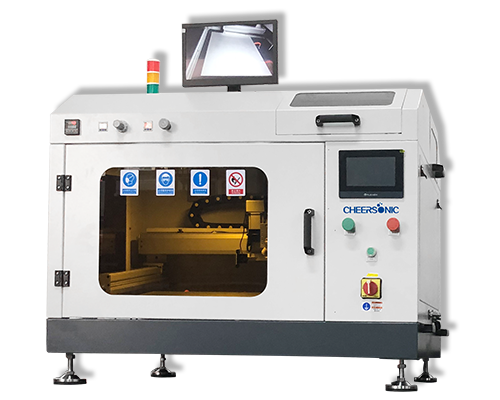
II. Working Principle of the Membrane Electrode In DMFC, the MEE works as follows:
1. Methanol Oxidation: In the anode catalyst layer, methanol and water dissociate into protons, electrons, and carbon dioxide under the action of the catalyst. Protons are transported to the cathode through the proton exchange membrane, while electrons reach the cathode through the external circuit, forming a current that drives the load.
2. Oxygen Reduction: In the cathode catalyst layer, oxygen combines with protons transported from the proton exchange membrane and electrons arriving through the external circuit to produce water and release heat.
III. Performance Optimization of the Membrane Electrode To improve the performance of the DMFC MEE, optimization can be achieved in the following aspects:
1. Catalyst Development: Developing high-performance, low-cost catalysts is key to improving MEE performance.Catalysts with high activity, high stability, and long lifespan can be developed through alloying and support strategies.
2. Improvement of Proton Exchange Membranes:Research and preparation of new proton exchange membrane materials are crucial for improving proton conduction efficiency and long-term battery stability. Reducing methanol permeation is also an important direction for improving membrane electrode performance.
3.Optimization of Membrane Electrode Structure:Optimizing the composition and structure of the membrane electrode, such as using more efficient catalytic layer structures and improving the performance of the diffusion layer, can further enhance the performance and efficiency of the membrane electrode.
IV.Application Prospects of Membrane Electrodes:DMFCs possess advantages such as simple structure, high energy density, and low environmental pollution, making them promising for applications in portable electronic devices and distributed power stations. With continuous advancements in membrane electrode technology and cost reductions, DMFCs are expected to become one of the mainstream clean energy technologies in the future.
In summary, the membrane electrode is the core component of a DMFC, and its performance directly affects the battery’s performance and efficiency. Through catalyst development, proton exchange membrane improvements, and membrane electrode structure optimization, the performance and efficiency of DMFCs can be further improved, promoting their application and development in the clean energy field.
About Cheersonic
Cheersonic is the leading developer and manufacturer of ultrasonic coating systems for applying precise, thin film coatings to protect, strengthen or smooth surfaces on parts and components for the microelectronics/electronics, alternative energy, medical and industrial markets, including specialized glass applications in construction and automotive.
Our coating solutions are environmentally-friendly, efficient and highly reliable, and enable dramatic reductions in overspray, savings in raw material, water and energy usage and provide improved process repeatability, transfer efficiency, high uniformity and reduced emissions.
Chinese Website: Cheersonic Provides Professional Coating Solutions