
Fabrication of Spray-Coated Organic Photovoltaic Cells
Fabrication of Spray-Coated Organic Photovoltaic Cells – Cheersonic
Organic photovoltaic cells, especially those suitable for small-scale laboratory use, typically need to be easy to fabricate, have stable performance, relatively low cost, and be suitable for small-scale research. The following is a detailed analysis of organic photovoltaic cells suitable for small-scale laboratories:
I. Basic Characteristics of Organic Photovoltaic Cells
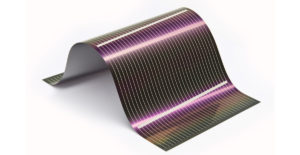
Organic photovoltaic cells (OPVs) use organic semiconductors as the active material for photoelectric conversion. Compared to inorganic solar cells, they have advantages such as low cost, thinness, light weight, simple manufacturing process, and the ability to be made into large-area flexible devices. However, organic photovoltaic cells also have some challenges, such as relatively low energy conversion efficiency and the need to improve stability.
II. Types of Organic Photovoltaic Cells Suitable for Small-Scale Laboratories
1. Organic Small-Molecular Bilayer Solar Cell Structure: This structure is made by stacking two different functional organic semiconductor materials to optimize light absorption and charge separation efficiency.
a. Advantages: Low manufacturing cost, abundant materials, light weight, good flexibility, and can be fabricated through solution processing processes (such as spin coating, spray coating, and printing), making it suitable for large-scale production. In addition, new processes such as inkjet printing and roll-to-roll printing are gradually being applied to its preparation, improving production efficiency and material utilization.
b. Applications: Primarily used in portable electronic devices and flexible electronic products, such as wearable devices, portable chargers, electronic paper, and smart windows.
2. Other types of organic photovoltaic cells: Schottky organic cells: the earliest type of organic solar cell, employing a sandwich single-layer structure with relatively low photoelectric conversion efficiency.
a. Heterojunction organic cells: including bilayer heterojunction cells and bulk heterojunction solar cells, which improve exciton separation efficiency by increasing the donor/acceptor interface area.
b. Dye-sensitized solar cells: mimicking the principle of photosynthesis, using wide-bandgap oxide-type nanoscale semiconductors as electrodes, and fabricated using dye sensitization and other methods. Raw materials are abundant, costs are low, and the process technology is relatively simple.
III. Precautions for small-scale laboratory preparation of organic photovoltaic cells:
1. Material selection: Stable and easily prepared organic semiconductor materials should be selected, such as polymers and small-molecule organic materials. At the same time, attention should be paid to performance parameters such as the light absorption coefficient and carrier mobility of the material.
2. Preparation Process: Select a suitable preparation process based on laboratory conditions, such as spin coating, spray coating, or printing. Ensure a clean environment during the preparation process to avoid impurities affecting battery performance.
3. Performance Testing: After preparation, conduct performance tests on the batteries, including energy conversion efficiency and stability. Use standard testing methods and equipment to ensure accurate results.
4. Safety Measures: Strictly adhere to laboratory safety operating procedures during preparation and testing to prevent chemical leaks, fires, and other accidents.
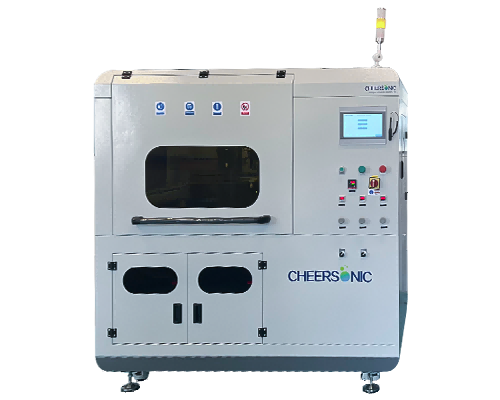
Application of Ultrasonic Spray Coating Machines in Organic Photovoltaic Cell Fabrication
Ultrasonic spray coating machines, with their precision atomization advantages, have become core equipment for the large-scale fabrication of organic photovoltaic cells (OSCs). They can efficiently and uniformly deposit key functional layers such as active layers and buffer layers, contributing to a dual improvement in device performance and production efficiency. Their core principle is to atomize the organic photovoltaic material solution into uniform micron-sized droplets through high-frequency piezoelectric vibration, which are then precisely deposited onto the substrate under the guidance of a carrier gas, avoiding problems such as droplet aggregation and uneven coating caused by traditional spraying.
This equipment is adapted to the fabrication requirements of organic photovoltaic cells and has significant advantages: non-contact spraying protects flexible substrates from damage and is suitable for roll-to-roll large-scale production; material utilization is over 95%, significantly reducing the loss of expensive organic semiconductor materials; and film thickness and morphology can be precisely controlled, keeping coating uniformity within ±3% and optimizing charge transport efficiency.
In practical applications, ultrasonic spraying machines can deposit anolyte buffer layers such as WO3 and active layers such as PM6:DTY6. Combined with air knife-assisted technology, solvent additives are not required, enabling the environmentally friendly application of low-toxicity solvents. The power conversion efficiency of the fabricated devices can reach up to 14.1%. Its process is mild, parameters are controllable, and it is compatible with photovoltaic material solutions of different viscosities. It can meet both laboratory research and development needs and adapt to industrial mass production scenarios, providing reliable technical support for organic photovoltaic cells to move from the laboratory to large-scale production.
About Cheersonic
Cheersonic is the leading developer and manufacturer of ultrasonic coating systems for applying precise, thin film coatings to protect, strengthen or smooth surfaces on parts and components for the microelectronics/electronics, alternative energy, medical and industrial markets, including specialized glass applications in construction and automotive.
Our coating solutions are environmentally-friendly, efficient and highly reliable, and enable dramatic reductions in overspray, savings in raw material, water and energy usage and provide improved process repeatability, transfer efficiency, high uniformity and reduced emissions.
Chinese Website: Cheersonic Provides Professional Coating Solutions
