
Electrolytic Functional Water Coating Using Ultrasonic Spraying
Analysis of the Characteristics of Titanium Anodes and Platinum Electrodes for Electrolytic Functional Water Coating Using Ultrasonic Spraying Machines
In the field of electrochemistry, the preparation of electrolytic functional water relies on a highly efficient and stable electrode system. Titanium anodes, with their excellent structural properties and corrosion resistance, have become one of the core components. The application of ultrasonic spraying technology further optimizes the performance of titanium anodes. Combined with the unique advantages of platinum electrode materials, this provides solid support for the upgrading of the electrolytic functional water industry.
Titanium anodes, based on pure titanium, possess excellent structural strength and chemical stability. A titanium dioxide passivation film spontaneously forms on their surface, effectively resisting erosion from various corrosive environments. This lays the foundation for their long-term stable operation in the preparation of electrolytic functional water. However, the electrochemical catalytic activity of pure titanium is limited and cannot meet the requirements of high-efficiency reactions in the preparation of electrolytic functional water. Therefore, it is necessary to optimize the performance by coating the surface with catalytic materials. Ultrasonic spraying machines are key equipment for achieving this optimization process.

Ultrasonic spraying technology relies on high-frequency ultrasonic vibration to atomize the catalytic slurry into nanoscale uniform droplets. These droplets are then precisely deposited onto the surface of the titanium anode substrate through directional deposition, forming a dense and uniform catalytic coating. Compared to traditional spraying processes, this non-contact spraying method avoids mechanical damage to the titanium substrate while ensuring minimal coating thickness deviation, eliminating defects such as pinholes and localized build-up, significantly improving the adhesion between the coating and the substrate, reducing the risk of coating peeling, and thus extending the service life of the titanium anode. In the preparation of functional water through electrolysis, a uniform catalytic coating can construct a stable gas-liquid-solid three-phase reaction interface, accelerating the electrolysis reaction rate, improving electrolysis efficiency, and reducing energy consumption.
Among numerous catalytic coating materials, platinum, due to its superior electrochemical performance, has become one of the preferred materials for titanium anode coatings used in functional water electrolysis. As an electrode material, platinum has an extremely wide range of applications, covering multiple fields such as electroplating, electrolytic synthesis, electrochemical wastewater treatment, and fuel cells. Its core advantages are concentrated in three aspects: corrosion resistance, catalytic activity, and potential characteristics.
Platinum electrodes exhibit particularly outstanding corrosion resistance. Except for a few mixed acids, they maintain stable chemical properties and do not undergo significant corrosion in common acids such as hydrochloric acid, nitric acid, sulfuric acid, hydrofluoric acid, and phosphoric acid, as well as in most electrolyte solutions. This characteristic allows it to adapt to the complex electrolyte environment in the preparation of functional water through electrolysis, preventing electrode failure due to corrosion and ensuring the continuity and stability of the electrolysis process. Simultaneously, platinum possesses extremely high catalytic activity, significantly reducing the activation energy of the electrolysis reaction, accelerating electron transfer rates, improving the efficiency of functional water preparation, and shortening the reaction cycle.
Furthermore, platinum electrodes exhibit the unique characteristics of high oxygen evolution potential and low hydrogen evolution potential, making them suitable as both high-performance anode materials and highly efficient cathode materials. In the preparation of functional water through electrolysis, platinum-coated titanium anodes effectively promote oxidation reactions on the anode surface, efficiently generating active substances with bactericidal and disinfecting functions, while suppressing side reactions and improving the purity and quality of the electrolyzed functional water.
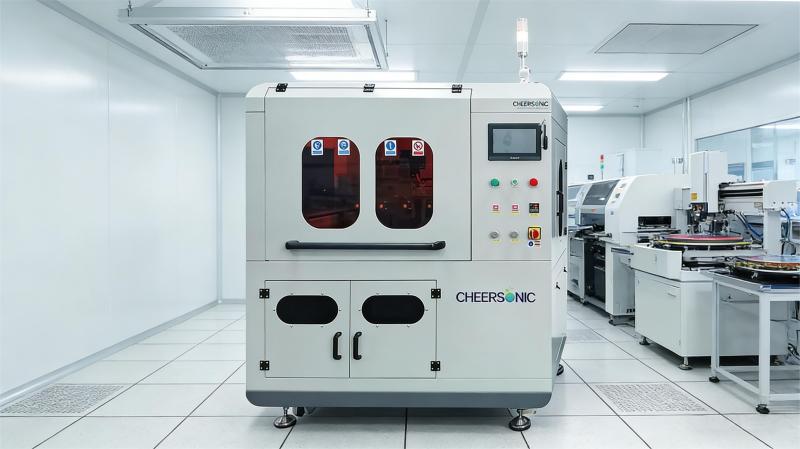
The combination of an ultrasonic spraying machine and platinum-coated titanium anodes achieves complementary technological advantages. Ultrasonic spraying technology ensures the uniformity and density of the platinum coating, fully utilizing the catalytic and corrosion-resistant properties of platinum, while the titanium substrate provides reliable structural support for the entire electrode. This combination not only improves the efficiency and quality of functional water electrolysis production but also extends the service life of the electrodes and reduces maintenance costs and material waste during production.
As the application of functional water electrolysis expands in fields such as medicine, food, and environmental protection, the requirements for electrode performance are also constantly increasing. The technology of using ultrasonic spraying machines to coat platinum-coated titanium anodes balances high efficiency and stability while aligning with the green and low-carbon industrial development trend. In the future, through process optimization and technological innovation, electrode performance will be further improved, driving the functional water electrolysis industry to achieve higher-quality development and providing more reliable electrochemical solutions for various scenarios.
About Cheersonic
Cheersonic is the leading developer and manufacturer of ultrasonic coating systems for applying precise, thin film coatings to protect, strengthen or smooth surfaces on parts and components for the microelectronics/electronics, alternative energy, medical and industrial markets, including specialized glass applications in construction and automotive.
Our coating solutions are environmentally-friendly, efficient and highly reliable, and enable dramatic reductions in overspray, savings in raw material, water and energy usage and provide improved process repeatability, transfer efficiency, high uniformity and reduced emissions.
