
Titanium Anode for Ultrasonic Spraying of Electrolytic Copper Foil
Technical Advantages and Applications of Titanium Anodes for Ultrasonic Spraying of Electrolytic Copper Foil
In modern electronics, electrolytic copper foil is a core material for printed circuit boards and lithium-ion batteries, and its quality directly affects the performance of the final product. The production process of electrolytic copper foil is based on the electrodeposition reaction of copper sulfate solution. By controlling the electrolysis conditions, copper ions are reduced and deposited on the surface of the cathode roller to form foil. This process, seemingly simple, actually places extremely stringent requirements on production stability—uniformity of current distribution, temperature and composition fluctuations of the electrolyte, and consistency of electrode spacing. Deviations in any of these aspects can lead to fatal defects such as uneven copper foil thickness, pinholes, and burrs.
Anode Challenges under High Current Conditions
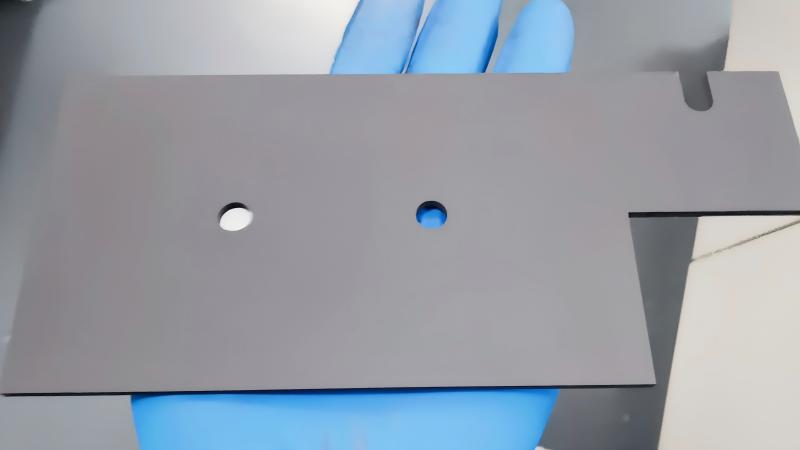
The production of electrolytic copper foil is a typical high-current electrochemical process. As a key component for current introduction, the anode needs to withstand extremely high current densities for extended periods while maintaining stable electrochemical activity in a strongly acidic copper sulfate solution. Traditional anode materials face severe challenges under these conditions: on the one hand, metal anodes are prone to passivation or dissolution, leading to increased cell voltage and a surge in energy consumption; on the other hand, changes in anode size directly disrupt the inter-electrode spacing, and fluctuations in inter-electrode spacing are the primary factor affecting the uniformity of copper foil thickness.
Core Advantages of Noble Metal Coated Titanium Anodes
The emergence of noble metal coated titanium anodes provides an effective solution to these problems. These electrodes use metallic titanium as the substrate, coated with an oxide layer containing noble metals such as iridium, ruthenium, and platinum. The titanium substrate possesses excellent corrosion resistance and mechanical strength, ensuring that the anode does not deform under high current impact; while the noble metal coating endows the electrode with superior electrocatalytic activity and conductivity. More importantly, the coefficient of thermal expansion of titanium matches well with the coating material, maintaining the integrity and adhesion of the coating during electrolysis.
The stability of the inter-electrode spacing is one of the most prominent contributions of titanium anodes. Because the titanium substrate hardly dissolves in the electrolyte, the anode’s dimensions remain unchanged throughout its entire service life. This means that the relative position between the cathode roller and the anode can be maintained in the initial setting for a long time, fundamentally ensuring the uniformity of current distribution. In contrast, production lines using soluble or easily corroded anodes often require frequent adjustments to the electrode spacing or even shutdowns to replace the anodes, which not only affects production efficiency but also makes it difficult to guarantee the consistency of copper foil quality between batches.
Significant Energy Saving Effect
Energy consumption is a significant component of the production cost of electrolytic copper foil. Precious metal-coated titanium anodes have a lower oxygen evolution overpotential, and at the same current density, their operating voltage can be hundreds of millivolts lower than that of traditional anodes. For large-scale electrolytic cell clusters operating continuously, the energy saved by this voltage drop is considerable. For a production line with an annual output of tens of thousands of tons of electrolytic copper foil, this can save millions of yuan annually in electricity costs alone. At the same time, the lower cell voltage also reduces the temperature rise burden on the electrolyte, indirectly reducing the energy consumption of the cooling system.
Life Cycle Value from Recoating and Reuse
The most economically attractive feature of titanium anodes is their recoatability. When the precious metal coating on the surface gradually wears away and the electrocatalytic performance declines due to long-term use, the titanium substrate itself remains undamaged. Through specialized chemical stripping and surface treatment processes, residual old coatings can be completely removed, allowing for the recoating of a new noble metal catalyst layer. The electrochemical performance of the recoated titanium anode can be restored to the level of a new anode, while the cost is only a fraction of that of a brand-new anode.
This characteristic fundamentally changes the cost-sharing model for anodes. A high-quality titanium substrate can support multiple recoating cycles, with a total service life of several years or even more than ten years. The purchase cost of the anode is spread over a longer production cycle, significantly reducing the electrode consumption cost per unit output. More importantly, recoating and reuse avoids the downtime losses and installation and commissioning workload caused by frequent anode replacements, improving the continuity of production line operation.
Ensuring Process Implementation: Ultrasonic Spraying Technology
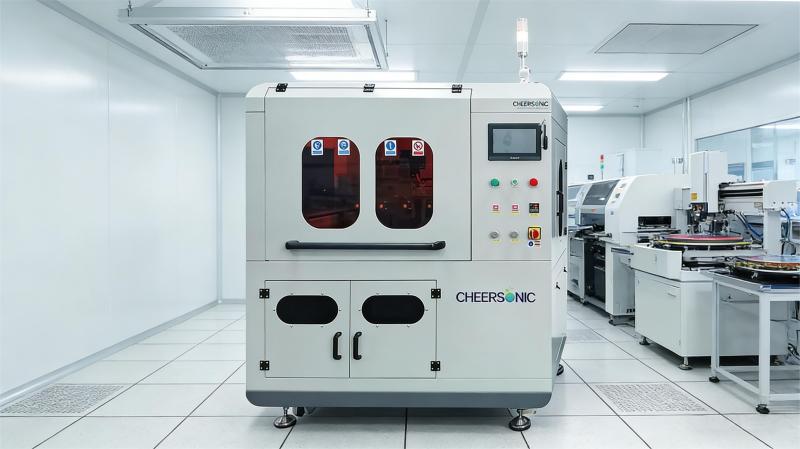
To fully realize the performance potential of titanium anodes, the quality of coating preparation is crucial. Ultrasonic spraying technology, with its excellent coating uniformity and controllability, has become the ideal process for preparing high-performance noble metal coated titanium anodes. Ultrasonic atomization devices break down the coating precursor solution into micron- or even nano-sized droplets. These droplets, guided by a carrier gas, are uniformly deposited on the titanium substrate surface, forming a dense and consistent coating. Compared to traditional brushing or air-spraying processes, ultrasonic spraying allows for precise control of the coating amount, avoiding localized current density differences caused by uneven coating thickness, thereby further improving the overall current distribution uniformity of the anode.
Conclusion
Ultrasonic-sprayed titanium anodes with precious metal coatings have become an indispensable core component in the production of high-performance electrolytic copper foil due to their stable electrode spacing, significant energy-saving effects, and reusable lifecycle advantages. As electronic products continue to advance towards thinner and higher-performance designs, the quality requirements for electrolytic copper foil will only increase, and titanium anode technology will continue to evolve, providing solid support for the precision and greening of copper foil manufacturing. For manufacturers, selecting and correctly using titanium anodes is not only a practical necessity to ensure product quality but also a long-term strategy to reduce overall costs and enhance competitiveness.
About Cheersonic
Cheersonic is the leading developer and manufacturer of ultrasonic coating systems for applying precise, thin film coatings to protect, strengthen or smooth surfaces on parts and components for the microelectronics/electronics, alternative energy, medical and industrial markets, including specialized glass applications in construction and automotive.
Our coating solutions are environmentally-friendly, efficient and highly reliable, and enable dramatic reductions in overspray, savings in raw material, water and energy usage and provide improved process repeatability, transfer efficiency, high uniformity and reduced emissions.