
Summary of PEM Electrolyte Anode Catalyst Layer Improvements
Summary of PEM Electrolyte Anode Catalyst Layer Improvements (For Large-Scale Deployment)
Traditional PEM electrolyzer anode catalyst layers consist of catalyst dispersed in an ionomer (ion-conducting polymer) network. There are two main configurations: catalyst-coated membranes (coated onto a membrane) and porous transport electrodes (coated onto a PTL). “Membrane electrode” is a general term for both. The catalyst layer can be coated onto a membrane or PTL substrate using methods such as spray gun coating, ultrasonic spraying, or blade coating. The configuration and coating method affect the catalyst layer properties and electrolyzer performance.
The anode environment is highly acidic (pH≈0) and highly oxidizing (>1.3V). The catalyst needs to remain stable under these conditions, currently limited to precious metals. While ruthenium has high OER activity, its stability is insufficient, making iridium the mainstream choice. Iridium oxide (especially amorphous iridium oxide) has higher activity, but its durability is lower than that of crystalline iridium oxide, and the catalyst state changes with the electrolyzer potential or contact with hydrogen, requiring long-term monitoring.
Iridium’s annual mining output is only 7.5 tons (far lower than platinum’s 200 tons), posing a bottleneck to the large-scale production of PEM electrolyzers. Reducing the iridium loading in the anode catalyst layer is key to cost control. Current literature indicates that iridium loading has decreased from >1 mgIr·cm⁻² to below 0.5 mgIr·cm⁻², but further breakthroughs are needed: first, clarifying the interfacial transport mechanism; second, identifying degradation modes; and third, ensuring quality control for large-scale production.

Catalyst Utilization Optimization
Achieving high catalyst utilization at low loading requires optimizing the transport processes inside and outside the catalyst layer: protons are transported to the membrane via the ionomer phase, electrons are conducted to the PTL via iridium particles, liquid water permeates into the catalyst layer through the PTL pores, and oxygen is expelled in the reverse direction. It is important to note that the ionomer is non-conductive; isolated or completely embedded iridium particles cannot conduct electrons.
The “three-phase boundary” (the junction of the PTL, catalyst, and ionomer) is the only site where the OER reaction occurs. At low loadings, the iridium particle network is weak, and particles not directly in contact with the PTL and without electrical connections are unlikely to participate in the reaction, leading to a shrinking three-phase boundary. Furthermore, the catalyst layer swells due to water absorption by the ionomer, entering the PTL voids (i.e., “stratification”), resulting in iridium particle dispersion, decreased connectivity, and reduced electronic conductivity and utilization. This problem is more pronounced at low loadings.
Current optimization strategies fall into three categories: first, using iridium fibers prepared by electrospinning to bridge isolated iridium particles; second, altering the catalyst morphology, such as synthesizing porous iridium nanosheets through electrochemical dealloying of nickel-iridium alloy foil to construct a continuous conductive structure (both are relatively novel); and third, using catalyst supports (which are more widely studied).
Applications of Catalyst Supports
Supports can increase the specific surface area of the catalyst, reduce the catalyst mass required for the target current, and have great potential for reducing loading. However, the core challenge is that commercially available mainstream supports (such as titanium dioxide) are electronically insulating, which negates the advantage of improved catalyst dispersion. While some studies have sought conductive supports through doping or developing novel materials (such as TaC and NbC), none have successfully passed long-term durability tests.
1. Material Selection
Under harsh anode conditions, most supports (such as conductive carbon black) are thermodynamically unstable. Stable materials are mostly semiconductor metal oxides, whose conductivity is questionable. Although novel supports have shown potential in some tests, data on low loading and durability at industrial-grade current densities (>1 A·cm⁻²) are lacking, limiting their widespread adoption. Currently, titanium dioxide supports are frequently tested at low loading and industrial-grade current densities. Their application can be traced back to size-stabilized anode technology, and related commercial catalyst research has also been conducted in recent years.
2. Conductivity and Electron
Network Construction Titanium dioxide has high resistivity (over 4000 Ω·m in nanowire form, far exceeding the 0.4 Ω·m of commonly used PEMFC supports). While some studies have used reduced titanium or Magneille phase titanium oxides (substoichiometric oxides) to improve conductivity, and some combinations (such as IrO₂/Ti) have shown better performance than unsupported IrO₂ at low loadings, the stability of these supports during operation remains unclear.
IrOx has significantly better conductivity than titanium dioxide. Theoretically, a core-shell structure can achieve complete conductivity and high IrOx utilization. However, in practice, it is difficult to form a complete IrOx film on titanium dioxide, easily resulting in electronically insulating IrOx islands. Therefore, it is necessary to construct an interconnected IrOx network to connect catalyst particles that are not in direct contact with the PTL, thereby improving conductivity and utilization.
Two existing network construction strategies exist: First, optimizing the catalyst layer thickness, with 4-8 μm being the optimal range (4 μm ensures in-plane electronic conductivity, 8 μm controls mass transfer overpotential). Thickness is linearly positively correlated with iridium loading, and different catalysts require different loading levels to achieve this thickness. Second, developing core-shell structures. Some studies show that low-loading core-shell catalysts outperform traditional catalysts, and in porous transport electrode configurations, the conductivity of the catalyst layer is less important than that of catalyst-coated films.
Overall, titanium dioxide supports rely on IrOx permeation networks to improve utilization. Currently, there are cases where low loadings (<0.4 mg Ir·cm⁻²) still perform well after thousands of hours of testing, but further research is needed on IrOx pathway construction. Simultaneously, the long-term durability verification of novel supports and doped titanium dioxide is required.
Durability Assurance
Reducing iridium loading must be done without compromising durability. However, only six MEA studies have examined iridium durability at loadings ≤0.4 mgIr·cm⁻². The degradation mechanism and influencing parameters of low-loading systems still need to be clarified.
1. Degradation Mechanism and Influencing
Factors Industrial-grade testing shows that after 4500 hours of operation with an ultra-low loading CCM (0.08 mgIr·cm⁻²), iridium loss reaches 70%. Most studies have also found that iridium dissolves over time and redeposits on the membrane and cathode catalyst layer.
Parameters that accelerate degradation include: 1) Open-circuit voltage conditions (such as start-up/shutdown), which reduce crystalline IrO₂ to metallic Ir, and then oxidize it to the unstable amorphous IrOx, leading to accelerated degradation and performance decline; 2) Dynamic operation, such as potential cycling (especially square wave cycling), high cycling frequency, and high upper limit potential, all accelerate degradation; 3) Low loading, as lower loading results in more pronounced degradation, while high loading catalyst layer thickness can act as a buffer, delaying the onset of degradation, and catalyst layers of similar thickness but different loadings exhibit similar durability.
2. Standardization Needs
A standardized accelerated degradation protocol (AST) needs to be developed to shorten durability testing time (eliminating the need for thousands of hours), while simultaneously enabling performance comparisons of MEAs with different loadings, morphologies, and manufacturing methods, providing support for the development of next-generation MEAs.
Role of Ionomer Binders
In the catalyst layer, ionomer binders (referring only to ionomers within the catalyst layer) affect reaction site exposure, proton/electron conduction, reactant transport, and product removal. In commercial MEAs, ionomer binders and membrane ionomers often have similar or identical compositions, leading to conflicting performance requirements (e.g., membranes require high electronic resistance, while binders require low electronic resistance). Currently, similar ionomers are still the primary choice to ensure proton conduction.
PEMWE can draw on the research experience of PEMFC (e.g., using ionomer binders to replace PTFE, improving platinum utilization and reducing loading by an order of magnitude), but the impact of new configurations (e.g., steam-feed anodes, direct IrOx deposition on the PTL) on ionomer selection needs to be considered, and its role in large-scale deployment requires further in-depth research.
Scale-up of MEA Manufacturing
Large-scale production of low-loading catalyst layers requires overcoming technological bottlenecks: Ultrasonic spraying, commonly used in laboratories, is unsuitable for mass production due to low catalyst slurry solids content (<1wt%) and low yield; more scalable blade coating technologies (e.g., rod coating, slot extrusion coating) require high solids content (>5wt%) slurries, which can easily lead to uneven catalyst layers at low loadings.
Further research should focus on: first, clarifying the key parameters of the slurry for achieving a uniform catalyst layer; and second, reducing catalyst loss caused by slurry seeping into the pores of the PTL during the fabrication of porous transport electrodes, which is crucial for reducing the amount of platinum group metals used.
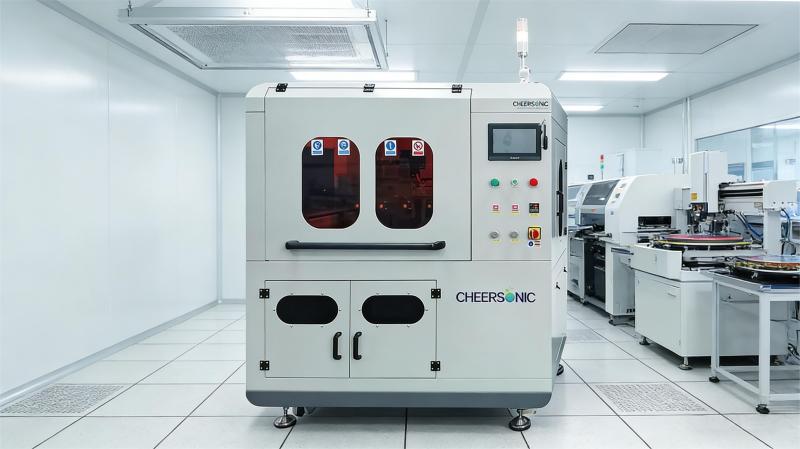
Ultrasonic spraying is a core process for preparing the anode catalyst layer in PEM electrolyzers. It utilizes high-frequency vibration to atomize the catalyst slurry into micron-sized uniform droplets, precisely depositing them onto the substrate membrane surface. A high-performance catalyst layer is then formed through hot-pressing transfer, suitable for anode catalyst systems such as Ir and RuO₂.
This process allows for gradient coating preparation through dual-channel control, optimizing catalyst loading and the distribution of additives such as sulfonated silica. This constructs efficient proton and electron transport channels, reducing reaction impedance. Its uniform atomization and controllable coating thickness reduce catalyst agglomeration, maximize the exposure of active sites, and achieve a material utilization rate of 80%-95%, far superior to traditional spraying processes. Furthermore, it causes minimal damage to the substrate membrane, making it suitable for large-scale production.
By optimizing the slurry ratio and spraying parameters, a continuous, defect-free catalyst layer can be prepared, significantly improving the oxygen evolution reaction efficiency and long-term stability of PEM electrolyzers. This contributes to cost reduction and efficiency improvement in hydrogen production via water electrolysis, making it a key technology bridging catalyst development and device industrialization.
About Cheersonic
Cheersonic is the leading developer and manufacturer of ultrasonic coating systems for applying precise, thin film coatings to protect, strengthen or smooth surfaces on parts and components for the microelectronics/electronics, alternative energy, medical and industrial markets, including specialized glass applications in construction and automotive.
Our coating solutions are environmentally-friendly, efficient and highly reliable, and enable dramatic reductions in overspray, savings in raw material, water and energy usage and provide improved process repeatability, transfer efficiency, high uniformity and reduced emissions.
Chinese Website: Cheersonic Provides Professional Coating Solutions
