
Development of dry cathode AEM electrolysis water technology
The anion exchange membrane electrolysis water technology (AEMWE) with dry cathode configuration has demonstrated application advantages in multiple dimensions: its simplified water management system can reduce operational complexity, and its ability to adapt to non corrosive working environments not only reduces equipment corrosion risks, but also significantly reduces capital investment and operating costs, improving technical economy. The core influencing factors of electrolytic cell performance include material system (ionomer and anion exchange membrane), operating conditions (temperature, flow rate, electrolyte feeding method), and electrolytic cell structure (flow field distribution pattern). The coupling effect of these parameters directly determines the energy conversion efficiency and long-term stability of the system. Although this technology has shown great potential to replace traditional electrolytic water configurations, there is still a lack of systematic data on dry cathode AEMWE. Based on existing research results, targeted research can be conducted in the following areas to fill the gap.
Optimization direction of key parameters
In a dry cathode system, the electrolyte on the cathode side and the required water for the reaction rely entirely on the diffusion supply of the anion exchange membrane (AEM). Therefore, the synergistic regulation of the ion exchange capacity (IEC) and water absorption rate (WU) of the membrane material is crucial. There is a clear correlation mechanism between the two: a low IEC can lead to insufficient WU, causing the cathode region to “dry up” and inhibiting the oxygen reduction reaction; If the IEC is too high, it will cause excessive swelling of the membrane material, damage the integrity of the membrane structure and the stability of the ion transport channel, and also affect the electrolysis performance.
Based on the above characteristics, performance optimization can be achieved by adopting a differentiated configuration strategy of anode cathode ionomers: on the anode side, due to the continuous supply of liquid feed, selecting a more hydrophobic ionomer can reduce liquid film impedance and improve oxygen evolution reaction kinetics; On the cathode side, priority should be given to ensuring a hydrated environment, especially under high current density conditions. Hydrophilic ionomers can maintain a moist state in the reaction zone through their strong water absorption properties, providing a guarantee for OH ⁻ ion transport.
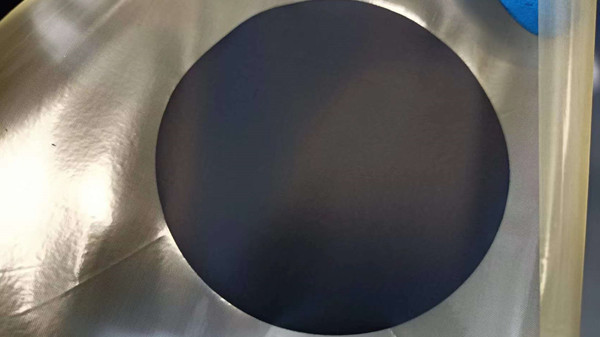
The optimization of the feeding system and flow rate parameters also urgently needs to be breakthrough. The current activation process of dry cathode electrolytic cells lacks standardized solutions, and the initial feeding method directly affects the activation degree of membrane electrode assemblies (MEA), which in turn determines the long-term durability and performance upper limit of the electrolytic cell. Existing research on flow rate mainly focuses on traditional systems with dual side feeding, and systematic data for single side feeding scenarios of dry cathodes is particularly scarce. Although some studies mention the influence of different electrolyte flow rates, in-depth analysis has not been conducted in conjunction with the structural characteristics of dry cathodes.
It is recommended to conduct screening experiments within a wide flow rate range of 10-50 mL · min ⁻¹, which covers typical operating conditions for laboratory research and pilot applications. The core goal of flow rate optimization is to ensure that sufficient OH ⁻ is transported to the cathode through AEM to participate in the reaction, and to maintain hydration balance within the membrane to avoid dehydration failure. In practical operation, two auxiliary strategies can be adopted: one is to increase the concentration of the anode electrolyte and enhance the permeation of water to the cathode side through a concentration gradient; The second is to supplement the vaporized electrolyte to the cathode side when the current density exceeds 0.6 A · cm ², in order to alleviate the dehydration risk under high load. It should be noted that high concentrations of KOH can enhance the hydration effect, but accelerate the chemical degradation of the electrode substrate and membrane material. Therefore, a balance needs to be established between hydration assurance and material durability.
Application strategies of diagnostic technology and catalysts
The temperature parameter exhibits a dual influence characteristic: increasing the temperature can reduce the activation energy of the reaction, increase the ion migration rate, and thus improve the electrolysis performance; But at the same time, it will also accelerate the aging of membrane materials, loss of catalyst active components, and degradation of seals, which will damage the stability of the system. The key to resolving this contradiction lies in clarifying the temperature induced degradation mechanism, which requires a combination of in situ and non in situ diagnostic techniques for research. Temperature changes can indirectly regulate the relative humidity distribution on both sides of AEM by changing the dew point of the system. Therefore, it is necessary to establish a quantitative relationship between humidity and membrane performance. In situ electrochemical impedance spectroscopy (EIS) can be used to analyze the dynamic impact of humidity changes on ion transport resistance in real time, providing data support for humidity regulation.
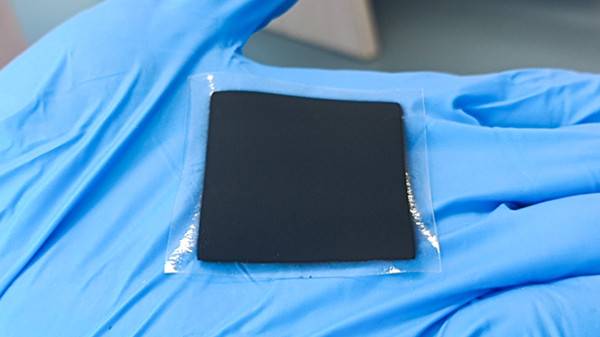
The combination of multiple characterization techniques can achieve a comprehensive analysis of degradation mechanisms: neutron imaging technology (in situ and non in situ combination) can visually present the hydration gradient distribution inside AEM/MEA, clarify the starting position and diffusion path of dehydration failure; Small angle X-ray scattering (SAXS) can reveal the microstructural evolution of membrane materials and elucidate the correlation between hydrophilic/hydrophobic domain distribution and ion transport efficiency; Fourier transform infrared spectroscopy (FTIR) and nuclear magnetic resonance (NMR) can accurately identify chemical degradation products and trace the pathways of functional group damage in membrane materials. In addition, gas permeation monitoring requires the integration of specialized sensors, combined with gas chromatography (GC) analysis of the gas composition in the anode chamber, to provide a basis for system safety and reaction selectivity evaluation.
The classification benchmark testing of catalyst systems is also indispensable. The current AEMWE research mainly uses two types of catalysts: precious metal (PGM) based and non precious metal (non PGM) based, which have significant differences in catalytic activity, stability, and cost. Considering the special reaction environment of the dry cathode system (such as local water content, OH ⁻ concentration gradient), it is necessary to establish performance evaluation systems for two types of catalysts separately, clarify their activity thresholds, stability degradation laws, and cost-effectiveness ratios under dry cathode conditions, and provide a basis for practical application selection.
Summary and Future Directions
The dry cathode AEM electrolysis water technology, with its core advantages of simplifying water management and reducing equipment costs, has shown broad application prospects in the field of green hydrogen preparation. However, it still faces multiple challenges such as insufficient material matching, unclear operating parameters, and incomplete diagnostic methods. Future research needs to aim for a “performance stability cost” triangle balance, with a focus on breaking through three aspects: firstly, establishing evaluation criteria for dry cathode specific material systems and optimizing the matching relationship between IEC and WU; Secondly, establish standardized activation and operation procedures, and clarify the scope of control for key parameters; The third is to build a diagnostic platform that combines multiple technologies to achieve accurate analysis of degradation mechanisms. By conducting systematic research to address the aforementioned issues, dry cathode AEMWE technology will be promoted from laboratory research to industrial application.
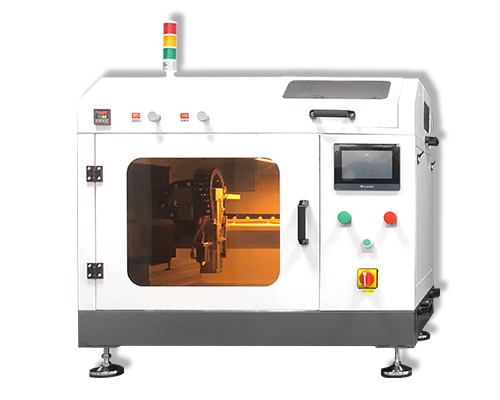
The application value of ultrasonic spraying technology
Ultrasonic spraying has great potential in the preparation of dry cathode AEMWE membrane electrodes. It atomizes the slurry into micrometer sized uniform droplets through high-frequency vibration, which can accurately control the thickness and component distribution of the catalytic layer. Compared to traditional spraying, this technology can reduce catalyst agglomeration, increase the exposure rate of active sites, and reduce membrane electrode resistance. In response to the differentiated configuration requirements of hydrophilic/hydrophobic ionomers on dry cathodes, ultrasonic spraying can achieve precise zoning preparation of anode and cathode coatings, ensuring uniform coverage of hydrophilic ionomers on the cathode side and optimizing the density of hydrophobic coatings on the anode side. In addition, its mild spray pressure can avoid damage to the membrane material, adapt to the swelling characteristics of AEM, help improve the consistency and long-term stability of the membrane electrode, and provide process support for the large-scale application of dry cathode technology.
About Cheersonic
Cheersonic is the leading developer and manufacturer of ultrasonic coating systems for applying precise, thin film coatings to protect, strengthen or smooth surfaces on parts and components for the microelectronics/electronics, alternative energy, medical and industrial markets, including specialized glass applications in construction and automotive.
Our coating solutions are environmentally-friendly, efficient and highly reliable, and enable dramatic reductions in overspray, savings in raw material, water and energy usage and provide improved process repeatability, transfer efficiency, high uniformity and reduced emissions.
Chinese Website: Cheersonic Provides Professional Coating Solutions
