
Ultrasonic Spraying of Copper Based Catalyst
Ultrasonic Spraying of Copper Based Catalyst – Catalyst Deposition – Cheersonic
Under the dual carbon goal, the resource utilization of CO ₂ has become a key path to solving energy and environmental problems. Among them, the electrocatalytic reduction of CO ₂ to methanol has attracted much attention due to its advantages such as easy storage and wide applications. Copper based catalysts are the core materials in this field, but traditional preparation methods often result in uneven distribution of active sites and hindered electronic conduction, which limits the selectivity and efficiency of methanol conversion. The application of ultrasonic spraying technology provides a new solution for the precise construction of copper based catalysts, significantly improving the “directional” conversion ability of CO ₂ to methanol.
The core advantage of ultrasonic spraying technology is to achieve uniform and controllable deposition of catalyst film layer. Compared with traditional coating methods, it atomizes copper based catalyst slurry into uniformly sized micrometer sized droplets through high-frequency ultrasonic vibration. These droplets adhere precisely to the electrode substrate under the action of an electric field, forming a catalytic film with uniform thickness and reasonable pore structure. This uniformity avoids the formation of “hot spots” in traditional preparation, reduces the generation of by-products such as H ₂ and CO, and focuses CO ₂ conversion more on the methanol pathway. Experimental data shows that the thickness deviation of catalyst film prepared by this technology can be controlled within 5%, and the exposure of active sites can be increased by more than 30%.
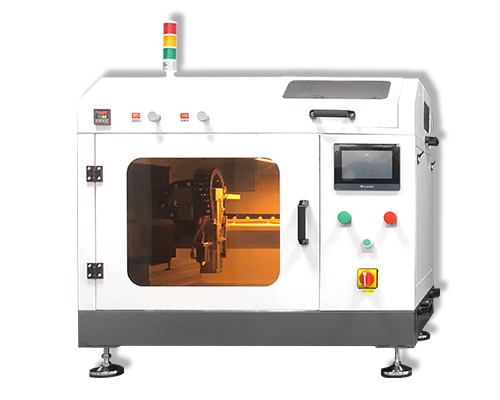
The regulation of catalyst components is another key to achieving precise conversion. During the ultrasonic spraying process, the distribution and crystal structure of active components in copper based catalysts can be accurately controlled by real-time adjustment of slurry concentration, spraying rate, and substrate temperature. For example, when introducing auxiliary elements such as zinc and tin into copper based catalysts, this technology can ensure that the doping elements are uniformly fused with copper particles, forming a stable alloy phase and optimizing the electronic structure of the catalyst surface. This precise regulation makes the adsorption and activation pathways of CO ₂ molecules on the catalyst surface more controllable, significantly reducing the energy barrier for methanol generation and increasing the Faraday efficiency of methanol to over 55%.
The optimization of interface contact performance further enhances the accuracy of conversion. The catalytic film formed by ultrasonic spraying is tightly bonded to the electrode substrate, effectively reducing interfacial resistance and accelerating electron transfer efficiency. At the same time, the abundant microporous structure in the membrane provides sufficient channels for electrolyte penetration and product desorption, avoiding the accumulation and poisoning of products on the catalyst surface. In continuous electrocatalytic testing, the catalyst system can operate stably for more than 100 hours, with a methanol yield decay rate of less than 8%, demonstrating excellent industrial application potential.
The combination of ultrasonic spraying technology and copper based catalysts has solved the accuracy problem of CO ₂ electrocatalytic methanol production from the perspective of preparation process. It has constructed an efficient oriented catalytic system through membrane uniformity control, precise component regulation, and interface performance optimization. With the continuous improvement of this technology, theoretical calculations can be combined to further optimize spray parameters and catalyst components in the future, achieving a dual breakthrough in methanol conversion efficiency and selectivity, and providing more competitive technical support for the resource utilization of CO ₂.
About Cheersonic
Cheersonic is the leading developer and manufacturer of ultrasonic coating systems for applying precise, thin film coatings to protect, strengthen or smooth surfaces on parts and components for the microelectronics/electronics, alternative energy, medical and industrial markets, including specialized glass applications in construction and automotive.
Our coating solutions are environmentally-friendly, efficient and highly reliable, and enable dramatic reductions in overspray, savings in raw material, water and energy usage and provide improved process repeatability, transfer efficiency, high uniformity and reduced emissions.
Chinese Website: Cheersonic Provides Professional Coating Solutions
