
Structural Design of Dry Cathode Alkaline AEM Electrolyzer
Although the alkaline anion exchange membrane electrolysis technology (AEMWE) has developed rapidly in recent years, there is still a lack of systematic understanding and unified standards in the design of the core structure of the electrolysis cell and the matching of operating parameters, especially in the research and development of the special configuration of dry cathode. The structural performance of the electrolytic cell directly determines the electrolysis efficiency and long-term stability. Its core components include the material selection of bipolar plates (BPP) and porous transport layers (PTL), as well as the reasonable construction of electrode systems. The synergistic effect of these components jointly ensures the efficient progress of the electrolysis process.
Design and Material Selection of Bipolar Plate (BPP)
As a key load-bearing component of the electrolytic cell, the bipolar plate undertakes multiple functions such as uniform current conduction, fluid distribution of reactants and products, and structural support of the stack. Its cost proportion can reach 40% of the total cost of the stack, and it is the core link in controlling the economic efficiency of the equipment. In an alkaline electrolysis environment, the material selection of bipolar plates needs to meet the requirements of conductivity, corrosion resistance, and structural stability simultaneously. The differences in operating conditions on different electrode sides further increase the difficulty of selection.
Due to the relatively mild reducing environment on the cathode side, graphite material has become a traditional choice due to its excellent chemical stability and conductivity. On the anode side, corrosion-resistant metals such as titanium (Ti) are often used due to the risk of oxidation and corrosion. In addition to the above-mentioned materials, metals such as stainless steel (SS) and nickel (Ni) have also been attempted for bipolar plate manufacturing. The outstanding advantages of these materials are low cost and excellent mechanical processing performance, which helps to reduce the threshold for large-scale applications. However, it should be noted that metal materials are prone to surface passivation or corrosion peeling during long-term operation of alkaline electrolysis, which not only increases contact resistance, but also may contaminate electrodes and membrane components with corrosion products, ultimately damaging the overall efficiency of the system. Therefore, the complementary application of material surface modification or coating protection technology is crucial.

Flow field design and its impact on electrolysis performance
In the process of water electrolysis, there exists a two-phase flow system where liquid and gas coexist, and the rationality of the flow field structure directly determines the reaction efficiency and energy loss. The core function of the flow field includes three aspects: firstly, to uniformly transport the electrolyte to the surface of the catalyst layer (CL), ensuring the supply of reaction materials; The second is to timely remove the gas products generated on the electrode surface to avoid the increase of mass transfer resistance caused by bubble accumulation; The third is to minimize fluid pressure drop and reduce auxiliary energy consumption while achieving the above functions. The flow field structure is usually integrated with a bipolar plate design, and is mainly divided into typical types such as parallel channels, serpentine channels, and finger shaped channels according to the different geometric shapes of the channels.
The core difference between parallel channels and serpentine channels lies in the fluid path: in parallel channels, the electrolyte flows uniformly across the electrode surface along multiple parallel channels, while serpentine channels extend the fluid residence time through a continuous serrated path. However, there is no unified conclusion on the performance advantages and disadvantages of these two designs, and their applicability highly depends on the parameters of electrolysis conditions.
A study on a 10 cm ² electrolytic cell compared the performance of four flow field designs (parallel, single serpentine, double serpentine, and triple serpentine). All flow channel sizes were uniformly set to a width of 2 mm and a depth of 3 mm. The experimental conditions were set at 333 K, 1 M KOH electrolyte, and a flow rate of 270 mL · min ⁻¹. The results showed that the voltage of the parallel flow field electrolytic cell was higher than that of the serpentine flow field throughout the entire current range, which was due to the problems of uneven flow, temperature gradient, and pressure distribution that are prone to occur in parallel flow channels. It is worth noting that the electrolysis voltage of the three serpentine flow field is significantly higher than that of the single serpentine design at high current densities. The reason for this is that after the electrolyte is distributed to three parallel channels, the mass flow rate in a single channel decreases, resulting in a decrease in reactant supply efficiency and product removal ability. In contrast, the high flow velocity characteristics of a single serpentine channel are more conducive to enhancing mass transfer processes, thereby achieving lower electrolysis voltages and better overall performance.
It should be emphasized that the above research is based on traditional dual side feeding systems, and there is still a lack of research on flow field design for dry cathode configurations in existing literature. The special requirements of the dry cathode system require the flow field to not only meet the mass transfer needs, but also to achieve efficient gas separation, pressure regulation, and thermal management functions in a coordinated manner. Therefore, it is urgent to conduct systematic research on flow field structures such as parallel, serpentine, finger fork, and mesh, in order to provide theoretical support for the structural optimization of dry cathode electrolytic cells.
Function and Material Optimization of Porous Transport Layer (PTL)
The porous transport layer is usually arranged on both sides of the anion exchange membrane (AEM) or membrane electrode assembly (MEA). Its core functions include promoting gas diffusion, achieving uniform distribution of current, regulating the water transport process, and providing mechanical support for the catalyst layer. The common structural forms include fiber, foam and braided mesh. The material selection of PTL needs to be accurately matched with the working conditions on the electrode side, and carbon based or nickel based materials are often used on the cathode side due to the relatively mild environment; The anode side is in a strong oxidizing environment, which is prone to material degradation. Therefore, titanium based materials, including pure titanium or platinum coated titanium (Pt Ti), are usually selected to enhance corrosion resistance.
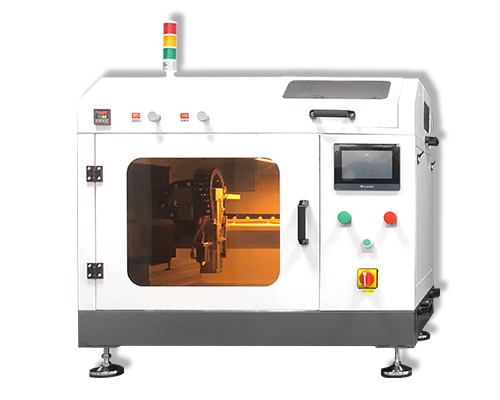
The influence of material combination and preparation process on the performance of PTL has been extensively experimentally verified, among which ultrasonic spraying technology is widely used in the preparation of catalyst layers. This technology utilizes ultrasonic transducers to convert electrical energy into high-frequency vibrations, causing the catalyst slurry to atomize into micrometer sized uniform droplets, which are precisely deposited on the substrate surface to form a thin film. Its core advantage lies in the fine and evenly distributed atomized particles, which can prepare catalyst layers with controllable thickness (usually several micrometers to tens of micrometers) and optimized pore structure, effectively improving the exposure of active sites and electrolyte wettability.
In AEMWE, ultrasonic spraying is commonly used for coating platinum carbon and nickel iron based catalysts. A study used Fumasep FAA-3-50 film as the substrate to prepare a 40 wt% platinum carbon cathode layer and a nickel iron hydroxide catalytic layer on the anode side by chemical bath deposition method. The results showed that Ni ₀ ₅₆Fe₀. The ₄₄ OOH system achieves a current density of 3.6 A · cm ⁻ ² at 1.9 V, which is directly related to the characteristics of uniform catalyst dispersion and tight interlayer bonding brought by ultrasonic spraying. This technology can also reduce the amount of precious metals used, providing support for reducing the cost of electrolytic cells.
The compression control of the electrolytic cell can also significantly affect its performance, and the number of gaskets is a key parameter for adjusting the compression. Research has found that using a combination of a single gasket (cathode side) and a stainless steel (SS10) gas diffusion layer (GDL), at a current density of 0.5 A · cm ⁻ ², the electrolysis voltage is reduced by 0.11 V compared to traditional multi gasket configurations, reaching an optimized level of 2.13 V. However, it should be noted that excessive increase in compression will exacerbate the risk of hydrogen permeation from the cathode to the anode, which may lead to safety hazards and energy loss. Therefore, the selection of gasket quantity needs to seek a balance between performance improvement and safety stability.
A comparative study on the anode performance of PTL with different materials shows that stainless steel based PTL (SS-PTL) exhibits the highest electrocatalytic activity in oxygen evolution reaction (OER), with significantly lower charge transfer resistance than platinum titanium and nickel based PTL. It can operate stably at a high current density of 4 A · cm ⁻ ² with only an electrolysis voltage of 2 V. Comparing it with traditional precious metal catalyst layers (iridium oxide IrO ₓ, cobalt oxide Co∝ O ₄), it was found that the IrO ₓ catalyst layer had superior performance when the current density was below 1 A · cm ⁻ ². However, when the current density was increased to 4 A · cm ⁻ ², the electrolysis voltage increased to 2.2 V, while SS-PTL remained at around 2 V. The core reason for this difference is that traditional catalyst layers are prone to structural instability due to the generation of large amounts of gas and heat accumulation at high reaction rates, while the porous structure and corrosion resistance of SS-PTL are more suitable for extreme working conditions.
The influence of other key structural factors
In addition to bipolar plates, flow fields, and PTL, the type of catalyst, loading capacity, and microstructure design of membrane electrode components also have a significant impact on electrolysis performance. Among them, the porosity control of the catalyst layer is particularly critical in the dry cathode configuration – unlike traditional wet electrolysis cells, the water transport direction in the dry cathode system changes from the membrane to the electrode side, which makes the interface interaction between the ionomer and the catalyst layer and the water distribution state the core of performance control.
A comparative study on single membrane and double membrane electrolytic cells was conducted to regulate the porosity of the cathode catalyst layer through two preparation processes: ultrasonic stirring method was used to prepare low porosity catalyst layers, and high-speed thin film mixing method was used to prepare high porosity samples. The experimental results show that regardless of whether a single or double membrane configuration is used, the electrolytic cell with a low porosity catalyst layer exhibits a smoother water distribution gradient, and the water content on the cathode side is significantly higher. This is because the low porosity structure can reduce water evaporation and migration losses, making it more suitable for the water management needs of the dry cathode. Meanwhile, polarization curve testing showed that the electrolytic performance of single membrane configuration was generally better than that of dual membrane design, which is directly related to the low resistance characteristics and concentration overpotential advantages of nickel based components.
Conclusion
The structural optimization of dry cathode alkaline anion exchange membrane electrolysis cells is a systematic engineering that requires the coordinated matching of components such as bipolar plates, flow fields, porous transport layers, and catalyst layers. The current research has clarified the performance impact mechanism of each core component, but the structural standardization research for special working conditions of dry cathodes is still in its infancy. In the future, research should focus on optimizing flow field structures, surface modification of PTL materials, and microstructure control of catalyst layers. A structure performance correlation model should be established through multi parameter coupling experiments to provide technical support for the large-scale application of dry cathode electrolysis cells.
About Cheersonic
Cheersonic is the leading developer and manufacturer of ultrasonic coating systems for applying precise, thin film coatings to protect, strengthen or smooth surfaces on parts and components for the microelectronics/electronics, alternative energy, medical and industrial markets, including specialized glass applications in construction and automotive.
Our coating solutions are environmentally-friendly, efficient and highly reliable, and enable dramatic reductions in overspray, savings in raw material, water and energy usage and provide improved process repeatability, transfer efficiency, high uniformity and reduced emissions.
Chinese Website: Cheersonic Provides Professional Coating Solutions