
Ultrasonic Coating of Cobalt Based Catalyst
Ultrasonic coating of cobalt based catalyst assists in precise conversion of CO ₂ to methanol
Under the guidance of the “dual carbon” goal, the resource utilization of CO ₂ has become a key path to solving the energy crisis and environmental problems. The electrocatalytic reduction of CO ₂ to methanol has attracted much attention due to its mild conditions and high product value, but its core bottleneck lies in how to improve the selectivity and stability of the catalyst. In recent years, the application of ultrasonic spraying machines in cobalt based catalyst coating has provided a new technological solution for achieving “precise” conversion of CO ₂ to methanol, promoting the field towards a new stage of practicality.
Traditional catalyst coating techniques such as scraping and spin coating often face problems such as uneven coating thickness, catalyst agglomeration, and insufficient exposure of active sites, resulting in high by-products and low methanol yield during the CO ₂ conversion process. Ultrasonic spraying technology, with its unique atomization mechanism, solves these pain points from the source. Its working principle is to crush the cobalt based catalyst slurry into uniform droplets with a diameter of only a few microns through high-frequency ultrasonic vibration. These droplets are precisely attached to the electrode substrate under the drive of airflow, forming a dense and porous catalytic coating.
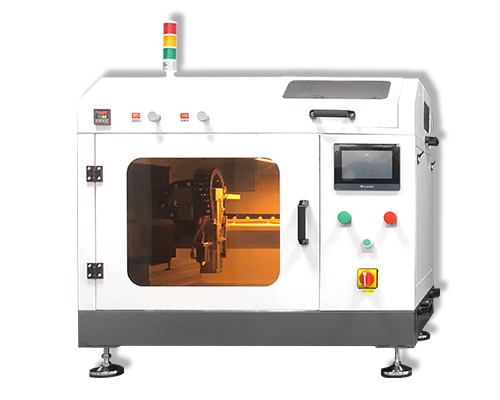
Cobalt based catalysts themselves have excellent CO ₂ adsorption activation ability, and the Co ³ ⁺ active sites on their surface can effectively reduce the energy barrier for CO ₂ conversion. However, traditional coating methods can easily cause catalyst particles to agglomerate, resulting in a large number of active sites being encapsulated and unable to function effectively. The coating formed by ultrasonic coating technology not only has uniform and controllable thickness, but also allows cobalt based catalyst particles to be distributed in a monodisperse or oligomeric state, significantly increasing the number of exposed active sites. Experimental data shows that the catalyst coated with this technology has an active site utilization rate increased by more than 40% compared to traditional methods, laying the foundation for the efficient generation of methanol.
The core of precise conversion lies in improving methanol selectivity and reducing the generation of by-products such as CO and methane. The porous coating structure formed by ultrasonic coating can ensure sufficient contact between the electrolyte and catalyst, as well as regulate the mass transfer process at the reaction interface. The electronic structure of cobalt based catalysts is more stable in a uniform coating, which can effectively suppress the occurrence of excessive reduction reaction of CO ₂. At the same time, the uniformity of the coating avoids the exacerbation of side reactions caused by excessive local current density, making it easier for the reaction to proceed towards the direction of methanol generation. Related studies have shown that this technology can increase the selectivity of CO ₂ electrocatalytic conversion to methanol to over 85%, far higher than traditional coating processes.
In addition, ultrasonic coating technology also has good industrial application potential. The coating process can be carried out continuously, with good coating repeatability, which can meet the requirements of large-scale electrode preparation. At the same time, this technology has strong adaptability to catalyst slurries, and can achieve efficient coating for both nanoscale cobalt based catalysts and composite cobalt based catalysts. In stability testing, cobalt based catalyst electrodes coated with ultrasonic waves showed excellent long-term performance, with methanol yield remaining above 90% of the initial value even after 100 hours of continuous operation.
The combination of ultrasonic coating technology and cobalt based catalysts provides an efficient solution for the electrocatalytic conversion of CO ₂ to methanol. This technology optimizes the catalytic coating structure, fully unleashing the performance advantages of cobalt based catalysts and achieving efficient and highly selective conversion of CO ₂ to methanol. With the continuous improvement and promotion of this technology, it is expected to promote the industrialization process of CO ₂ resource utilization technology, provide strong technical support for achieving the “dual carbon” goal, and help build a green and low-carbon energy cycle system.
About Cheersonic
Cheersonic is the leading developer and manufacturer of ultrasonic coating systems for applying precise, thin film coatings to protect, strengthen or smooth surfaces on parts and components for the microelectronics/electronics, alternative energy, medical and industrial markets, including specialized glass applications in construction and automotive.
Our coating solutions are environmentally-friendly, efficient and highly reliable, and enable dramatic reductions in overspray, savings in raw material, water and energy usage and provide improved process repeatability, transfer efficiency, high uniformity and reduced emissions.
Chinese Website: Cheersonic Provides Professional Coating Solutions