Influence of Electrolyte Feed on AEM Electrolysis Water System
Electrolyte feed is a core factor in regulating the performance and operational stability of anion exchange membrane electrolyzed water systems (AEMWE). By precisely controlling the pH environment at the electrode electrolyte interface, it directly affects the interfacial reaction kinetics and ion transport efficiency. Among them, supporting the concentration regulation of electrolytes is particularly crucial – a reasonable concentration level is the basis for ensuring ion conductivity and maintaining the continuous and efficient progress of water splitting reactions. In industrial practice, an alkaline aqueous solution with a mass fraction of 1-10% is usually supplied to the electrolysis system. This concentration range can ensure ion conductivity efficiency while avoiding membrane swelling or electrode corrosion caused by excessive concentration.
The regulatory effect of feeding mode on system stability
Existing research has confirmed that the feeding mode of electrolytes (single-sided/double-sided feeding, symmetrical/asymmetrical feeding) has a significant impact on the long-term operational performance of AEMWE. A team prepared membrane electrode assemblies (MEAs) using catalyst coated substrate (CCS) process at 50 ℃, using aminated Radel polysulfone as the ionomer. The study systematically investigated the influence of different feed modes of deionized water (DIW) and obtained a guiding experimental conclusion:
– Double sided circulating feeding: When DIW is circulating simultaneously at the anode and cathode, the system achieves a stable slot pressure of 2.25V at a current density of 0.2A · cm ⁻ ², and operates continuously for more than 500 hours, demonstrating optimal stability;
– Single side anode feeding: When only DIW is supplied to the anode, there is a rapid increase in cell pressure during the initial stage of electrolysis, but then it enters a stable period, ultimately achieving about 300 hours of continuous operation;
– Single side cathode feeding: When only DIW is supplied to the cathode, the degradation rate of the system is significantly accelerated, and the longest stable operation time is only 196 hours, which is the worst performance solution among all single feeding modes;
– Stage feeding: If DIW is supplied to the cathode for pretreatment 2 hours before operation, and then switched to anode feeding mode, the system stability can be restored to the level of 500 hours.
The above results clearly indicate that sufficient hydration of the cathode chamber, especially in the initial stage of electrolysis, is a key prerequisite for improving the efficiency and durability of the AEMWE system. This discovery provides a core basis for optimizing the feeding strategy.

Collaborative control of initial feed pretreatment and running feed
To further explore the regulatory potential of electrolyte feeding, researchers have divided the feeding process into two stages: “initial feeding” and “running feeding”. The initial feeding can be regarded as a targeted pretreatment method, usually supplied with DIW or alkaline solution continuously for 10 minutes, aiming to establish a stable ion transport channel for membrane electrode components; Running feed refers to the conventional electrolyte supply during the electrolysis process.
Experimental results have shown that the selection of initial feed components has a significant impact on system performance: under dry cathode configuration, when alkaline solution is used as the initial feed, the early activation speed and long-term operational stability of the system are significantly improved. This performance improvement essentially stems from the optimization of the mass transfer process – alkaline pretreatment can quickly eliminate ion transport resistance within the membrane, building an efficient mass transfer path for subsequent electrolytic reactions, especially suitable for working conditions such as dry cathodes that require high ion transport efficiency.
Optimization direction of electrolyte pH characteristics and ionic components
Traditional AEMWE systems often use high pH electrolytes (pH ≈ 14), which have the core advantage of excellent ionic conductivity. However, they also have obvious drawbacks: strong corrosive environments can accelerate the aging of electrodes and electrolytic cell components, and the generation of bypass currents can also reduce energy utilization efficiency. For this reason, researchers have turned their attention to neutral pH media or pure DIW systems, but the low ionic conductivity of such media can lead to a significant increase in Ohmic losses, which also limits performance improvement.
In response to this contradiction, research has systematically explored the modification effect of adding metal salts in near neutral pH media, using sodium perchlorate as a reference salt, and compared it with the pure DIW system. After adding 10mM sodium perchlorate to the anode electrolyte, the working voltage of the system at a current density of 0.5A · cm ⁻ ² decreased to 2.58V, while the working voltage of the pure DIW system was 2.77V, and the performance was significantly improved. Further comparison of the effects of potassium nitrate, sodium bicarbonate, and sodium perchlorate revealed that potassium nitrate exhibited the best performance. The core mechanism is that the salt containing electrolyte reduces the ohmic resistance of the electrolyte by providing additional ion carriers, thereby reducing voltage losses; Under the dry cathode configuration, the synergistic effect of membrane charge and electric field direction can further suppress ion permeation and enhance system stability. In addition to the above-mentioned salts, pure water and bicarbonate systems have also become important research directions for electrolyte components.
The mechanism and laws of the effects of anions and cations
In dry cathode AEMWE operation, the cation and anion characteristics in the electrolyte are key parameters for regulating performance. Relevant studies have revealed clear structure-activity relationships, providing precise guidance for optimizing ion components.
The Performance Regulation Law of Alkali Metal Cations
– A study on alkali metal cations (Li ⁺, Na ⁺, K ⁺, Cs ⁺) showed that in low hydroxide concentration anolyte systems, cation size indirectly regulates cathodic overpotential by affecting dynamic ion radius and mobility, while anodic overpotential remains stable due to constant hydroxide concentration. The experiment used 0.01M sodium hydroxide as the anode electrolyte and 0.15M nitrate solutions (lithium nitrate, sodium nitrate, potassium nitrate, cesium nitrate) containing different alkali metal cations as the cathode. The following core conclusions were drawn:
– Anode overpotential characteristics: When the anode electrolyte contains only sodium hydroxide, the anode overpotential is the lowest; After adding nitrate, there is a slight increase in the anodic overpotential, which is due to the accumulation of nitrate ions in the ionomer, partially covering the active sites of the catalyst, resulting in a decrease in the concentration of hydroxide in the ionomer;
– Cathodic overpotential law: Cathodic overpotential is significantly affected by the type of cation, among which K ⁺ exhibits the smallest cathodic overpotential at high current density, and the overall performance order is K ⁺<Na ⁺<Li ⁺ ≈ Cs ⁺;
– Ion mobility mechanism: The performance difference is directly related to the dynamic ion radius of cations – although Li ⁺ has the smallest ion radius, it is prone to form a larger hydration shell, resulting in an increase in the actual dynamic ion radius and migration resistance; The hydration shell of K ⁺ is the thinnest, with the smallest dynamic ion radius, resulting in the highest migration efficiency.
Based on the above rules, the electrolyte system containing K ⁺ exhibits optimal performance: at a current density of 1A · cm ⁻ ², the cell pressure is only 1.802V, and when using 0.01M potassium hydroxide+0.15M potassium nitrate as the anode electrolyte, the system achieves long-term stable operation for 1000 hours at 60 ℃ and 1A · cm ⁻ ². In addition, Na ⁺ has shown great potential for application, with its excellent hydration ability and mobility making it an effective substitute ion for K ⁺ in dry cathode configurations with current densities of 2A · cm ⁻ ² and higher.
The influence mechanism of anionic components
The regulatory effect of anion types on the performance of AEMWE cannot be ignored. Research has found that when the anode liquid flow is a 1M alkaline solution, the anion composition of the cathode chamber electrolyte significantly affects system performance: if DIW or alkaline solution (i.e., the anions are mainly OH ⁻) is used for the cathode, the high-frequency resistance (HFR) of the system is lower, and it exhibits significant advantages at high current densities; When the anion is replaced from OH ⁻ to CO ∝⁻ or NO ∝⁻, the electrolysis performance will significantly decrease, which is due to a dual negative effect – on the one hand, the change in anion type leads to an increase in HFR and an increase in Ohmic loss; On the other hand, non OH ⁻ anions can undergo adsorption poisoning on the surface of hydrogen evolution reaction (HER) catalysts, reducing catalytic activity.
Summary and Outlook
Based on existing research results, electrolyte feeding affects the performance and stability of AEMWE systems through multiple dimensions such as feeding mode, component characteristics, and stage regulation. The initial stage of cathode hydration guarantee, reasonable application of alkaline pretreatment, and selection of advantageous cations such as K ⁺ are effective paths to improve system performance; The optimization of anions should be based on the core principle of avoiding catalyst poisoning.
Future research should focus on the synergistic mechanism of anions and cations under complex working conditions, develop dynamically adjustable feeding strategies, combine membrane material modification and electrode structure optimization, further break through the performance bottleneck related to electrolyte feeding, and provide better theoretical support and technical solutions for the industrial application of AEMWE technology.
The ultrasonic sprayer, with its advantages of uniform atomization and dense coating, has become an ideal preparation equipment for AEM (anion exchange membrane) fuel cell cathodes. The core principle is to convert electrical energy into high-frequency vibration through an ultrasonic transducer, causing the cathode slurry (containing catalyst, binder, solvent, etc.) to break down into micrometer sized droplets, which are precisely deposited on the surface of AEM to form a catalytic layer.
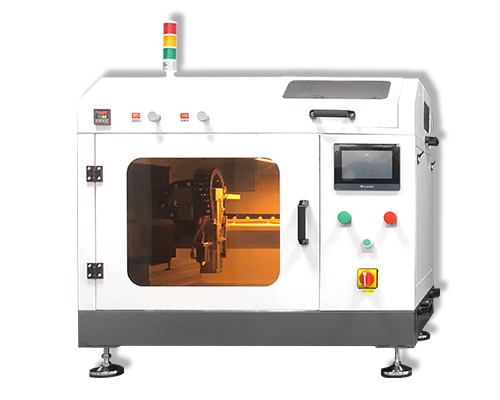
When preparing, it is necessary to first adjust the viscosity of the slurry to 5-20 mPa · s to ensure atomization stability. Set the ultrasonic frequency to 20-40 kHz, spray pressure to 0.1-0.3 MPa, and nozzle movement speed to 5-10 mm/s to ensure uniform and controllable coating thickness within 10-30 μ m. During the process, it is necessary to maintain a humidity of 40% -60% in the spraying environment to avoid rapid solvent evaporation and coating cracking.
This technology can reduce catalyst agglomeration, increase the contact area of the three-phase interface, while reducing the porosity of the coating and enhancing electronic conductivity. Compared with traditional spraying, the utilization rate of the cathode catalytic layer prepared by it is increased by 15% -20%, which increases the peak power density of AEM fuel cells by about 10%, and the batch stability is excellent, providing support for the large-scale production of AEM devices.
About Cheersonic
Cheersonic is the leading developer and manufacturer of ultrasonic coating systems for applying precise, thin film coatings to protect, strengthen or smooth surfaces on parts and components for the microelectronics/electronics, alternative energy, medical and industrial markets, including specialized glass applications in construction and automotive.
Our coating solutions are environmentally-friendly, efficient and highly reliable, and enable dramatic reductions in overspray, savings in raw material, water and energy usage and provide improved process repeatability, transfer efficiency, high uniformity and reduced emissions.
Chinese Website: Cheersonic Provides Professional Coating Solutions
