
Ultrasonic Spray of Semiconductor Layer and Dielectric Layer
Ultrasonic Spray of Semiconductor Layer and Dielectric Layer – Preparation of Thin Film Transistors – Cheersonic
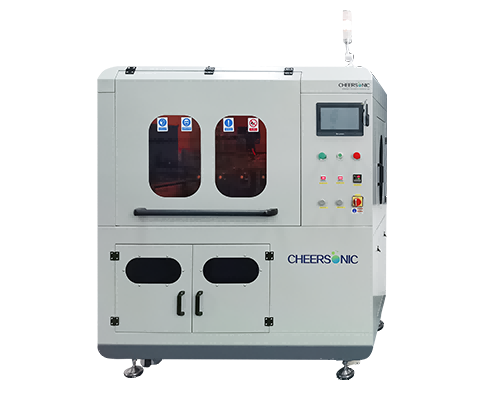
Ultrasonic spraying machine: the core process equipment for accurately empowering the preparation of thin film transistors
In the current wave of electronic devices transitioning towards miniaturization, flexibility, and high performance, thin film transistors (TFTs) serve as core components in fields such as display drivers, intelligent sensing, and photovoltaic energy. The precision and efficiency of their manufacturing processes directly determine the performance limits of end products. The ultrasonic spraying machine, with its unique atomization deposition principle, has become a key equipment for achieving precise construction of semiconductor layers and dielectric layers, promoting large-scale and high-quality production of thin film transistors, and providing important support for process innovation in the field of electronic manufacturing.
The core working principle of ultrasonic spraying machine: from atomization to precise deposition
The core advantage of ultrasonic spraying machine compared to traditional spraying equipment lies in its atomization technology based on ultrasonic vibration. When the equipment is working, high-frequency ultrasonic waves (usually in the frequency range of 20kHz-100kHz) act on the liquid raw materials inside the spraying head, and through mechanical vibration, the raw materials are crushed into uniform droplets at the micrometer or even nanometer level, forming a stable “atomization cone”. This atomization method does not require high-pressure airflow assistance, avoiding the problems of droplet splashing and particle agglomeration in traditional high-pressure spraying. The diameter of atomized droplets can be accurately controlled within 1-5 microns, and the uniformity deviation of droplet size distribution is less than 10%, laying the foundation for the uniformity of subsequent deposited films.

During the sedimentation process, the ultrasonic spraying machine can achieve uniform movement of the spraying head along a preset path through a precise motion control system (such as a servo motor-driven XYZ axis platform), combined with real-time adjustment of liquid flow rate (minimum flow rate can be as low as 0.1mL/h) and atomization parameters, to ensure that the droplets can accurately cover the target area on the substrate surface. At the same time, the temperature control system equipped with the equipment can heat the substrate in real time (with a temperature control accuracy of ± 1 ℃), allowing the droplets to quickly dry and solidify upon contact with the substrate, reducing uneven film thickness caused by droplet flow and further improving deposition accuracy.
Accurate deposition of semiconductor layers: ensuring the electrical performance of thin film transistors
The semiconductor layer is the core component of thin film transistors for current regulation. Its purity, thickness uniformity, crystallinity, and adhesion to the substrate directly affect key electrical parameters such as carrier mobility and switching ratio of the transistor. Ultrasonic spraying machines can provide suitable process solutions for different types of semiconductor materials (such as organic semiconductors, metal oxide semiconductors, sulfide semiconductors) in semiconductor layer deposition.
Taking the deposition of metal oxide semiconductors (such as IGZO) as an example, the raw materials are usually metal salt solutions dissolved in organic solvents. The ultrasonic spraying machine precisely controls the atomization parameters to atomize the solution into small droplets, which are then evenly sprayed onto the surface of the pre treated substrate (such as glass, flexible polymer substrate). Under the heating effect of the substrate, the organic solvent evaporates rapidly, and the metal salt forms a dense precursor film. After annealing treatment (usually at a temperature of 200-400 ℃), the precursor is transformed into a metal oxide semiconductor layer with good crystallinity. During the entire process, the ultrasonic spray coating machine can control the thickness of the semiconductor layer within 10-50 nanometers, and the thickness deviation of the same batch of products is less than 5%, which is much better than the traditional spin coating process (deviation is usually greater than 15%). In addition, due to the extremely low impact force of atomized droplets, ultrasonic spraying machines can deposit semiconductor layers on flexible substrates without damaging the substrate, providing the possibility for the preparation of flexible thin film transistors.
Dense construction of dielectric layer: strengthening the insulation barrier of thin film transistors
The dielectric layer, as a key structure for isolating the semiconductor layer and electrode in thin film transistors, needs to have high insulation, low leakage current, and dense pinhole free characteristics to avoid charge leakage between the electrode and the semiconductor layer and ensure stable switching performance of the transistor. Ultrasonic spraying machine can effectively solve the problems of multiple pinholes and poor density in dielectric layer deposition in traditional processes by optimizing process parameters.
Common dielectric materials (such as silicon oxide, aluminum oxide, organic polymer dielectric materials) mostly exist in the form of sol gel system or polymer solution. After the ultrasonic spraying machine atomizes these materials, the droplets form a continuous thin film on the substrate surface. By precisely controlling the spraying frequency and drying temperature of each layer, the thickness of the dielectric layer can be controlled in a stepwise manner (thickness range can be from 50 nanometers to several micrometers). For example, when depositing a silicon oxide dielectric layer, an ultrasonic sprayer can avoid the problems of uneven solvent evaporation and film cracking caused by a single thick coating by using multiple rounds of thin coating (with a thickness of 5-10 nanometers per round) and low-temperature drying (80-120 ℃). The dielectric constant of the final formed dielectric layer is stable (with a deviation of less than 3%), and the leakage current density can be as low as 10-8A/cm ² or less, meeting the insulation requirements of high-performance thin-film transistors. At the same time, the low-temperature deposition characteristics of the ultrasonic spraying machine (with a minimum deposition temperature of up to room temperature) can avoid the performance damage of the deposited semiconductor layer caused by high temperatures and ensure the compatibility of interlayer structures.
Complete Preparation of Thin Film Transistors: Process Integration Value of Ultrasonic Spraying Machine
In the complete preparation process of thin film transistors, ultrasonic spraying machines are not a single step equipment, but a core equipment that can efficiently connect with substrate pretreatment, electrode preparation, annealing treatment and other process steps. The value of its process integration is mainly reflected in three aspects:
Firstly, the substrate has wide adaptability. The ultrasonic spraying machine is compatible with both rigid substrates (glass, silicon wafers) and flexible substrates (polyimide, polyethylene terephthalate), and does not require complex surface modification of the substrate. By adjusting the atomization pressure and substrate temperature, it can achieve uniform deposition on different substrate surfaces, providing flexible support for the preparation of diversified thin film transistor products (such as flexible display driver TFT, wearable sensor TFT).
Secondly, the material utilization rate is high. In traditional spin coating processes, about 60% -80% of raw materials are thrown out of the substrate due to centrifugal force and wasted. However, ultrasonic spraying machines can increase the utilization rate of raw materials to over 80% through precise atomization and path control, significantly reducing the consumption of expensive raw materials such as precious metals and rare metal oxides, and reducing production costs.
Thirdly, it has strong capacity for large-scale production. The ultrasonic spraying machine can be connected to automated production lines through parallel design of multiple nozzles (supporting 2-8 nozzles working synchronously), achieving a thin film deposition efficiency of several square meters per hour, and a stable product yield of over 95%, meeting the large-scale production needs of thin film transistors in display panels, photovoltaic modules, and other fields.
Application prospects: Promote the evolution of electronic devices towards higher performance
With the rapid development of emerging fields such as flexible electronics, wearable devices, and transparent electronics, the performance requirements for thin film transistors are constantly increasing, and the technological advantages of ultrasonic spraying machines will be further highlighted. For example, in the field of flexible OLED displays, flexible thin-film transistors prepared by ultrasonic spraying can have a bending radius as low as 5 millimeters. After 100000 bending cycles, the electrical performance degradation is less than 10%, which is much better than products prepared by traditional processes; In the field of intelligent sensors, ultrasonic spraying machines can accurately deposit semiconductor and dielectric layers on tiny substrates (such as fiber optic end faces with a diameter of 1 millimeter), producing highly sensitive temperature and humidity sensors and expanding the application boundaries of thin film transistors.
In the future, with the continuous upgrading of ultrasonic spraying technology in atomization accuracy, material compatibility, process automation, etc., it will not only be limited to the deposition of semiconductor layers and dielectric layers, but may also be further applied to the preparation of electrode materials and functional modification layers, realizing the integrated spraying and forming of the entire structure of thin film crystal tubes, bringing more efficient, accurate, and environmentally friendly process solutions to the electronic manufacturing field, and promoting the development of the entire industry towards higher performance, lower cost, and more sustainable direction.
About Cheersonic
Cheersonic is the leading developer and manufacturer of ultrasonic coating systems for applying precise, thin film coatings to protect, strengthen or smooth surfaces on parts and components for the microelectronics/electronics, alternative energy, medical and industrial markets, including specialized glass applications in construction and automotive.
Our coating solutions are environmentally-friendly, efficient and highly reliable, and enable dramatic reductions in overspray, savings in raw material, water and energy usage and provide improved process repeatability, transfer efficiency, high uniformity and reduced emissions.
Chinese Website: Cheersonic Provides Professional Coating Solutions
