
Ultrasonic Spraying of Flexible Thin Film Solar Cells
Below, I will provide a comprehensive and in-depth analysis of the principles and advantages of ultrasonic spraying technology, its specific applications in the preparation of flexible thin film solar cells, and the challenges and future development it faces.
The principle and core advantages of ultrasonic spraying technology
Principle:
Unlike traditional pressure nozzles that rely on high pressure to break liquids into mist, ultrasonic nozzles utilize high-frequency electrical energy (typically 20 kHz to 200 kHz) to be converted into high-frequency mechanical vibrations through piezoelectric transducers. This vibration is transmitted to the tip of the nozzle, causing the liquid film passing through the nozzle to generate a “fine wave”. When the wave amplitude reaches a critical value, the droplet will be directly “peeled off” from the peak, forming a uniform and controllable micrometer sized mist droplet.
Core advantages (why is it suitable for flexible thin-film solar cells):
1. Extremely high film uniformity and consistency:
*The generated droplets have uniform size, concentrated distribution, and can form a very flat and defect free thin film. This is crucial for nanoscale functional layers such as electron transport layers and perovskite layers, which directly affect the photoelectric conversion efficiency and stability of the battery.
2. Excellent process controllability:
*By precisely adjusting the ultrasonic frequency, flow rate, and nozzle movement speed, the thickness (from tens of nanometers to a few micrometers), morphology, and crystal quality of the film can be precisely controlled. This is highly valuable for optimizing material formulations and process windows during the research and development phase.
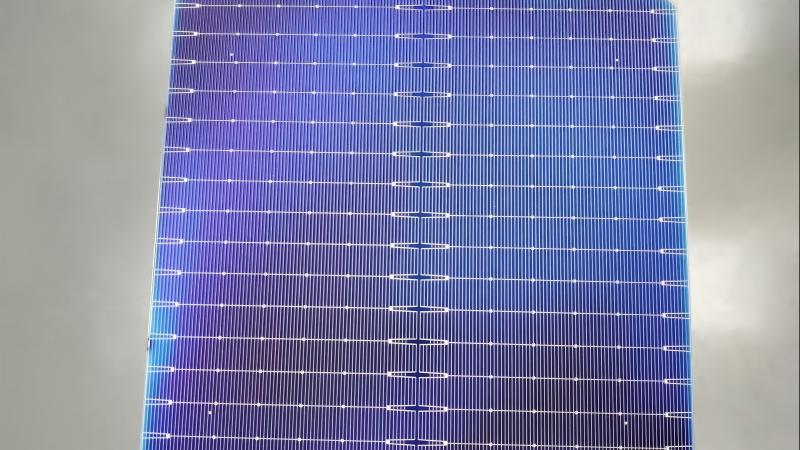
3. Low flow, high efficiency, saving expensive materials:
*Ultrasonic spraying can achieve extremely low flow rates (as low as milliliters per minute) and material utilization rates of nearly 95% or more. This can significantly reduce the raw material cost for flexible solar cells using expensive materials such as organic semiconductors, fullerene derivatives, gold electrodes, etc.
4. Gentle spraying process, suitable for flexible substrates:
*The entire process does not rely on high pressure, and the kinetic energy of the droplets is relatively low. This means that it will not cause damage or penetration to fragile flexible substrates such as PET, PEN, thin metal foils, nor will it blow away the deposited underlying film.
5. Excellent compatibility and adaptability:
*Capable of handling solutions and slurries with various viscosities and solid contents, including solvents with low surface tension. This makes it suitable for depositing various functional layers, from ZnO nanoparticle electron transport layers prepared in aqueous phase, to perovskite precursor solutions prepared in organic solvents, and even conductive polymers (such as PEDOT: PSS) and carbon nanotube slurries.
6. Non contact spraying with strong patterning ability:
*The nozzle does not come into contact with the substrate, and combined with an automated motion platform and mask plate, it can easily achieve the deposition of complex patterns, which is very important for the preparation of modular batteries and integrated electronic devices.
Specific Applications in the Preparation of Flexible Thin Film Solar Cells
Ultrasonic spraying technology can be used to prepare multiple key functional layers of flexible thin-film solar cells.
1. Electronic transport layer
*Materials: ZnO, TiO ₂, SnO ₂ and other nanoparticle solutions.
*Application: Spraying can form dense, pinhole free, and uniform ETL films, which is the key to ensuring efficient charge extraction and reducing short circuits. Its low-temperature process (<150 ° C) perfectly matches flexible plastic substrates that are not resistant to high temperatures, such as PEN.
2. photoactive layer
*Organic photovoltaics: Used for spraying a blend solution of donor/acceptor (such as PBDB-T: ITIC, PM6: Y6), which can accurately control the phase separation morphology of the donor/acceptor and form an ideal nanoscale interpenetrating network structure.
*Perovskite solar cells: This is currently a hot research topic. Ultrasonic spraying can be used for:
*One step method: Directly spray perovskite precursor solution (such as PbI ₂+MAI), and induce crystallization through subsequent annealing or solvent engineering.
*Two step/sequential spraying: first spray PbI ₂ layer, then spray MAI solution, allowing it to undergo a chemical reaction on the substrate to form perovskite. This method can better control the crystallization process and obtain high-quality thin films.
*Component engineering: Through a multi-channel spraying system, solutions of different components can be mixed in real time to efficiently screen complex perovskite formulations (such as mixed cations and mixed halogens).
3. Hole transport layer
*Materials: PEDOT: PSS, PTAA, NiO ₓ, etc.
*Application: Spraying can form a uniform HTL, ensuring effective collection of voids and serving as a protective layer for the lower layer.
4. Electrode
*Transparent top electrode: Spray silver nanowires, carbon nanotubes, or conductive polymer solutions to form a flexible and transparent conductive network.
*Back electrode: Spraying metal nanoparticles (such as silver and copper) ink on a rigid or flexible substrate to form a conductive back contact.
Challenges and Future Development Directions
Despite significant advantages, there are still some challenges to overcome in order to perfectly integrate ultrasonic spraying into the large-scale manufacturing of flexible thin-film solar cells
The complexity of crystallization kinetics and morphology control:
*Spraying is a dynamic, non-equilibrium process that involves complex coupling of droplet flight, substrate impact, spreading, solvent evaporation, and crystal nucleation and growth. Especially for perovskite and organic active layer, how to accurately control the substrate temperature, spray parameters and environmental atmosphere to obtain the optimal film morphology and crystallinity is the core technical difficulty.
2. Balance between large-area uniformity and mass production speed:
*It is relatively easy to achieve high efficiency at laboratory sizes (such as 1-2 cm ²), but maintaining uniformity throughout the entire area is a major challenge when scaling it up to the module level (>100 cm ²). Need to optimize the scanning path, overlap rate, and multi nozzle collaborative working strategy of the nozzle.
3. nozzle blockage and long-term stability:
*Ink containing nanoparticles or easily crystallized ink may cause nozzle clogging, affecting process stability and repeatability. We need to develop more reliable nozzle designs and online cleaning and maintenance strategies.
4. Process integration and compatibility:
*Integrating ultrasonic spraying with other film-forming techniques such as slit coating, vapor deposition, and inkjet printing onto a complete production line requires addressing the mutual influence and pollution issues between each process step.
Future development direction:
*Artificial Intelligence and Machine Learning Optimization: Utilizing AI algorithms to handle the nonlinear relationship between complex process parameters and final device performance, quickly optimizing and accelerating the research and development process.
*Full spray and roll to roll production line: The goal is to achieve full spray and continuous R2R production from substrate cleaning to deposition of all functional layers, which is the ultimate path to reduce the manufacturing cost of flexible solar cells.
*Targeting emerging material systems: applied to more advanced materials such as all inorganic perovskites, low dimensional perovskites, new organic receptor materials, etc., exploring the regulatory effect of ultrasonic spraying on their unique optoelectronic properties.
*Environmentally friendly ink development: Combining lead-free perovskite and green solvent system, develop a completely environmentally friendly ultrasonic spraying process.
Conclusion
Ultrasonic spraying technology, as a precise, non-contact, and high material utilization deposition method, provides a powerful key for the development and future large-scale production of high-performance flexible thin film solar cells.
It not only enables rapid and low-cost screening of materials and optimization of processes during the research and development stage, but also demonstrates great potential for preparing uniform and high-performance films on large-area flexible substrates during the preparation stage. With the deepening of material science understanding and continuous progress in process control technology during spraying, ultrasonic spraying is expected to become an important engine for promoting the commercialization of flexible, lightweight, and low-cost photovoltaic technology.
About Cheersonic
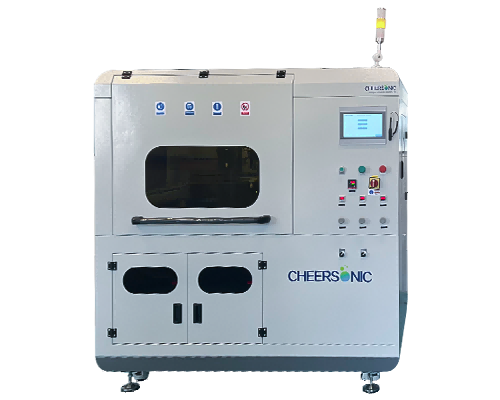
Cheersonic is the leading developer and manufacturer of ultrasonic coating systems for applying precise, thin film coatings to protect, strengthen or smooth surfaces on parts and components for the microelectronics/electronics, alternative energy, medical and industrial markets, including specialized glass applications in construction and automotive.
Our coating solutions are environmentally-friendly, efficient and highly reliable, and enable dramatic reductions in overspray, savings in raw material, water and energy usage and provide improved process repeatability, transfer efficiency, high uniformity and reduced emissions.
Chinese Website: Cheersonic Provides Professional Coating Solutions