
Bipolar Plate Coating for Hydrogen Fuel Cell Engine Stack
We focus on the coating technology of the core component of the hydrogen fuel cell engine stack – Bipolar Plate (BPP). This is one of the key factors determining the performance, lifespan, and cost of the fuel cell stack.
Why do bipolar plates require coating?
The bipolar plate forms the backbone of the fuel cell stack and plays a crucial role:
- Separation of reactive gases: Separate hydrogen and air (oxygen) in adjacent single cells.
- Conducting current: Collecting and conducting current, therefore it must have high conductivity.
- Transport reactants: Surface flow channels are used for uniform distribution of gas.
- Heat dissipation and drainage: Assist in managing the heat generated by the fuel cell stack and the water produced by the reaction.

However, the working environment of fuel cells is extremely harsh:
- Acidic environment (pH 2-3)
- High potential (>1.4 V)
- High temperature (~80 ° C)
- High humidity
In this environment, metal bipolar plates (such as stainless steel and titanium alloys) will rapidly corrode, leading to:
- Metal ion leaching: fouling of membrane electrode assembly (MEA), poisoning of catalysts, resulting in permanent performance degradation.
- Formation of oxide film: A non-conductive metal oxide passivation layer is formed on the surface, resulting in a sharp increase in contact resistance and a significant reduction in the output power and efficiency of the stack.
- Pitting and perforation: may ultimately lead to gas leakage and complete failure of the fuel cell stack.
Therefore, it is essential to apply a protective coating that combines high conductivity, high corrosion resistance, and good adhesion to the metal bipolar plate.
Core requirements for bipolar plate coating
An ideal coating must meet the following stringent requirements:
- High conductivity: surface resistance<10 m Ω· cm ²; Minimize Ohmic losses, improve stack output power and efficiency
- Excellent corrosion resistance: corrosion current<1 μ A/cm ²; Long term stability in anode and cathode environments, with a lifespan of thousands or even tens of thousands of hours
- High density: no through pores; Completely isolate the corrosive medium from contact with the base metal
- Good adhesion: tested by tape peeling; Prevent coating peeling during assembly, operation, and thermal cycling
- Good mechanical properties: high hardness, wear resistance; Resist assembly pressure and vibration wear during operation

Mainstream coating types and technologies
Coating technology is mainly divided into two categories: carbon based coatings and metal based coatings.
1. Carbon based coating
This type of coating has stable chemical properties and excellent corrosion resistance, and is currently the mainstream of research and application.
- Graphite/amorphous carbon coating:
– Material: Diamond like carbon (DLC) or its variants.
– Advantages: Extremely dense, hard, chemically inert, and highly corrosion-resistant.
– Challenge: High internal stress, prone to microcracks; Conductivity is sometimes difficult to balance. - Conductive polymer composite coating:
– Materials: Polyaniline (PANI), polypyrrole (PPY), etc. are composite with carbon materials (graphene, carbon nanotubes).
– Advantages: Low cost, simple process, good toughness.
– Challenge: Long term stability needs to be verified, and conductivity is relatively low.
2. Metal based coating
- Precious metal coating:
– Materials: gold (Au), platinum (Pt), tantalum (Ta), etc.
– Advantages: Extremely excellent conductivity and corrosion resistance, with the best performance.
– Challenge: The extremely high cost is the main obstacle to its large-scale commercial application. - Metal nitride/carbide coating:
– Materials: titanium nitride (TiN), chromium nitride (CrN), chromium carbide (CrC), etc.
– Advantages: high hardness, good wear resistance, and good conductivity.
– Challenge: There is a risk of pinhole defects, which may lead to localized corrosion.

Coating preparation process
There are various layer preparation processes, mainly divided into several categories such as physical vapor deposition (PVD), chemical vapor deposition (CVD), thermal spraying, and wet chemical processes.
- Physical vapor deposition (PVD) is a technique in which a material source is vaporized and deposited onto a substrate surface using physical methods in a vacuum environment to form a thin film. Its advantages are dense, uniform coating, and good adhesion, but its disadvantages are expensive equipment, slow deposition rate, and limited coverage ability for bipolar plates with complex flow channels. It is mainly suitable for coatings such as metal nitrides and diamond-like carbon (DLC).
- Chemical vapor deposition (CVD) is a process that uses gaseous precursors to undergo chemical reactions on the surface of a substrate to generate solid thin films. Its biggest advantage is excellent coverage of complex three-dimensional structures and high coating quality. However, this process usually requires high temperatures, which may affect the performance of the substrate and sometimes use toxic process gases, mainly suitable for coatings such as graphene and amorphous carbon.
- The thermal spraying process heats the coating material to a molten or semi molten state, and then sprays it onto the surface of the substrate with high-speed airflow to form a coating. Its advantages are fast sedimentation rate and relatively low cost; The disadvantage is that the coating is usually porous and has a rough surface, which may require subsequent processing to achieve sealing or smoothness requirements. It is mainly used for coating preparation of metal alloys and composite materials.
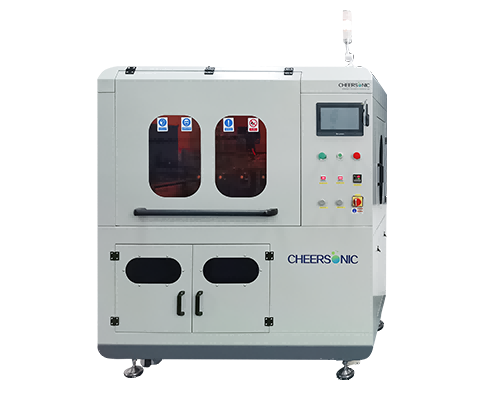
- Ultrasonic spraying is a non vacuum solution. This process atomizes liquid slurry containing coating functional materials into uniform and fine droplets through ultrasonic energy, sprays them onto the substrate, and then undergoes heat treatment and sintering to form a film. Its outstanding advantages are the ability to achieve ultra-thin and uniform coatings, extremely high material utilization rate (>95%), and low overall cost. The challenge lies in the fact that coatings are usually composite materials of multiple materials, and their purity and density need to be improved through optimized formulations and processes. They are mainly suitable for carbon based composite material coatings such as graphene and conductive carbon black.
Summary and Development Trends
Bipolar plate coating is an interdisciplinary field of materials science, surface engineering, and electrochemistry. The current development trend is:
- Low cost: Seeking alternative solutions for precious metal coatings, such as developing high-performance non precious metal composite coatings.
- High performance: Through multi-layer/gradient structure design, it simultaneously meets the requirements of conductivity, corrosion resistance, and adhesion.
- Process optimization: Develop new processes that can balance performance, cost, and complex shape coverage capabilities, similar to ultrasonic spraying.
- Exploration of new materials: New two-dimensional materials such as graphene and MXene have become research hotspots due to their excellent conductivity and barrier properties.
There is no “perfect” coating solution, and the current choice is a trade-off between performance, lifespan, cost, and process complexity. But there is no doubt that advanced coating technology is a key factor in promoting the successful commercialization of metal bipolar plates and even the entire hydrogen fuel cell industry.
About Cheersonic
Cheersonic is the leading developer and manufacturer of ultrasonic coating systems for applying precise, thin film coatings to protect, strengthen or smooth surfaces on parts and components for the microelectronics/electronics, alternative energy, medical and industrial markets, including specialized glass applications in construction and automotive.
Our coating solutions are environmentally-friendly, efficient and highly reliable, and enable dramatic reductions in overspray, savings in raw material, water and energy usage and provide improved process repeatability, transfer efficiency, high uniformity and reduced emissions.
Chinese Website: Cheersonic Provides Professional Coating Solutions
