
Preparation Process of Black Alumina Ceramics
Preparation Process of Black Alumina Ceramics – Ultrasonic Spray Pyrolysis Technology – Cheersonic
In recent years, with the continuous improvement of performance and expansion of production of chip and thin-film electronic components such as solar cells, light-emitting diodes, semiconductors, and liquid crystal displays, the market’s demand for high-precision and high-performance vacuum suction cups has become increasingly urgent. As a key functional fixture in electronic manufacturing, vacuum suction cups are connected to vacuum equipment through connecting tubes. After coming into contact with the object to be processed (such as silicon wafers, glass substrates, flexible films, etc.), the vacuum system is activated to create negative pressure inside the suction cup. The workpiece is firmly attached to the surface of the suction cup using atmospheric pressure, thereby completing precision machining, testing, or handling processes. After the processing is completed, the vacuum equipment stops working and slowly inflates to smoothly detach the workpiece, achieving efficient and non-destructive clamping and release.
Traditional vacuum suction cups are often made of metal materials such as aluminum alloy and stainless steel, and adsorption through holes are formed by mechanical drilling. However, the aperture of such suction cups is usually large. When adsorbing thin or flexible materials, uneven pressure distribution around the aperture can easily cause local elastic deformation of the material, which in turn affects the positioning accuracy and product quality of subsequent processes such as printing, photolithography, and bonding. To address this issue, the industry is generally shifting towards using porous ceramic materials with micrometer sized uniform pore structures to prepare vacuum suction cups. In addition, to avoid interference of stray light reflected on the surface of the suction cup during optical processing such as photolithography, such ceramic suction cups also need to have good black color rendering characteristics.
At present, the black porous ceramic vacuum suction cups used by domestic electronic manufacturing enterprises are almost entirely dependent on imports, with high prices and long supply cycles. With the continuous expansion of the domestic electronics industry, the development of a new type of black porous ceramic vacuum suction cup with independent intellectual property rights has significant economic and social significance for breaking foreign technological monopolies, reducing production costs, and improving the security of the industrial chain.

Material System and Coloring Mechanism of Black Porous Alumina Ceramics
Black alumina ceramics are mainly made from high-purity Al ₂ O Ⅲ powder, and are sintered at a certain temperature and atmosphere by introducing transition metal oxides as coloring agents and adding appropriate sintering aids. The color development mechanism mainly depends on the solid-state reaction of the coloring agent during sintering and the formation of spinel structure. The choice of coloring agent not only affects the final color depth of ceramics, but also directly relates to the mechanical properties, pore structure, and pore size distribution of the material.
Among numerous transition metal oxides, Fe ₂ O Ⅲ, CoO, NiO, Cr ₂ O Ⅲ, and MnO ₂ are widely used due to their excellent coloring ability and relatively stable high-temperature behavior. However, these oxides are prone to volatilization at high temperatures, leading to a decrease in coloring efficiency and even compositional deviation. Therefore, in process design, it is common to pre synthesize spinel type compounds (such as CoAl ₂ O ₄, FeCr ₂ O ₄, etc.) to suppress volatilization and improve coloring stability. The formation of spinel phase not only helps to improve the uniformity and depth of color, but also optimizes the sintering behavior and final properties of the material to a certain extent.
Overview of Preparation Process of Black Alumina Ceramics
The common preparation processes for black alumina ceramics can be divided into two categories: one-step sintering method and two-step sintering method. The one-step process is simple, directly mixing Al ₂ O Ⅲ powder, coloring agent, and sintering aid to form and sintering, but its coloring effect and composition uniformity are often limited by high-temperature volatilization. The two-step method first synthesizes black spinel pigment through solid-state reaction, and then mixes it with Al ₂ O Ⅲ and additives to prepare ceramics. Although the process is long and the energy consumption is high, it can significantly improve the coloring stability and color consistency.
Among many preparation methods, the gel casting process has attracted much attention due to its ability to achieve complex shape and high porosity control. This method involves adding organic monomers and crosslinking agents to ceramic slurries, triggering in-situ polymerization under catalytic conditions to solidify and shape the slurries. After drying and gluing, the green body is sintered at high temperature, and organic matter decomposes and escapes to form a porous structure. By adjusting the solid content, organic matter type and content, precise control of porosity within the range of 40% -95% can be achieved, and the pore size distribution is concentrated, especially suitable for high porosity, micrometer level ventilation structures required for vacuum suction cups.
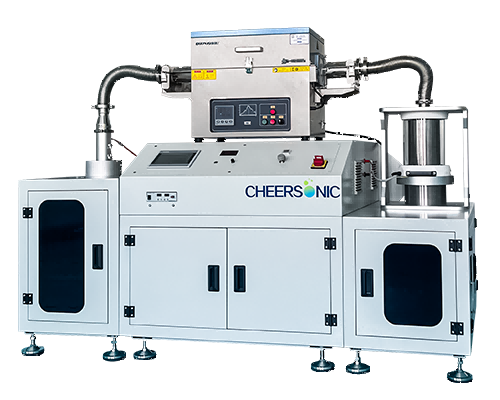
In recent years, ultrasonic spray pyrolysis technology has also been applied to the preparation of black alumina ceramics with Al ₂ O ∨ powder as the precursor. This process forms micrometer sized droplets from a solution containing aluminum source and colored metal ions through ultrasonic atomization. After high-temperature pyrolysis reaction, a composite powder with uniform composition and narrow particle size distribution is directly obtained, which has good sintering activity and color consistency, providing a new approach for the preparation of high-quality porous ceramics.
The synergistic effect of sintering additives and coloring agents on performance
In the preparation of black porous alumina ceramics, the addition of sintering aids helps to lower the sintering temperature, suppress abnormal grain growth, and promote the formation of spinel phase. Common additives include SiO ₂, MgO, CaO, etc. They can promote the densification process by forming liquid or solid solutions, while adjusting the pore structure and mechanical strength.
Colorants such as MnO ₂ and Fe ₂ O3 not only have coloring functions, but also have melting aids. The research shows that in the gel casting process, when the sintering temperature is controlled at about 1250 ℃, a proper proportion of MnO ₂/Fe ₂ O ³ composite addition can produce liquid phase at low temperature, promote mass transfer and spinelization, and make the ceramics appear dark black. As the content of coloring agents increases, the color of ceramics deepens, but excessive addition may actually lead to an increase in porosity – because MnO ₂ decomposes at high temperatures to produce gas, which acts like foaming and increases the pores to a certain extent.
Therefore, in practical applications, it is necessary to consider the compatibility of colorants and sintering aids as a whole. By adjusting the ratio of Al ₂ O ³ matrix and coloring system, the synergistic optimization of porosity, pore size distribution, and mechanical strength can be achieved while ensuring color performance.
Performance advantages and application prospects of porous ceramic vacuum suction cups
Compared with traditional metal suction cups, black porous alumina ceramic vacuum suction cups have a series of significant advantages: their uniformly distributed micron sized pores can provide flexible and stable adsorption force, avoiding excessive local stress that may cause deformation or damage to the thin film material; Black body coloring effectively eliminates stray light reflection and meets the requirements of optical sensitive processes; The excellent wear resistance and corrosion resistance also extend the service life of the suction cup in industrial environments. In addition, porous ceramic suction cups usually have excellent flatness and dimensional stability. One suction cup can adapt to the clamping of various specifications of workpieces, greatly improving equipment utilization and production flexibility.
At present, there is still a gap in the preparation technology of large-sized and high-performance black porous ceramic suction cups among domestic enterprises, especially in key process links such as precise control of pore structure, large-area blank forming, and sintering deformation control, which urgently need to be breakthrough. In the future, further research should be carried out on advanced powder preparation and molding technologies based on gel casting, ultrasonic spray pyrolysis, etc., optimize the coloring sintering integration process, and promote the full autonomy of domestic black alumina ceramic vacuum sucker from materials, processes to equipment.
In summary, the development of high-performance black porous alumina ceramic vacuum suction cups not only meets the current demand for high-precision clamping technology in the electronic manufacturing industry, but also has important driving significance for promoting the progress of related materials and process technologies. By continuously optimizing the material system and preparation route, it is expected to achieve domestic substitution of such key components in the near future, providing important support for the high-quality development of China’s electronic components industry.
About Cheersonic
Cheersonic is the leading developer and manufacturer of ultrasonic coating systems for applying precise, thin film coatings to protect, strengthen or smooth surfaces on parts and components for the microelectronics/electronics, alternative energy, medical and industrial markets, including specialized glass applications in construction and automotive.
Our coating solutions are environmentally-friendly, efficient and highly reliable, and enable dramatic reductions in overspray, savings in raw material, water and energy usage and provide improved process repeatability, transfer efficiency, high uniformity and reduced emissions.
Chinese Website: Cheersonic Provides Professional Coating Solutions
