
Low Temperature Sintering Alumina Ceramic Technology
Low Temperature Sintering Alumina Ceramic Technology – Ultrasonic Spray Pyrolysis – Cheersonic
In recent years, with the increasing demand for high-performance structural ceramics in industries such as electronics, aviation, energy, and chemical engineering, alumina ceramics have become one of the most widely used structural ceramics due to their high strength, high hardness, excellent high temperature resistance, corrosion resistance, and chemical stability. In addition, they have a wide range of raw material sources and low costs. The main crystal phase α – Al ₂ O ∝ endows the material with stable physicochemical properties, making it suitable for manufacturing various key components such as cutting tools, wear-resistant parts, electronic substrates, and biomedical implants. However, alumina ceramics also face a significant challenge: the melting point of α – Al ₂ O3 is as high as 2050 ℃, which typically requires sintering temperatures above 1600 ℃. This not only results in high energy consumption and process costs, but also imposes strict requirements on sintering equipment, limiting the preparation of certain complex shaped or large-sized components. Therefore, developing efficient and low-cost low-temperature sintering technology for alumina ceramics has become an important research direction in the field of materials.

To reduce the sintering temperature of alumina ceramics, the main technological paths currently include improving the sintering activity of raw material powders, adopting special sintering processes, and introducing sintering aids. Firstly, improving the fineness and surface activity of alumina powder is the fundamental means to promote sintering. The smaller the particle size and the larger the specific surface area of the powder, the higher the surface energy, the stronger the diffusion driving force, and the sintering temperature can be effectively reduced. For example, the preparation of alumina ceramic powder by ultrasonic spray pyrolysis can achieve efficient atomization and pyrolysis of precursor solution, and obtain submicron or nanometer α – Al ₂ O ∨ powder with uniform composition, narrow particle size distribution and high sintering activity, providing a high-quality raw material basis for low-temperature sintering.
Secondly, special sintering processes such as hot pressing sintering (HP), hot isostatic pressing (HIP), microwave sintering, and discharge plasma sintering (SPS) can enhance diffusion and densification kinetics through external field assistance (pressure, electric field, microwave, etc.), and significantly reduce sintering temperature. However, these methods usually have complex equipment, high energy consumption, and are difficult to apply to the large-scale preparation of complex shaped products.
Among various methods, the addition of sintering aids has become the most widely researched and industrialized low-temperature sintering technology due to its simple process, low cost, and significant effect. This method does not require complex equipment or high cost pretreatment of raw materials. By reasonably combining the types and contents of additives, low-temperature densification can be achieved, and the microstructure can be controlled to some extent, improving material properties.
The mechanism of action of sintering aids is mainly based on two aspects: firstly, introducing lattice defects through doping, promoting ion diffusion, and reducing diffusion activation energy; The second is to form a liquid phase, which promotes particle rearrangement through the capillary force of the liquid phase, and accelerates material migration through the dissolution precipitation mechanism. Specifically, based on their chemical composition and structural differences, adjuvants can be classified into the following categories: types that form solid solutions with Al ₂ O3 (such as TiO ₂ MgO); Additives that can form a low eutectic liquid phase system with alumina (such as SiO ₂, calcium magnesium silicate); Compounds that react with the matrix to form new phases (such as CaO · 6Al ₂ O3); And substances that introduce low melting point glass phases (such as borates, phosphates).
In practical applications, in order to balance sintering temperature and comprehensive material properties, most studies use composite additive systems to achieve better sintering promotion effects by utilizing the synergistic effects between each component. The selection principle includes: no inhibitory reaction occurs between additives; Different additives complement each other in function, reducing sintering temperature while optimizing microstructure and electromechanical properties. Common composite systems include CaO-MgO SiO ₂ (CMS), MnO ₂ – TiO ₂ – MgO, La ₂ O ∝ – MgO, Y ₂ O ∝ – SiO ₂, etc. Among them, MgO has been widely used as a sintering aid for alumina, but its high temperature volatility may lead to abnormal grain growth. In recent years, research has found that rare earth oxides (such as La ₂ O3, Y ₂ O3) can effectively inhibit grain boundary migration and refine grains even in extremely small amounts. Therefore, MgO/rare earth composite additives have become a research hotspot.
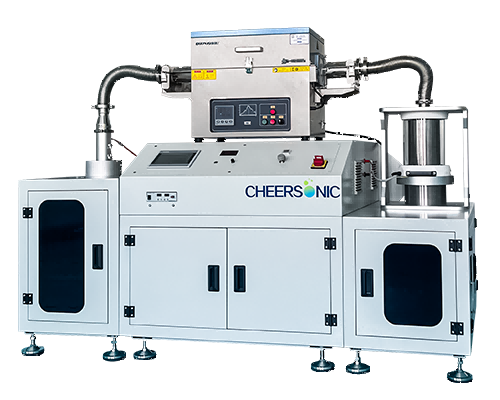
In addition to traditional solid phase mixing and ball milling, modern powder preparation technologies such as ultrasonic spray pyrolysis are also used to prepare doped Al ₂ O ∨ composite powders with more uniform composition and better dispersion. This method atomizes the metal salt precursor solution into micrometer sized droplets through ultrasonic atomization, and then undergoes high-temperature pyrolysis reaction to directly obtain ceramic powder with uniform composition and concentrated particle size distribution, greatly improving the consistency of sintering activity and doping effect, helping to further reduce sintering temperature and improve material reliability.
At present, significant progress has been made in low-temperature sintering of alumina ceramics using sintering aids, which can achieve dense sintering below 1500 ℃ while maintaining good mechanical strength and functional properties. However, there are still several challenges in this field: the selection and formulation of additives rely heavily on experimental experience and lack systematic thermodynamic and kinetic theoretical guidance; The interaction between additives in a multi-component system and their impact mechanism on final performance are not yet clear; Further research is needed to investigate the effects of low-temperature sintering on the long-term thermal stability and fatigue resistance of materials. Especially for microcrystalline or transparent alumina ceramics, balancing low-temperature sintering with optical/mechanical properties remains a challenge.
Future research should focus on constructing theoretical models for sintering additive design, combining multivariate phase diagram calculations and sintering kinetics simulations, to promote the shift of additive screening from empirical guidance to theoretical prediction. At the same time, it is necessary to further explore new auxiliary systems, such as low melting point glass forming aids, rare earth transition metal multi-component composite systems, and strengthen the combination with advanced powder preparation processes such as ultrasonic spray pyrolysis, so as to achieve the full process control from powder to sinter. In addition, the combination of low temperature sintering technology and near net shape forming technology (such as gel casting, additive manufacturing, etc.) will also expand the application prospects of alumina ceramics in precision structural functional integration components.
In summary, achieving low-temperature sintering of alumina ceramics through sintering aids is an economical, effective, and suitable technological path for large-scale production. With the continuous development of multi-component additive design, advanced powder synthesis, and sintering theory, low-temperature sintered alumina ceramics are expected to replace traditional high-temperature sintered materials in more high-end fields, becoming one of the key directions to promote the energy-saving, consumption reducing, and high-performance development of the structural ceramic industry.
About Cheersonic
Cheersonic is the leading developer and manufacturer of ultrasonic coating systems for applying precise, thin film coatings to protect, strengthen or smooth surfaces on parts and components for the microelectronics/electronics, alternative energy, medical and industrial markets, including specialized glass applications in construction and automotive.
Our coating solutions are environmentally-friendly, efficient and highly reliable, and enable dramatic reductions in overspray, savings in raw material, water and energy usage and provide improved process repeatability, transfer efficiency, high uniformity and reduced emissions.
Chinese Website: Cheersonic Provides Professional Coating Solutions