
Introduction to Hydrogen Production by Electrolysis of Water
Hydrogen energy, with its high efficiency and environmental characteristics, is regarded as a key support for the future transformation of the energy system.
The way to produce hydrogen gas
Currently, the vast majority of hydrogen production worldwide (about 96%) still relies on fossil fuels. Although this type of hydrogen production method has short-term cost-effectiveness, it is accompanied by significant carbon dioxide emissions, which is not conducive to sustainable development. The application of carbon capture technology can alleviate emission problems to a certain extent, but the fundamental solution lies in developing low-carbon or even zero carbon hydrogen production processes. The water electrolysis hydrogen production technology uses electricity to directly decompose water into hydrogen and oxygen, and its production process itself is close to zero emissions. Combining this technology with renewable energy generation can truly achieve zero carbon throughout the hydrogen production process, producing completely clean hydrogen gas. Meanwhile, hydrogen itself can serve as an efficient energy storage carrier, effectively smoothing out the volatility of renewable energy generation and promoting the large-scale application of wind power, photovoltaics, and other technologies. Therefore, promoting the development of hydrogen production technology through water electrolysis has important strategic significance for optimizing China’s energy structure and achieving the “dual carbon” goal.

Overview of Hydrogen Production Technology through Water Electrolysis
It is predicted that the global demand for hydrogen energy will significantly increase in the coming decades, with the proportion of hydrogen produced through water electrolysis expected to rise from a low level to a dominant position. There are currently four mainstream water electrolysis technology routes: alkaline electrolysis, proton exchange membrane electrolysis, anion exchange membrane electrolysis, and solid oxide electrolysis.
Alkaline electrolysis technology
Alkaline electrolysis is currently the most commercialized and widely used technological route. It uses a high concentration alkaline solution as the electrolyte, with a medium working current density and moderate unit energy consumption. However, this technology typically relies on porous physical membranes (such as specific polymers or ceramic materials) to separate gases, which presents challenges such as slow dynamic response, strong electrolyte corrosiveness, complex system pressure and liquid level control, and risk of gas interpenetration.
Anion exchange membrane electrolysis technology
To address some of the bottlenecks in alkaline electrolysis, research has proposed using anion exchange membranes with good density, low resistance, and relatively low cost to replace traditional physical membranes. This technology not only effectively solves the problem of gas interpenetration, but also has the potential to reduce electrolyte concentration and increase working current density. However, due to its relatively late start in research and development, its technological maturity still needs to be improved, especially the long-term stability of the key component anion exchange membrane still needs to be broken through to meet the needs of large-scale applications.
Proton exchange membrane electrolysis technology
Unlike alkaline technology, proton exchange membrane electrolysis uses a perfluorosulfonic acid solid electrolyte membrane with excellent chemical stability, high proton conductivity, and outstanding gas barrier properties. This membrane simultaneously serves to isolate electrode gases and transfer protons. Therefore, this technology can directly use pure water electrolysis, avoiding the blockage caused by the formation of precipitates due to carbon dioxide reaction in alkaline electrolytes, as well as the environmental pollution risk caused by strong alkaline liquid leakage. In addition, its electrolytic cell adopts an extremely compact zero spacing design, significantly reducing internal resistance, resulting in a much higher working current density than alkaline technology, and relatively lower unit energy consumption. Thanks to the excellent gas barrier performance of solid electrolyte membranes and pure water systems, the hydrogen produced has high purity and high pressure, greatly reducing the energy consumption for subsequent purification and compression. Of particular importance is that this technology has faster dynamic response speed and a wider operating load range, making it highly adaptable to volatile renewable energy power systems.
Solid oxide electrolysis technology
Solid oxide electrolysis has significant differences in device structure and operating conditions compared to the first three technologies. It adopts an all solid state electrolytic cell design, using porous metal ceramic cathodes and specific non precious metal oxide anodes, with commonly used electrolytes being specific types of oxygen ions or proton conductors. Its notable feature is working in a high-temperature environment (usually exceeding 600 degrees Celsius), which is beneficial for improving reaction efficiency. However, high temperatures pose severe challenges to the chemical stability, thermomechanical stability, and system sealing of materials, limiting their current application and promotion.
Future prospects and technological adaptability
To meet the demand for deep coupling with renewable energy in the future, hydrogen production technology needs to have the ability to respond quickly and flexibly to adapt to the intermittency and volatility of renewable energy. In this dimension, proton exchange membrane electrolysis technology with fast response speed exhibits unique advantages. Its core research direction focuses on reducing the amount of key materials (such as electrode catalysts), improving electrolyte membrane performance, enhancing material stability, and extending system life. With continuous breakthroughs in related materials and processes, this technology is expected to play a core driving role in balancing the supply and demand of renewable energy and developing the green hydrogen energy industry.
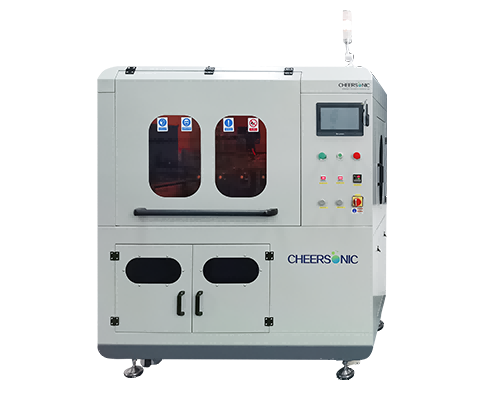
Cheersonic’s fuel cell catalyst coating system can prepare highly uniform, repeatable, and durable coatings, making it highly adaptable to such difficult application scenarios. From the research and development stage to the mass production stage, its anti clogging technology can accurately control the coating properties, significantly reduce material consumption, and lower maintenance costs and downtime.
In fuel cells and electrolysis processes, the Cheersonic ultrasonic spraying system can apply highly durable and uniform carbon based catalyst ink coatings to proton exchange membrane (PEM) electrolyzers such as perfluorosulfonic acid resin membranes (Nafion) without causing membrane deformation. A uniform catalyst coating can be deposited on the surfaces of proton exchange membrane fuel cells, gas diffusion layers (GDLs), electrodes, various electrolyte membranes, and solid oxide fuel cells. The suspension used includes carbon black ink, polytetrafluoroethylene (PTFE) binder, ceramic slurry, platinum, and other precious metals.
In addition, ultrasonic spraying technology can also be used to spray metal oxide suspensions containing platinum, nickel, iridium, ruthenium based and other metal alloys, in order to manufacture proton exchange membrane fuel cells, polymer electrolyte membrane (PEM) electrolyzers, direct methanol fuel cells (DMFCs) and solid oxide fuel cells (SOFCs), thereby achieving maximum load and high battery efficiency. Many large fuel cell manufacturers around the world are using ultrasonic nozzles to spray a uniform layer of catalyst ink film. The catalyst solution will not cause blockage of the ultrasonic nozzle, thus forming a uniform and homogeneous fuel cell catalyst coating, and precise control of droplet size can be achieved within the flow range from ultra-low flow to production scale. In addition, the Cheersonic ultrasonic nozzle is highly suitable for spraying polymer solutions such as polytetrafluoroethylene onto the gas diffusion layer to enhance the hydrophilic or hydrophobic properties during the electrolysis process.
About Cheersonic
Cheersonic is the leading developer and manufacturer of ultrasonic coating systems for applying precise, thin film coatings to protect, strengthen or smooth surfaces on parts and components for the microelectronics/electronics, alternative energy, medical and industrial markets, including specialized glass applications in construction and automotive.
Our coating solutions are environmentally-friendly, efficient and highly reliable, and enable dramatic reductions in overspray, savings in raw material, water and energy usage and provide improved process repeatability, transfer efficiency, high uniformity and reduced emissions.
Chinese Website: Cheersonic Provides Professional Coating Solutions
