
Ultrasonic Spraying of Fuel Cell Sensors
In the era of pursuing efficient and clean energy solutions, fuel cell sensors serve as the critical “nerve endings” for system health monitoring and control, and their performance and reliability are crucial. The manufacturing of these precision sensors, especially their core catalyst layers, electrodes, and functional coatings, places stringent demands on process quality: uniformity, material utilization, and precise control are essential. Ultrasonic spraying technology, with its unique advantages, is becoming a highly sought-after advanced manufacturing tool in this field.
Core Advantages of Ultrasonic Spraying: Precision and Efficiency
1. Superior Uniformity and Consistency: The core of ultrasonic spraying lies in the use of high-frequency vibrations (typically in the 20kHz to 120kHz range) to “break” liquids into extremely fine, uniformly sized atomized droplets. This fine atomization capability, combined with a precise motion control platform, enables highly controlled deposition of slurries or solutions onto substrates. This uniformity is crucial for the catalyst layers (often containing expensive platinum group metals) and polymer electrolyte membrane coatings of fuel cell sensors. It directly determines the distribution of active sites, the consistency of reaction rates, and the stability and reliability of the final signal output.
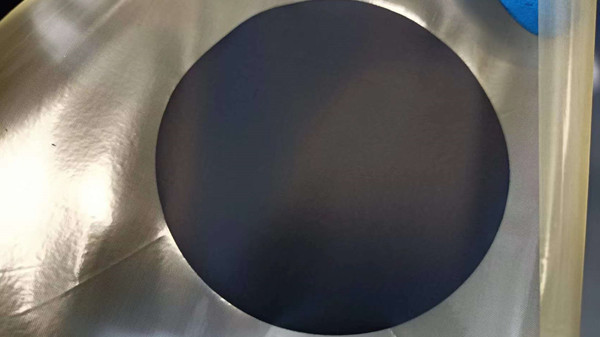
2. Extremely high material utilization and cost-effectiveness: Traditional spraying methods (such as pneumatic spraying) are often associated with severe overspray, resulting in the waste of expensive materials (such as platinum catalyst ink and Nafion solution) because they fail to deposit in the target area. Ultrasonic spraying produces droplets with lower kinetic energy and better directionality, significantly reducing overspray and rebound, and achieving material utilization rates exceeding 90%. This is crucial for reducing the manufacturing costs of sensors using precious metals.
3. Excellent low-flow and thin-film forming capabilities: Ultrasonic nozzles achieve fine atomization without relying on high air pressure, enabling stable operation at extremely low flow rates (down to microliters per minute). This feature makes them ideal for spraying ultra-thin (down to submicron) and ultra-low-load coatings. This precise control of film thickness is irreplaceable when depositing ultra-thin catalyst layers, microporous layers, or functionalized coatings for fuel cell sensors.
4. Gentle handling, protecting sensitive materials: The ultrasonic atomization process primarily applies high-frequency vibration energy to the liquid, rather than the intense shear forces of high-pressure gas. This “mild” property is particularly important for processing slurries/solutions containing sensitive biomolecules (such as enzymes in certain biofuel cell sensors), easily agglomerated nanoparticles (such as catalysts on carbon supports), or high-molecular-weight polymers (such as ionomer solutions), effectively maintaining the material’s activity and structural integrity.
5. Precisely Controllable Process Parameters: Key parameters such as spray rate, droplet size, and atomization pattern can be independently and precisely controlled by adjusting the ultrasonic frequency, amplitude, and liquid feed rate. This high degree of controllability provides a powerful guarantee for optimizing coating properties (such as porosity, conductivity, and ionic conductivity) and achieving complex gradient coatings or multilayer structures.
6. Environmentally Friendly: Because atomization relies primarily on ultrasonic energy, the use of compressed air as an atomization medium can often be reduced or eliminated, reducing compressed air consumption and potential oil and water contamination risks. Furthermore, high material utilization means less waste and volatile organic compounds (VOCs), further aligning with green manufacturing principles.
Key Applications in Fuel Cell Sensor Manufacturing
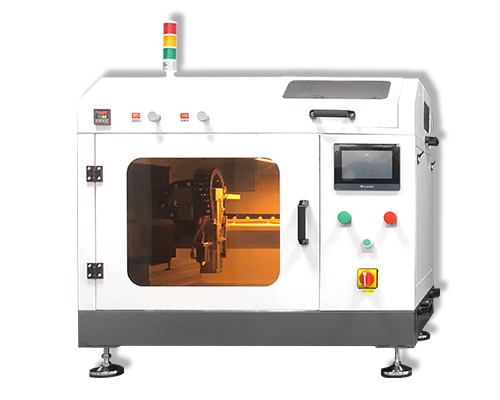
Ultrasonic spray coating systems play a key role in several core steps of fuel cell sensor manufacturing:
1. Catalyst Coating Electrode Preparation: This is its most core application. An ink consisting of a precious metal catalyst (Pt/C, Pt alloy, etc.) and an ionomer (such as Nafion) is evenly and ultra-thinly sprayed onto a gas diffusion layer or proton exchange membrane, forming the sensor’s core sensitive electrode and ensuring high catalytic activity and reaction consistency.
2. Proton Exchange Membrane Functionalization Coating: An ultra-thin ionomer or catalyst layer is directly sprayed onto the proton exchange membrane surface to optimize membrane-electrode interface contact, enhance proton conduction efficiency, or construct specialized confined sensing structures.
3. Gas Diffusion Layer Microporous Coating: A suspension of carbon powder and a hydrophobic agent (such as PTFE) is evenly sprayed onto a gas diffusion substrate to form a microporous layer that controls gas and water transport. This is crucial for maintaining a suitable reaction environment within the sensor. 4. Protective and Functional Modification Layers: Application of anti-toxic coatings, selective permeable membranes, or bioactive layers can impart specialized functions to sensors, such as immunity to impurities, selective target recognition, or biosensing.
Future Outlook
As fuel cell technology advances toward higher efficiency, longer lifespans, and a wider range of applications, the requirements for the accuracy, response speed, stability, and miniaturization of its integrated sensors will continue to rise. Ultrasonic spray coating, with its significant advantages in ultra-thin, uniform coating preparation, high-value material conservation, sensitive material compatibility, and process controllability, has become an indispensable advanced manufacturing technology for the next generation of high-performance, high-reliability fuel cell sensors. It not only enhances the performance of existing products but also serves as a core engine driving innovation in the design and manufacturing of new sensors, providing a solid manufacturing foundation for the intelligentization and widespread adoption of fuel cell technology.
By embracing the precision and efficiency offered by ultrasonic spray coating, fuel cell sensor manufacturing is moving toward a more controllable, economical, and greener future, continuously providing powerful sensing capabilities for the stable operation and intelligent management of clean energy systems.
About Cheersonic
Cheersonic is the leading developer and manufacturer of ultrasonic coating systems for applying precise, thin film coatings to protect, strengthen or smooth surfaces on parts and components for the microelectronics/electronics, alternative energy, medical and industrial markets, including specialized glass applications in construction and automotive.
Our coating solutions are environmentally-friendly, efficient and highly reliable, and enable dramatic reductions in overspray, savings in raw material, water and energy usage and provide improved process repeatability, transfer efficiency, high uniformity and reduced emissions.
Chinese Website: Cheersonic Provides Professional Coating Solutions