
Uniform Porous Catalyst Layer
Uniform Porous Catalyst Layer: Guaranteeing Fuel Cell Performance and Lifespan
The performance and lifespan of a fuel cell fundamentally depend on the quality of its catalyst layer. An ideal catalyst layer must possess uniform thickness, good dispersibility, and be specifically designed to promote efficient mass transport. However, in traditional catalyst layer preparation processes, coatings often struggle to simultaneously achieve uniformity and structural controllability, easily leading to problems such as uneven thickness, particle agglomeration, and dense microstructures. This, in turn, causes fuel cell failures during operation, including cracking, delamination, and severe mass transfer polarization. To overcome this bottleneck, advanced ultrasonic spraying technology offers a promising solution.

Ultrasonic spraying technology utilizes the mechanical vibrations generated by high-frequency sound waves to atomize the catalyst slurry into uniform droplets at the micron or even submicron level. This process does not rely on high pressure or high-speed airflow, resulting in a smoother and more controllable droplet trajectory. It allows for stable deposition on the surface of proton exchange membranes or gas diffusion layers without disrupting the original dispersion of the catalyst particles. Compared to traditional pneumatic spraying or scraping processes, the microstructure of coatings formed by ultrasonic spraying can be precisely controlled by adjusting multiple parameters such as ultrasonic frequency, slurry flow rate, carrier gas pressure, and substrate temperature. This refined process control allows engineers to customize catalyst layer structures with specific porosity, surface roughness, and hydrophilic/hydrophobic properties for different catalyst materials (such as platinum-carbon, platinum alloys, and metal-free catalysts) and different flow field designs.
Most importantly, ultrasonic spraying technology can easily construct porous microstructures. Introducing appropriate pores into the catalyst layer not only provides rapid diffusion channels for reactant gases (hydrogen and oxygen) but also effectively drains water generated on the cathode side, preventing flooding. Simultaneously, this porous structure significantly reduces the risk of cracking within the coating due to drying shrinkage or thermal stress accumulation. In dense coatings prepared by traditional processes, the differences in thermal expansion coefficients between layers and the capillary forces during solvent evaporation easily lead to through-cracks, causing the catalyst layer to peel off from the proton exchange membrane. The porous network formed by ultrasonic spraying, with its numerous tiny stress-relieving points, effectively buffers shrinkage stress during the drying process, allowing the coating to maintain structural integrity even at a relatively thick thickness. Furthermore, the excellent dispersibility and uniform pore distribution avoid localized hotspots or uneven current density distribution, thus slowing down aging processes such as catalyst agglomeration, dissolution, or carbon support corrosion, ultimately significantly extending the stable operating life of the fuel cell.
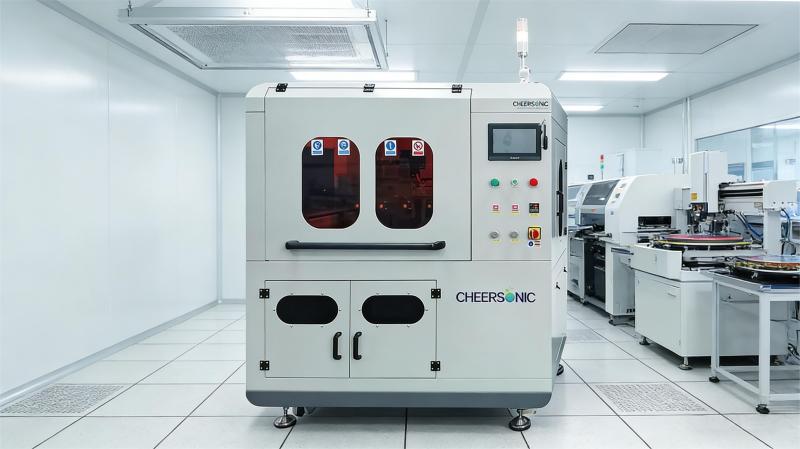
From an engineering application perspective, ultrasonic spraying technology also offers advantages such as high material utilization, continuous production capability, and ease of achieving large-area uniform coating. In the process of fuel cells moving from laboratory research to large-scale manufacturing, coating technology that can simultaneously meet performance indicators and cost control requirements is crucial. By precisely controlling the microstructure and mass transport characteristics of the catalyst layer, ultrasonic spraying provides a reliable technical path for developing next-generation fuel cells with high power density, long lifespan, and low precious metal usage. In summary, the uniformity, dispersion, and porous structure design of the catalyst layer are key factors determining the performance and lifespan of fuel cells. Ultrasonic spraying, with its precise control over coating morphology, especially its unique advantages in constructing crack-resistant and delamination-resistant porous microstructures, is becoming an indispensable core process in the manufacturing of high-performance fuel cells.
About Cheersonic
Cheersonic is the leading developer and manufacturer of ultrasonic coating systems for applying precise, thin film coatings to protect, strengthen or smooth surfaces on parts and components for the microelectronics/electronics, alternative energy, medical and industrial markets, including specialized glass applications in construction and automotive.
Our coating solutions are environmentally-friendly, efficient and highly reliable, and enable dramatic reductions in overspray, savings in raw material, water and energy usage and provide improved process repeatability, transfer efficiency, high uniformity and reduced emissions.
Chinese Website: Cheersonic Provides Professional Coating Solutions