
Ultrasound-Assisted Coating of Drainage Catheter Surfaces
Ultrasound-Assisted Coating of Drainage Catheter Surfaces. Cheersonic ultrasonic catheter coating systems are engineered for precise, repeatable deposition of lubricious, hydrophilic, and functional coatings on catheters, guidewires, and medical tubing.
In today’s rapidly evolving landscape of medical technology, even a seemingly ordinary drainage catheter can see its performance subtly enhanced—reducing patient infection risk, minimizing tissue damage, and accelerating recovery. Traditional drainage catheters, whether used for pleural, abdominal, or other fluid drainage, have surface properties that directly affect their safety and efficacy. Ultrasound-assisted coating technology, with its unique physical mechanisms and exceptional process control, is now enveloping these lifelines in a uniform, robust, and highly functional “invisible armor,” quietly advancing clinical drainage therapy.
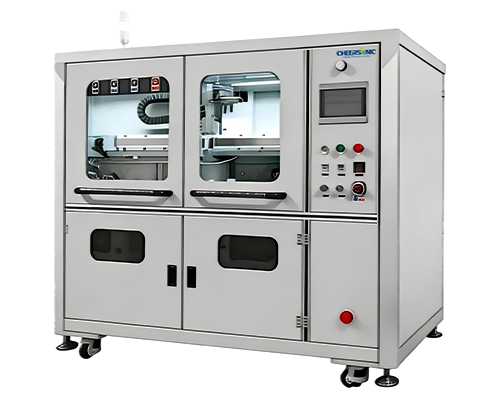
The core role of a drainage catheter is to establish a temporary passage between the internal and external environments, bringing its surface into prolonged contact with human tissue, blood, or bodily fluids. Conventional coating techniques—such as dip‑coating, spray‑coating, or brush‑coating—often face challenges including uneven film thickness, inadequate adhesion, non‑uniform distribution of functional components, and difficulty in achieving complete coverage over complex geometries. Non‑uniform coatings may fail prematurely at thinner spots, while thicker areas can alter catheter flexibility or even peel off. Poor adhesion can lead to wear during insertion or indwelling, not only losing functionality but also posing risks from detached debris. These limitations have spurred innovation in coating technologies.
Ultrasound‑assisted coating is rooted in the precise physical effects generated by high‑frequency ultrasonic vibration. When ultrasound at a specific frequency is applied to a coating solution, it induces intense cavitation in the liquid—the rapid formation, growth, and violent implosion of microscopic bubbles. This process creates localized extremes of temperature and pressure, along with powerful micro‑jets. In coating applications, this energy is precisely directed toward the catheter substrate surface, achieving multiple enhancements: cavitation micro‑jets deeply clean the surface by removing microscopic contaminants, significantly improving the physical interlocking between the coating and the substrate; simultaneously, ultrasonic energy highly disperses and activates molecules or particles in the coating solution, promoting both physical wetting and possible chemical bonding with the substrate, thus yielding a dense coating with excellent adhesion. The entire process is typically realized via dip‑ or spray‑coating combined with ultrasonic atomization, enabling nanoscale control over coating thickness and uniformity.
Applying ultrasound‑assisted coating to drainage catheters offers benefits across multiple dimensions. First is outstanding uniformity and consistency. Ultrasonic energy ensures that the solution spreads evenly over the catheter surface, including complex side‑hole structures, producing a continuous, defect‑free film with controllable thickness—this is critical for the uniform release of antimicrobial agents in anti‑infective coatings. Second is unparalleled adhesion and durability. The “activation” of the substrate surface by ultrasonic cavitation enables the coating to withstand friction during insertion, complex mechanical forces in the body, and possible enzymatic degradation, ensuring stable function throughout the intended indwelling period. Third is enhanced and extended functional integration. This technology is well‑suited for loading various functional components, such as antimicrobials (silver ions, antibiotics), anticoagulants (heparin), lubricants (hydrophilic polymers), or tissue‑repair factors. Ultrasonic treatment not only enables uniform dispersion of these components but also allows “programming” of coating architecture by controlling process parameters (e.g., frequency, power, time), thereby tuning properties such as hydrophilicity/hydrophobicity, lubricity, and drug‑release kinetics.
In clinical practice, ultrasound‑assisted coating endows drainage catheters with more precise performance tailoring. For example, long‑term indwelling drains can be given strongly adherent, sustained‑release antimicrobial/antibiofilm coatings via this method, significantly lowering catheter‑associated infection risk. For catheters that require frequent repositioning, ultra‑smooth hydrophilic lubricious coatings can reduce frictional damage to mucosa or tissues, alleviating patient discomfort. When draining bloody fluids, a uniform and stable anticoagulant coating helps maintain patency. Moreover, the technology provides an ideal platform for developing “smart” responsive coatings—for instance, those that release drugs in response to local pH changes in an inflammatory environment.
The adoption of ultrasound‑assisted coating also aligns with the pursuit of green, efficient manufacturing in modern medical device production. The process is typically carried out at room or low temperature, making it suitable for heat‑sensitive bioactive substances; it offers high solution utilization, reducing waste; and with high coating quality and low defect rates, it improves overall production efficiency in the long run.
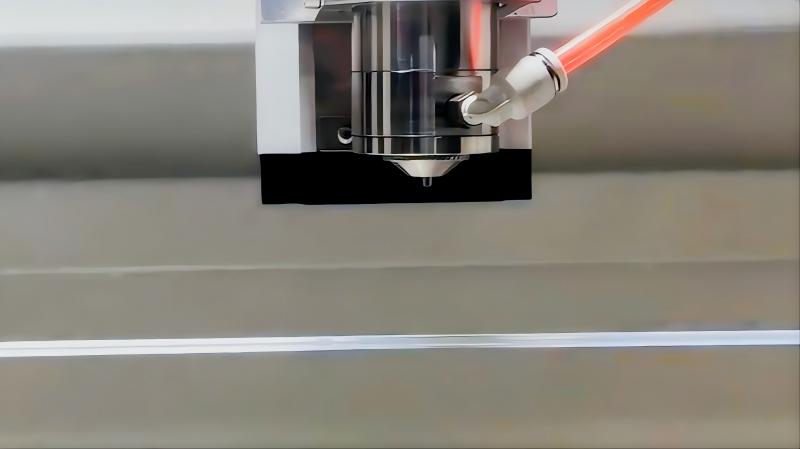
Despite its promising prospects, ultrasound‑assisted coating still faces some challenges. Optimizing process parameters for catheters made of different materials (e.g., silicone, polyurethane, latex), ensuring the stability of complex active ingredients under ultrasonic treatment, and conducting longer‑term large‑scale clinical studies to confirm its advantages are all areas requiring continued exploration. In the future, combined with more sophisticated automation, in‑line monitoring, and integration with novel biomaterials, ultrasound‑assisted coating is expected to achieve a higher degree of personalized customization—”tailoring” optimal catheter interfaces for different clinical scenarios.
From a broader perspective, the empowerment of drainage catheters by ultrasound‑assisted coating exemplifies the convergence of materials science, acoustic engineering, and clinical medicine. It no longer treats the coating as a simple add‑on layer, but rather, through precise physical control, transforms it into an integral, actively functional “smart skin” of the catheter. This invisible armor, woven by ultrasound, though unseen by the patient’s eyes, silently safeguards the safety and comfort boundaries of drainage therapy, representing a significant step toward more precise, reliable, and humanized surface engineering in medical devices. As the technology continues to mature and gain wider adoption, it will undoubtedly bring tangible clinical benefits to more patients, writing an important chapter in the story of minimally invasive treatment.
About Cheersonic
Cheersonic is the leading developer and manufacturer of ultrasonic coating systems for applying precise, thin film coatings to protect, strengthen or smooth surfaces on parts and components for the microelectronics/electronics, alternative energy, medical and industrial markets, including specialized glass applications in construction and automotive.
Our coating solutions are environmentally-friendly, efficient and highly reliable, and enable dramatic reductions in overspray, savings in raw material, water and energy usage and provide improved process repeatability, transfer efficiency, high uniformity and reduced emissions.
Chinese Website: Cheersonic Provides Professional Coating Solutions
