
Ultrasonic Spraying Titanium based Lead Dioxide Anode
Application of Cheersonic Ultrasonic Spraying Titanium based Lead Dioxide Anode in Organic Wastewater Treatment
With the acceleration of industrialization and increasingly stringent environmental standards, the treatment of wastewater containing organic pollutants has become a core challenge in water environment management. Traditional biochemical and physicochemical methods often face bottlenecks such as low efficiency, long cycle time, and susceptibility to secondary pollution when treating organic wastewater with complex components, high toxicity, and difficult degradation. In this context, electrochemical oxidation technology stands out with its advantages of high efficiency, cleanliness, and controllability, and the performance of electrode materials, which are the core of the technology, directly determines the treatment effect. Titanium based lead dioxide anodes are prepared by ultrasonic spraying technology, and have become an ideal choice in the field of organic wastewater treatment due to their excellent electrocatalytic activity, chemical stability, and economy. They are widely used in various wastewater treatment scenarios such as printing and dyeing, industry, daily life, and oil fields.
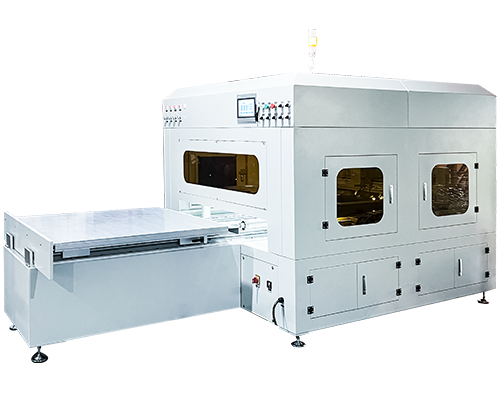
Ultrasonic spraying technology has brought revolutionary breakthroughs in the preparation of coatings for titanium based lead dioxide anodes. This technology utilizes high-frequency vibration to atomize lead dioxide precursor slurry into uniform and fine droplets, which are accurately deposited on the surface of titanium substrate. Compared to traditional coating processes, ultrasonic spraying can form a dense, uniform, strong adhesion, and controllable thickness coating, effectively avoiding defects such as pinholes, cracks, and edge effects, ensuring long-term stable operation of electrodes in high current and strong corrosive environments. At the same time, its material utilization rate is over 90%, significantly reducing raw material loss and providing both economic and quality guarantees for large-scale production.
The core advantage of titanium based lead dioxide anode lies in its unique material properties and electrochemical performance. Titanium matrix has the characteristics of low density, high strength, and strong corrosion resistance, which can provide stable support for coatings; The surface active layer of lead dioxide has a very high oxygen evolution potential, which can effectively suppress side reactions during electrolysis and preferentially generate strong oxidative active species such as hydroxyl radicals (• OH) in situ on the electrode surface. These free radicals have an oxidation potential of up to 2.80V and can rapidly oxidize and decompose various stubborn organic pollutants without selectivity, completely mineralizing them into carbon dioxide and water, achieving deep purification of wastewater.
In specific application fields, titanium based lead dioxide anodes exhibit strong scene adaptation capabilities. The composition of printing and dyeing wastewater is complex, containing a large number of high chromaticity and difficult to degrade dye molecules and additives, making traditional processes difficult to decolorize and degrade. This anode, with its strong oxidation ability, can quickly destroy the chromophore groups of dyes, efficiently remove COD and chromaticity, and achieve stable and reliable treatment effects. Industrial organic wastewater has a wide range of sources, including phenolic, aromatic, and heterocyclic compounds generated by industries such as chemical, pharmaceutical, and papermaking. It is highly toxic and has poor biodegradability. Titanium based lead dioxide anodes can effectively break through the limits of biological treatment and achieve efficient decomposition of recalcitrant organic compounds.
For domestic sewage treatment, this anode can be used as a deep treatment unit to further reduce residual trace organic matter, ammonia nitrogen, and pathogens in the wastewater, improve the effluent quality, and meet the standards for regeneration and reuse. In the treatment of oilfield wastewater, the excellent corrosion resistance and anti pollution ability of electrodes are fully utilized for the characteristics of wastewater with high oil content, high salt content, complex polymers and surfactants. They can effectively degrade petroleum pollutants, achieve standard wastewater reinjection or discharge, and alleviate the shortage of oilfield water resources and environmental pollution pressure.
In summary, ultrasonic spraying of titanium based lead dioxide anodes provides strong technical support for efficient and green treatment of organic wastewater due to its advanced preparation process, excellent electrocatalytic performance, and wide applicability in various scenarios. Under the trend of continuous upgrading of environmental protection requirements, this electrode material will play an increasingly critical role in various wastewater treatment fields such as printing and dyeing, industry, life, and oil fields, relying on its comprehensive advantages in treatment efficiency, operational stability, and full life cycle cost, to help achieve the goals of water environment governance and sustainable utilization of water resources.
About Cheersonic
Cheersonic is the leading developer and manufacturer of ultrasonic coating systems for applying precise, thin film coatings to protect, strengthen or smooth surfaces on parts and components for the microelectronics/electronics, alternative energy, medical and industrial markets, including specialized glass applications in construction and automotive.
Our coating solutions are environmentally-friendly, efficient and highly reliable, and enable dramatic reductions in overspray, savings in raw material, water and energy usage and provide improved process repeatability, transfer efficiency, high uniformity and reduced emissions.