
Ultrasonic Spraying PAA Solution
Ultrasonic Spraying PAA Solution – Ultrasonic Coating – Cheersonic
When using ultrasonic spraying equipment to spray PAA solution, it is necessary to combine the physical and chemical properties of PAA (water solubility, viscosity, molecular weight) with the core advantages of ultrasonic spraying (uniform atomization, fine particles, thin and controllable coating), and achieve high-quality coating through precise control of process parameters. The following provides a detailed explanation from five aspects: the adaptability of PAA solution characteristics, core operating procedures, key parameter settings, common problem solving, and application scenarios:
Key characteristics and spray compatibility of PAA solution
PAA is a water-soluble polymer with a large number of carboxyl groups (- COOH) in its molecular chain. Its solution properties directly affect the ultrasonic spraying effect and require targeted adjustments in advance
- Concentration and viscosity: When the concentration is too high (>20%), the viscosity is high, which can easily lead to poor liquid supply and agglomeration of atomized particles. However, when the concentration is too low, the coating is prone to sagging and insufficient coverage. Our company recommends a concentration of 5% -15% (mass fraction) and a viscosity control of 5-50 cP (25 ℃). It can be diluted with deionized water or adjusted to match the molecular weight
- Solubility and impurities: Partially dissolved PAA particles can clog the atomizing head, affecting the uniformity of atomization. When preparing, stir for 30-60 minutes until completely transparent, and filter with a 0.22-0.45 μ m filter membrane to remove impurities
- PH value: PAA has good stability in acidic environments (pH 2-4), and is prone to cross-linking in alkaline environments. No additional pH adjustment is required (PAA solutions naturally have weak acidity), and direct contact with alkaline substrates should be avoided
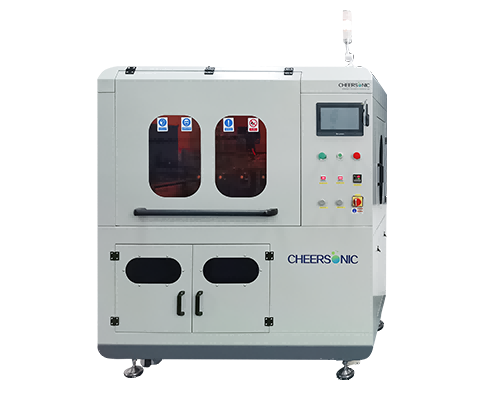
The core operation process of ultrasonic spraying equipment
1. Equipment preprocessing
- Cleaning of atomizer head: Before the first use or solution replacement, rinse the atomizer head with deionized water (sonicate for 5 minutes), and then dehydrate it with ethanol to avoid residual impurities affecting the purity of PAA coating.
- Pipeline inspection: Confirm that the liquid supply pipeline (recommended to use PTFE material, acid and alkali resistant) has no leaks, to avoid air entering and causing atomization and flow interruption.
2. PAA solution preparation and supply
- Weigh PAA powder according to the target concentration (e.g. molecular weight 10000-100000, depending on the coating hardness requirements), slowly add it to deionized water, and stir while adding (speed 300-500 rpm) to prevent clumping.
- After pouring the solution into the supply tank, turn on the stirring function (if the equipment comes with it), maintain slight disturbance (avoid introducing bubbles with vigorous stirring), and ensure uniform concentration.
3. Spray parameter debugging (core steps)
The key parameters of ultrasonic spraying need to match the characteristics of PAA solution. It is recommended to debug them in the following order:
- Ultrasonic frequency and amplitude:
– Frequency: 20-40 kHz is commonly used (the higher the frequency, the finer the atomized particles), and 28-35 kHz is recommended for PAA solution to balance atomization fineness and solution stability (excessive frequency can easily cause PAA molecular chain breakage);
– Amplitude: Set the initial value to 30% -50%, observe the atomization state (the droplets should be in a “white smoke” shape without falling droplets), and if “liquid streaks” appear, increase the amplitude appropriately. - Liquid supply speed:
– Adjust according to the principle of “no liquid accumulation in atomization, no gaps in coating”, usually 0.5-5 mL/min (the higher the concentration, the slower the liquid supply speed), for example, for 10% concentration PAA, it is recommended to use 1-2 mL/min. - Spray distance and movement speed:
– Spray distance: 50-100 mm (too close distance can cause coating accumulation, too far distance can cause fog droplets to disperse);
– Movement speed: 5-15 mm/s (low speed when the substrate size is small, such as 5-8 mm/s for small laboratory samples, and 10-15 mm/s for mass production), to ensure uniform coating thickness (single spray thickness is usually 1-5 μ m). - Drying conditions:
– PAA coating needs to be dried at low temperature (to avoid carboxyl decomposition caused by high temperature). It is recommended to dry with hot air at 60-80 ℃ or air dry at room temperature (humidity<60%) for 30-60 minutes to ensure complete evaporation of moisture.
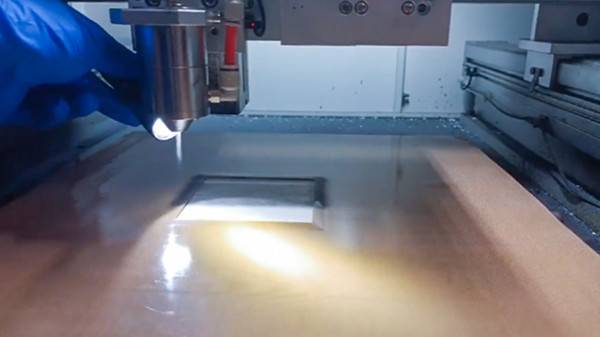
4. Post processing and cleaning
- After spraying, immediately rinse the supply pipeline and atomizing head with deionized water (ultrasonic vibration for 10 minutes), and then rinse 1-2 times with ethanol to prevent PAA residue from solidifying and blocking the channel;
- The coating needs to undergo adhesion testing (such as grid method, GB/T 9286). If the adhesion is insufficient, the substrate (such as metal or glass) can be plasma cleaned in advance to enhance surface hydrophilicity.
Typical application scenarios
Ultrasonic spraying PAA solution is widely used in the following fields due to its thin coating and high uniformity:
1. Metal anti-corrosion coating: The carboxyl groups of PAA can combine with the hydroxyl groups on the metal surface to form a dense protective film (thickness 5-10 μ m), which is used for pre-treatment anti-corrosion of aluminum alloys and magnesium alloys;
2. Membrane material modification: Spray PAA (thickness 1-3 μ m) on the surface of PVDF ultrafiltration membrane, introduce hydrophilic groups, and enhance the membrane’s anti fouling ability;
3. Biomedical coating: Spray low molecular weight PAA (molecular weight 10000-20000) on the surface of medical catheters (such as polyurethane catheters) to reduce the friction coefficient between the catheter and blood and reduce the risk of thrombosis;
4. Insulation layer of electronic devices: Spray ultra-thin PAA coating (thickness 0.5-2 μ m) on the surface of flexible circuit board as a temporary insulation layer, which can be removed by water washing later.
By optimizing the above parameters and controlling the process, ultrasonic spraying equipment can efficiently prepare uniform and dense PAA coatings, meeting the performance requirements in different scenarios. If it is necessary to adjust the process for specific substrates (such as ceramics, polymers), further substrate characteristics can be provided to refine the solution.
About Cheersonic
Cheersonic is the leading developer and manufacturer of ultrasonic coating systems for applying precise, thin film coatings to protect, strengthen or smooth surfaces on parts and components for the microelectronics/electronics, alternative energy, medical and industrial markets, including specialized glass applications in construction and automotive.
Our coating solutions are environmentally-friendly, efficient and highly reliable, and enable dramatic reductions in overspray, savings in raw material, water and energy usage and provide improved process repeatability, transfer efficiency, high uniformity and reduced emissions.
Chinese Website: Cheersonic Provides Professional Coating Solutions