
Ultrasonic Spraying of Resin Materials
Application of Ultrasonic Spray Machine in Spraying Resin Materials with Viscosity of 0-30pps
In the field of modern industrial precision spraying, ultrasonic spraying machines, with their unique atomization principle and precise process control capabilities, have become the preferred equipment for resin material spraying, especially in the viscosity range of 0-30pps, demonstrating irreplaceable advantages. Resin materials with a viscosity range of 0-30pps cover various products from low viscosity to medium low viscosity, and are widely used in high-end manufacturing fields such as electronics, optics, medical, and new energy. Ultrasonic spraying machines, through precise control of the atomization mechanism, perfectly adapt to the flow characteristics of resins in this viscosity range, achieving efficient, uniform, and energy-saving spraying effects, and solving many pain points of traditional spraying processes in this viscosity range.
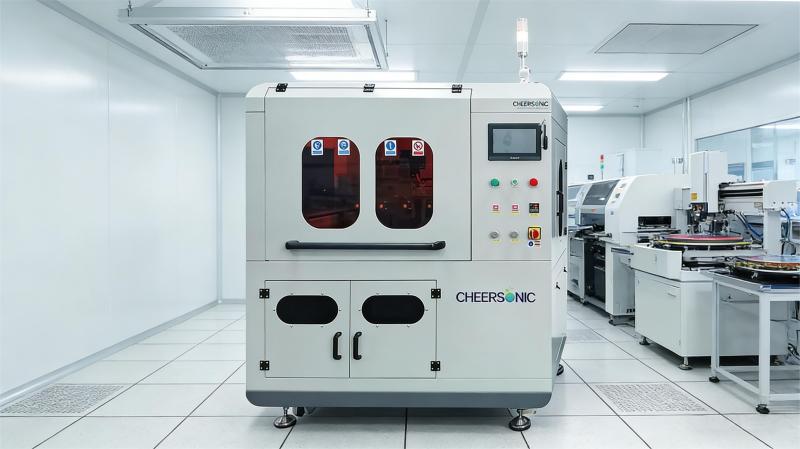
To understand the compatibility of ultrasonic spraying machines with resin materials with a viscosity of 0-30pps, it is necessary to first clarify the core influence of viscosity and the technical principles of ultrasonic spraying. CPS (Centipes) is a commonly used unit to measure the viscosity of liquids. Resin materials with a viscosity range of 0-30 CPS are in the low to medium low viscosity range, and their flow characteristics are between clear water (about 1 CPS) and dilute syrup (about 50 CPS). They have good fluidity and a certain viscosity, and can form a uniform and dense coating on the surface of the substrate, without easily causing problems such as sagging and dripping. The core working principle of ultrasonic spraying machine is to use high-frequency ultrasonic vibration (usually 20kHz to 120kHz), convert electrical energy into mechanical vibration through piezoelectric transducer, and transmit it to the atomizing plate at the top of the nozzle, so that the resin material flowing through the atomizing plate forms an extremely thin liquid film. Under the action of acoustic wave energy, the liquid film overcomes surface tension and is torn into countless uniformly sized micro or even nano droplets, which are then guided by low-pressure airflow to accurately deposit on the surface of the target substrate, completing the spraying process.
Compared with traditional air spraying, spin coating and other processes, the most prominent advantage of ultrasonic spraying machine in processing 0-30pps viscosity resin materials is the dual improvement of atomization uniformity and material utilization rate. Traditional air spraying relies on high-pressure airflow to atomize resin, which can easily lead to uneven droplet size distribution due to unstable airflow, resulting in defects such as uneven coating thickness, orange peel patterns, and pinholes. In addition, high-pressure airflow can cause a large amount of resin waste, with a material utilization rate of only 30% -50%; The atomization process of ultrasonic spraying machine does not require high-pressure airflow, and atomization is achieved only through high-frequency vibration. The droplet size distribution is extremely narrow, with good monodispersity, which can ensure that the coating thickness uniformity is controlled within ± 2%, far superior to the traditional process of ± 10% or more, perfectly adapting to the coating accuracy requirements of 0-30pps resin. At the same time, the mist flow directionality of ultrasonic spraying is excellent, with very few overspray phenomena, and the material utilization rate can reach over 90%. For high cost special resin materials, it can significantly reduce production costs and reduce waste disposal pressure.
There is a wide variety of resin materials within the viscosity range of 0-30pps, including epoxy resin, polyurethane resin, acrylic resin, polyimide resin, etc., which are widely used in various high-end manufacturing scenarios. The flexible adaptability of ultrasonic spraying machines enables them to meet the personalized spraying needs of different scenarios. In the field of electronics, low viscosity (0-10 CPS) epoxy resin and polyimide resin are commonly used for insulation coating spraying of integrated circuits and flexible circuit boards. Ultrasonic spraying machines can accurately adjust the vibration frequency and liquid flow rate to evenly spray the resin on the surface of precision electronic components, forming a dense and pinhole free insulation layer with a thickness controlled at the nanometer to micrometer level. This ensures insulation performance without affecting the heat dissipation and precision structure of electronic components, avoiding the impact damage of traditional spraying on fragile circuits.
In the field of optics, acrylic resin and silicone resin with low to medium viscosity (10-30pps) are commonly used for anti reflection and anti fingerprint coating spraying of optical lenses and display panels. The small droplets generated by ultrasonic spraying machines can evenly cover the surface of optical substrates, forming ultra-thin and transparent coatings that can reduce visible light reflectivity to below 1%, improve light transmittance and visual effects. At the same time, the coating has strong adhesion and is not easy to peel off or scratch, meeting the strict requirements of optical products. In the medical field, biocompatible resins (such as medical polyurethane resins) are often used for antibacterial coating spraying on the surface of medical devices. The viscosity of 0-30pps allows them to evenly adhere to the surface of the device without causing the coating to become thick due to high viscosity. The mild fogging characteristics of ultrasonic spraying can prevent the resin components from being damaged, ensure the biocompatibility and antibacterial effect of the coating, and ensure the safety of medical device use.
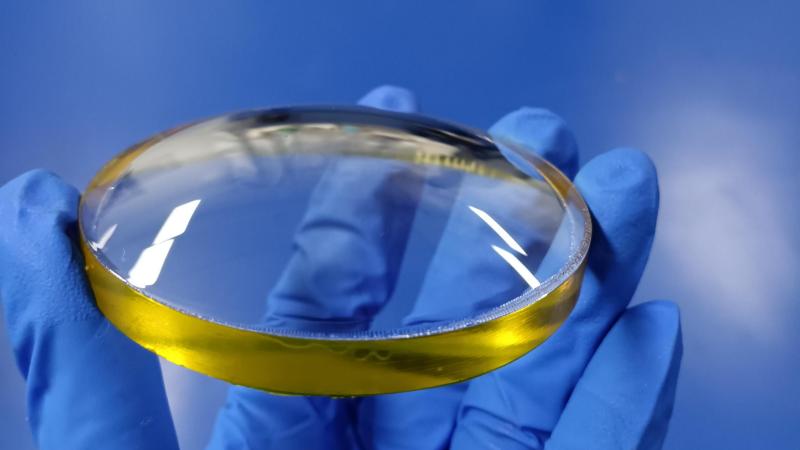
The reason why ultrasonic spraying machines can perfectly adapt to resin materials with viscosity of 0-30pps lies in their flexible adjustable process parameters and unique structural design. The equipment can adapt to the flow characteristics of different viscosity resins by adjusting parameters such as ultrasonic vibration frequency, amplitude, and liquid supply speed. For low viscosity resins with a flow rate of 0-10 CPS, the vibration frequency (60-120 kHz) can be appropriately increased to reduce droplet size and avoid sagging caused by excessive resin fluidity; For low to medium viscosity resins with a viscosity of 10-30 CPS, the vibration frequency can be appropriately reduced (40-60 kHz), the liquid film thickness can be increased to ensure uniform atomization, and the liquid supply speed can be adjusted to match the viscosity of the resin, avoiding problems such as insufficient atomization or coating accumulation. In addition, the nozzle design of ultrasonic spraying machines is diverse, and gathering or fan-shaped nozzles can be selected according to resin characteristics and spraying needs. Gathering nozzles are suitable for small area, high-precision spraying, while fan-shaped nozzles are suitable for large area, high-efficiency spraying, further improving the equipment’s adaptability to 0-30pps resin materials.
In practical applications, when using ultrasonic spraying machines to process resin materials with a viscosity of 0-30pps, attention should also be paid to controlling the process details to ensure the stability of the spraying effect. Firstly, resin materials need to be pre treated before spraying to remove impurities and bubbles, in order to avoid affecting the atomization effect and coating quality; Secondly, it is necessary to control the temperature and humidity of the spraying environment, usually maintaining a temperature of 20-30 ℃ and a humidity of 40% -60%, to prevent resin viscosity from fluctuating due to environmental changes, resulting in uneven coating; Finally, it is necessary to regularly clean the nozzle to avoid resin residue blocking the atomizing plate, affecting the vibration effect and atomization uniformity, and extending the service life of the equipment.
With the development of industrial manufacturing towards precision and green direction, the application range of 0-30pps viscosity resin materials will continue to expand, and the advantages of ultrasonic spraying machines will also be further utilized. It can not only achieve precise and efficient spraying, but also reduce material waste and environmental pollution, which is in line with the development trend of modern manufacturing industry. Whether it’s insulation protection for electronic components, functional coatings for optical products, or surface treatment for medical equipment, ultrasonic spraying machines can provide high-quality spraying solutions for various industries by perfectly adapting to resin materials with a viscosity of 0-30pps, promoting the upgrading and development of high-end manufacturing industries. In the future, with the continuous optimization of technology, ultrasonic spraying machines will further improve the accuracy of parameter adjustment, expand the types of resins they can adapt to, and provide support for precision spraying needs in more fields.
About Cheersonic
Cheersonic is the leading developer and manufacturer of ultrasonic coating systems for applying precise, thin film coatings to protect, strengthen or smooth surfaces on parts and components for the microelectronics/electronics, alternative energy, medical and industrial markets, including specialized glass applications in construction and automotive.
Our coating solutions are environmentally-friendly, efficient and highly reliable, and enable dramatic reductions in overspray, savings in raw material, water and energy usage and provide improved process repeatability, transfer efficiency, high uniformity and reduced emissions.
Chinese Website: Cheersonic Provides Professional Coating Solutions
