
Ultrasonic Spraying of Hyaluronic Acid (HA) for Guide Wires
Ultrasonic spraying of hyaluronic acid (HA) onto guide wires is a complex and efficient coating technique used in the medical device industry to improve lubricity and biocompatibility.
The following is a comprehensive breakdown of this process, its benefits, challenges, and considerations.
Why is hyaluronic acid applied to the guide wire?
*Lubrication: HA is a natural polysaccharide with excellent hydrophilicity (water absorption). When in contact with body fluids, it will form an extremely smooth, low friction hydrogel layer. This greatly reduces the insertion force and friction during vascular or other interventional surgeries.
*Biocompatibility: HA is a natural component of the human body (e.g. in connective tissue, skin, and synovial fluid). This makes it highly biocompatible, non irritating, and non-toxic.
*Hydrophilic coating: It is a stable hydrophilic coating that can be activated by blood or physiological saline, providing lubricity anytime, anywhere when needed.
*Potential for drug elution: HA can be used as a matrix or carrier for therapeutic agents such as antibiotics and anti proliferative drugs, allowing for local drug delivery.
Why is ultrasonic spraying used in this application?
Ultrasonic spraying is superior to traditional methods such as immersion coating or pressure atomization spraying, and can apply precise and thin coatings to small medical devices such as guide wires.
- The uniformity is very good: it produces a completely uniform and consistent droplet “fog”.
- Accurate control: Flow rate, atomization, and pattern can be digitally controlled.
- High efficiency:>95% of the material utilization rate is the goal of spray.
- The thickness is very thin and controllable: it can accurately apply sub micron to multi micron layers.
- Mild shear force: Low speed fog will not damage the underlying substrate or primer layer.
- Ultrasonic spraying process of HA coated guide wire
This process includes several key steps and components:
1. Preparation of guide wire:
- Cleaning: Exposed metal wires (usually nickel titanium or stainless steel) must be carefully cleaned to remove any oil, contaminants, or oxides.
- Primer (usually): A primer layer is usually applied first to enhance the adhesion between HA and the metal surface. Common primers include silane based compounds or other polymer adhesives. The primer layer can also be applied by ultrasonic spraying.
2. HA solution formula:
- Dissolve HA in a purified water-based solvent (sometimes containing a small amount of alcohol) to produce a coating solution with specific viscosity and concentration (usually 0.1% -2% w/v).
- The formula is crucial and may include:
*Crosslinking agent: After coating, chemical substances such as EDC/NHS are usually added to crosslink HA chains. This makes the coating more durable, resistant to dissolution, and more long-lasting in the body.
*Additives: Plasticizers or other agents that alter flexibility and durability.
3. Ultrasonic atomization and spraying:
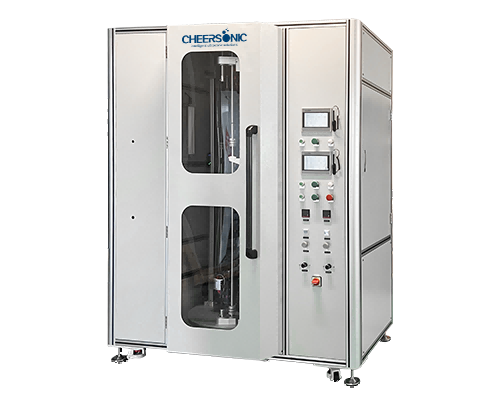
- The HA solution is pumped to the ultrasonic nozzle.
- Inside the nozzle, piezoelectric crystals vibrate at very high frequencies (e.g. 50-180kHz). This vibration generates standing waves at the nozzle tip, causing the liquid to decompose into tiny low-speed mist of micrometer size.
- The guide wire is mounted on a rotating spindle or fixture that passes evenly in front of the spray plume. This ensures a 360 degree coverage range.
- A low flow carrier gas (usually nitrogen or clean air) gently guides the mist onto the rotating surface of the guide wire.
4. Drying and curing:
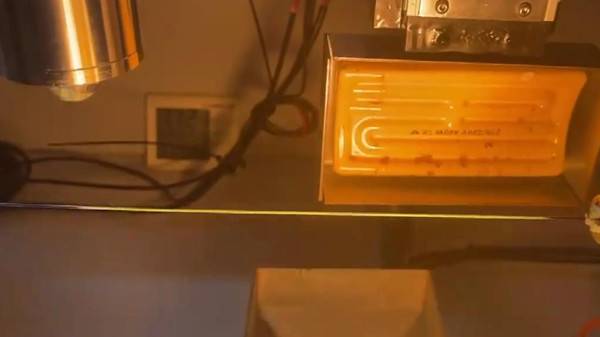
- After spraying, the coating guide wire is passed through a drying chamber (such as an oven or infrared lamp) to evaporate the solvent.
- If cross-linking agent is used, this curing step also promotes the chemical reaction of cross-linking and stabilizing the HA hydrogel layer.
5. Quality control and packaging:
- Check the consistency of the coating guide wire.
- It is usually packaged and disinfected in a hydrated state (e.g. in a saltwater bag) to protect the coating.
Conclusion
Ultrasonic spraying is an enabling technology for manufacturing high-performance hyaluronic acid coated wires. It provides the precision, uniformity and efficiency required for the application of fine hydrogel coatings to small and complex medical devices. This makes the guide wire have excellent lubricity, making the doctor’s operation smoother, and may improve the patient’s prognosis by reducing vascular trauma.
About Cheersonic
Cheersonic is the leading developer and manufacturer of ultrasonic coating systems for applying precise, thin film coatings to protect, strengthen or smooth surfaces on parts and components for the microelectronics/electronics, alternative energy, medical and industrial markets, including specialized glass applications in construction and automotive.
Our coating solutions are environmentally-friendly, efficient and highly reliable, and enable dramatic reductions in overspray, savings in raw material, water and energy usage and provide improved process repeatability, transfer efficiency, high uniformity and reduced emissions.
Chinese Website: Cheersonic Provides Professional Coating Solutions
