
Ultrasonic Spraying for Ti-Based Ir/Ru Metal Oxide Anodes
Ultrasonic Spraying for Ti-Based Ir/Ru Metal Oxide Anodes – Cheersonic
In the field of electrochemical industry, titanium based metal oxide anodes have become core materials in chlor alkali industry, water treatment, cathodic protection and other fields due to their excellent electrocatalytic activity and dimensional stability. Among them, iridium and ruthenium oxide coated anodes have attracted much attention due to their unique electrochemical properties. In recent years, ultrasonic spraying technology has gradually been applied as an advanced coating preparation method in the manufacturing process of such anode materials, demonstrating significant technical advantages.
Limitations of traditional preparation methods
The traditional preparation of titanium based metal oxide anodes mainly adopts the brush coating thermal decomposition method. Although this method is simple to operate, it has obvious drawbacks: uneven coating thickness, multiple pinhole defects, and easy agglomeration of oxide particles, which limits the electrochemical active area of the anode and leads to unstable service life. In addition, human factors have a significant impact on the brushing process, making it difficult to achieve quality consistency in large-scale production.
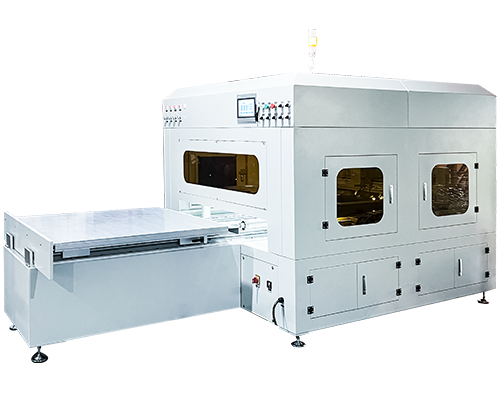
Principle of Ultrasonic Spraying Technology
Ultrasonic spraying technology utilizes piezoelectric transducers to generate high-frequency ultrasonic waves (usually 20-120 kHz), which are then used to atomize the precursor solution into micrometer sized uniform droplets through an atomizing nozzle. These droplets deposit on the surface of a heated titanium substrate carried by a carrier gas, and then undergo thermal decomposition to form a metal oxide coating. The core advantages of this technology are uniform droplet size, soft atomization, and strong deposition controllability.
Differences in Characteristics between Iridium and Ruthenium Coatings
Iridium based oxide coatings mainly consist of iridium oxide as the active component, exhibiting excellent electrocatalytic activity and chemical stability for oxygen evolution. They are particularly suitable for oxygen evolution reaction environments in acidic media, such as hydrogen production through water electrolysis and PCB electroplating. The ruthenium oxide coating is mainly composed of ruthenium oxide, which exhibits excellent catalytic performance for chlorine evolution reaction and is an ideal choice for chlor alkali industry and seawater electrolysis chlorine production. Both have their own focuses, and in practical applications, iridium ruthenium composites are often used to balance performance and cost.
Technical advantages of ultrasonic spraying
When applied to the preparation of iridium and ruthenium anodes, ultrasonic spraying technology brings multiple improvements. Firstly, micrometer sized uniform droplets ensure that the precursor solution spreads evenly on the surface of the titanium substrate, and the oxide particles formed after thermal decomposition have consistent sizes, significantly increasing the electrochemically active surface area. Secondly, this technology can accurately control the coating loading, reduce precious metal waste, and is particularly important for expensive iridium and ruthenium. Furthermore, the “soft landing” feature of ultrasonic spraying avoids splashing caused by high-speed droplet impact in traditional spraying, reducing pinhole and crack defects.
Key parameters for process optimization
To achieve high-performance anode preparation, systematic optimization of process parameters is required. The atomization frequency determines the droplet size, and high frequency produces finer droplets but reduces deposition efficiency; The carrier gas flow rate affects the droplet velocity and deposition range; The substrate temperature controls the thermal decomposition process. If the temperature is too low, the coating may not be dense, while if it is too high, it may cause the titanium substrate to oxidize and form a high resistance titanium dioxide layer. The concentration, solvent type, and surface tension of the precursor solution are equally critical. In practice, the strategy of combining multiple thin layer spraying with gradient heat treatment is usually adopted.
Microstructure and Properties of Coatings
The iridium and ruthenium coatings prepared by ultrasonic spraying exhibit a typical “crack like” morphology, and the crack network increases the true surface area of the electrode. Compared with the brush coating method, the oxide particle distribution in the coating obtained by ultrasonic spraying is more uniform, and the consistency of crack width and depth is better. Electrochemical tests showed that the voltammetric charge value of the ultrasonic sprayed anode significantly increased, the overpotential of oxygen or chlorine evolution decreased, and the results of the enhanced lifespan test were also better.
Application prospects and prospects
With the rapid development of new energy and environmental protection industries, the demand for high-performance and long-life metal oxide anodes continues to grow. Ultrasonic spraying technology is becoming an important technical route for the preparation of iridium and ruthenium titanium anodes due to its precision and controllability, high material utilization rate, and suitability for large-scale production. Future development trends include the integration of online granularity monitoring systems, multi nozzle array coating design, and intelligent optimization of process parameters using machine learning algorithms. It can be foreseen that the continuous advancement of ultrasonic spraying technology will provide higher quality anode products for the electrochemical industry.
About Cheersonic
Cheersonic is the leading developer and manufacturer of ultrasonic coating systems for applying precise, thin film coatings to protect, strengthen or smooth surfaces on parts and components for the microelectronics/electronics, alternative energy, medical and industrial markets, including specialized glass applications in construction and automotive.
Our coating solutions are environmentally-friendly, efficient and highly reliable, and enable dramatic reductions in overspray, savings in raw material, water and energy usage and provide improved process repeatability, transfer efficiency, high uniformity and reduced emissions.
