
Ultrasonic Spraying for Functional Coatings in Automotive Manufacturing
In the era of the automotive industry’s rapid transformation toward electrification, lightweighting, and intelligent driving forces, functional coatings are no longer merely cosmetic; they have become a core technological barrier to performance, safety, and durability. Faced with increasingly complex component geometries, stringent environmental regulations, and the need for extreme cost control, traditional spray coating technology is showing signs of fatigue. Ultrasonic spraying technology, with its revolutionary fine atomization capabilities and precise controllability, is becoming a key driver for innovative applications of automotive functional coatings, providing precise and efficient coating solutions for next-generation automotive manufacturing.
Automotive Functional Coatings: Pain Points and New Challenges of Traditional Processes
- Complex Geometry Coating Challenges: Deep cavities in battery cases, micro-pores in grilles, gaps in motor windings, and delicate sensor surfaces—traditional spraying struggles to achieve uniform, seamless coverage.
- Strict performance consistency requirements: Pressure resistance of insulation coatings, density of anti-corrosion coatings, and uniformity of thermal management coatings directly impact vehicle safety and lifespan.
- The dual pressures of environmental protection and cost: high material waste, excessive VOC emissions, and low utilization of expensive coatings make it difficult to meet both “dual carbon” goals and cost control requirements.
- Bottlenecks in the application of new materials: Environmentally friendly and efficient materials such as nano-coatings, water-based coatings, and high-solids coatings place higher demands on atomization precision and process control.

Ultrasonic Spraying: Core Technology Empowering a Revolution in Automotive Coatings
Its core advantage stems from its unique physical atomization mechanism:
- High-Frequency Vibration Atomization (20-120kHz): A piezoelectric transducer converts electrical energy into high-frequency mechanical vibrations, which act on the liquid film at the nozzle tip.
- Capillary Wave Breakup: Stable standing waves are formed on the liquid surface, producing ultra-uniform droplets (10-50μm) at the wave crests.
- Low-Momentum Transport: Fine droplets are gently transported by an extremely low-flow carrier gas (or by their own weight), achieving a “soft landing.”
- Precise and Controllable: Digital precision adjustment of flow and atomization parameters ensures highly consistent coating thickness and uniformity.
Innovative Application Scenarios: Ultrasonic Spraying Reshapes the Manufacturing of Core Automotive Components
Guardian of the Electric Heart: Power Battery Systems
- Battery Case Insulation Coating: Uniformly covers complex internal cavities and welds, creating a pinhole-free insulation layer, ensuring high-voltage safety (withstand voltage >3000VDC) and increasing material utilization by 60%.
- Fireproof and Heat-Insulating Coating (Battery Pack Cover): Ultra-thin, uniform coating of ceramic-based materials effectively blocks heat spread, reducing weight by 30% compared to traditional thermal insulation.
- Tab/Bus Anti-Corrosion Coating: Precisely sprayed in narrow areas, it prevents electrolyte corrosion and extends battery life.
Lightweight Invisible Armor: Vehicle Body and Structural Components
- Corrosion Protection for Magnesium/Aluminum Alloy Components: A dense, chromium-free conversion film or nano-coating is formed within complex curved surfaces and pores, addressing corrosion issues associated with lightweight materials and complying with environmental regulations.
- Carbon Fiber Reinforced Polymer (CFRP) Primer: Ultra-thin, uniform primer improves CFRP adhesion to paint, avoiding fiber exposure or paint buildup caused by traditional spraying.
- Spot Weld Sealant Replacement: Precisely spray water-based anti-rust wax or sealant onto vehicle body joints, achieving lightweight and highly effective corrosion protection.
Precision Assurance for Intelligent Perception: Sensors and Electronic Systems
- Optical Sensor (LiDAR, Camera) Protective Coating: A nanometer-thin, hydrophobic, anti-fouling coating ensures all-weather sensing reliability without compromising optical transmittance (>99.5%).
- PCB Conformal Coating (Moisture-Proof, Mildew-Proof, and Salt Spray-Proof): Precisely covers tiny components and gaps to prevent bridging, with controllable thickness (10-30μm) to enhance electronic system stability.
- EMI Shielding Coating: A conductive coating is evenly applied to the inner surface of the plastic housing to achieve efficient electromagnetic shielding, meeting increasingly stringent EMC requirements.
Master of Thermal Management Efficiency:
- Battery Liquid Cold Plate Thermal Coating: Uniformly applies a highly thermally conductive interface material within the flow channel, significantly reducing the contact thermal resistance between the battery cell and the cold plate and improving thermal management efficiency.
- Motor Stator/Rotor Heat Dissipation Coating: Sprays insulating thermally conductive material onto the silicon steel laminate or winding ends to optimize internal heat transfer paths.
- Insulated Gate Bipolar Transistor (IGBT) Heat Dissipation: Precisely sprays thermally conductive insulating material onto complex surfaces to improve heat dissipation reliability.
Fusion of Performance and Aesthetics: Functional Coatings for Interior and Exterior Trims
- Antimicrobial Coating for Interior Trims: Uniformly applies silver ions and other antimicrobial agents to fabric, leather, or plastic surfaces to enhance cabin health.
- Exterior Self-Healing Varnish: Ultra-thin, uniform application of a self-healing coating containing microcapsules, enabling automatic repair of minor scratches.
- Touch Panel Anti-Fingerprint (AF) Coating: Uniformly applies an anti-fingerprint, oleophobic coating to curved or irregularly shaped touch surfaces, enhancing the user experience.
Beyond Coatings: Ultrasonic Spraying Reshapes the Value Chain
- Ultimate Cost Reduction: Material utilization rates as high as 70%-95% significantly reduce the cost of expensive functional coatings and reduce waste disposal expenses.
- Quality Enhancement: Ultra-uniform coatings from nanometer to micrometer levels eliminate defects such as drips, orange peel, and pinholes, ensuring coating functional reliability.
- Green Manufacturing: Significantly reduces overspray (by >80%) and significantly reduces VOC emissions, easily meeting environmental regulations and assisting with Green Factory certification.
- Intelligent Flexibility: Seamless integration with robotics and automated production lines, digital parameter management, supports flexible production of small batches and multiple varieties, and adapts to rapid vehicle model iterations.
- Unlocking New Materials: A gentle, low-temperature atomization process is compatible with advanced, environmentally friendly coating systems such as water-based coatings, nano-slurries, and high-solids materials.
Future Trends: Resonating with the Automotive Revolution
- Intelligent Closed-Loop Control: Integrating machine vision (real-time detection of coating thickness and uniformity) with AI algorithms enables adaptive dynamic optimization of the spraying process.
- Multifunctional Composite Coatings: Achieve composite functional structures such as “insulation + thermal conductivity” and “corrosion protection + electrical conductivity” in a single spraying pass.
- Innovation for solid-state batteries: Precision coating of solid electrolyte layers or electrode interface modification layers facilitates breakthroughs in next-generation battery technology.
- Increasing sustainability: Deeply integrating with water-based/bio-based coatings and high-efficiency curing technologies (such as UV/EB) to create a comprehensive green coating solution.
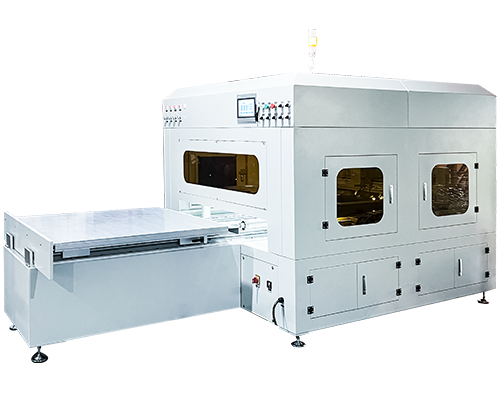
Ultrasonic spraying technology, with its unparalleled precision atomization and accurate control capabilities, is becoming the “precision paintbrush” for innovative applications of automotive functional coatings. It not only addresses core pain points such as complex geometric coverage, stringent performance requirements, and environmental cost pressures, but also opens up new possibilities in cutting-edge fields such as power battery insulation protection, lightweight material corrosion protection, intelligent sensor coatings, and efficient thermal management. With the rapid development of electric vehicles and intelligent connected vehicles, this technology has evolved from a process optimization tool to a strategic technology that reshapes the manufacturing process of core automotive components, ensures critical performance and safety, and drives the green and intelligent transformation of the industry. Choosing ultrasonic spraying is not just about choosing an efficient coating method; it is also about choosing “precision” and “sustainability” as core competitive advantages, painting a picture of future innovation on the canvas of automotive manufacturing.
About Cheersonic
Cheersonic is the leading developer and manufacturer of ultrasonic coating systems for applying precise, thin film coatings to protect, strengthen or smooth surfaces on parts and components for the microelectronics/electronics, alternative energy, medical and industrial markets, including specialized glass applications in construction and automotive.
Our coating solutions are environmentally-friendly, efficient and highly reliable, and enable dramatic reductions in overspray, savings in raw material, water and energy usage and provide improved process repeatability, transfer efficiency, high uniformity and reduced emissions.
Chinese Website: Cheersonic Provides Professional Coating Solutions
