
Ultrasonic Spraying Anti-fog Coating for Medical Mirrors
Application of Ultrasonic Spraying Anti-fog Coating Technology for Medical Product Mirrors
In medical diagnostic and treatment scenarios, the clarity of mirrors on medical products such as endoscope lenses, surgical microscope eyepieces, and monitor display mirrors directly affects diagnostic accuracy and patient safety. However, factors such as body temperature, temperature differences with the environment, and evaporation of bodily fluids in the medical environment can easily cause fogging on mirrors, resulting in blurred vision. In severe cases, this can delay surgical procedures and affect diagnostic accuracy. Precise spraying of anti-fog coatings is the core solution to this problem, and ultrasonic spraying technology, with its unique advantages, has become the preferred process for preparing anti-fog coatings for medical product mirrors.
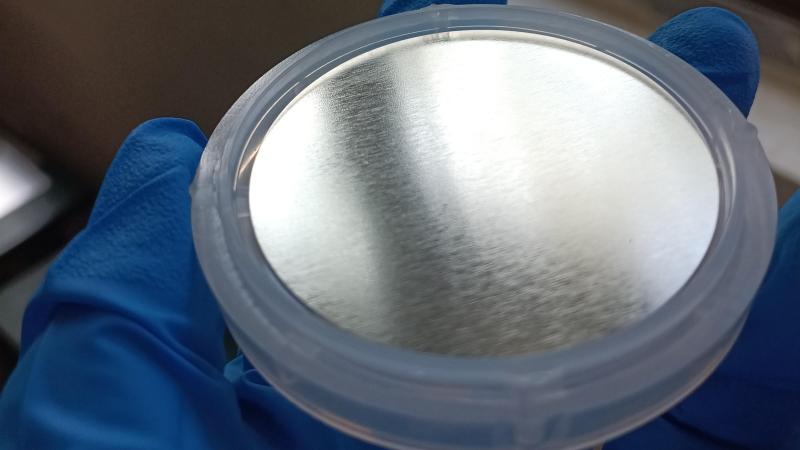
The core principle of ultrasonic spraying technology is to utilize the cavitation and acoustic flow effects of high-frequency ultrasound to achieve precise deposition of coating materials. When high-frequency ultrasound (typically 20kHz-1MHz) acts on the anti-fog coating precursor liquid, a large number of microbubbles rapidly form and collapse within the liquid. The energy generated at the moment of bubble collapse breaks the coating material into nanoscale fine particles, while simultaneously creating strong acoustic flow disturbances that promote uniform particle diffusion. These atomized micro-droplets, guided by airflow, are directionally deposited onto the surface of medical mirror substrates, forming a dense and uniform anti-fog coating after curing. Compared to traditional spraying processes, this technology does not require high-pressure airflow and can be completed at room temperature and pressure, avoiding damage to the medical mirror substrate caused by high temperature and pressure. It is particularly suitable for heat-sensitive optical materials such as glass and resin.
The implementation of ultrasonic spraying anti-fog coatings for medical product mirrors requires strict control over several key aspects. Regarding coating material compatibility, a material system that combines excellent anti-fog performance with biocompatibility must be selected. Commonly used systems are composites of hydrophilic polymers and nano-inorganic materials, such as polyvinyl alcohol-based composites and silica nanocomposite coatings. The materials must meet specific performance parameters: viscosity should be controlled below 50 cP, and solids content below 5% to avoid excessively large atomized droplets or particle sedimentation; simultaneously, water-based or alcohol-based solvents are used to reduce surface tension and improve the wettability and spreadability of droplets on the mirror surface.
Optimization of process parameters is the core of ensuring coating quality. In terms of frequency selection, higher frequencies (such as 120kHz) can generate finer droplets, suitable for preparing nanoscale ultrathin anti-fog coatings, avoiding droplet flow or edge accumulation before drying. Flow rate control must precisely match the volatility of the coating material to prevent excessive flow leading to overly thick coatings or insufficient drying, while insufficient flow may cause coating discontinuities. Furthermore, the spraying distance and nozzle movement speed need to be dynamically adjusted according to the mirror’s size and shape. For curved or irregularly shaped mirrors, parameter optimization can control the coating thickness error within ±1nm, solving the uneven thickness problem that easily occurs in traditional processes for spraying complex curved surfaces.
Environmental control is equally essential. Spraying must be carried out in a clean environment with stable temperature and humidity to avoid high temperature, high humidity, and dusty environments affecting coating adhesion and uniformity. The substrate pretreatment stage requires degreasing, dust removal, and activation treatment of the mirror surface to improve the adhesion between the coating and the substrate, ensuring that the coating does not peel off or fail during repeated cleaning and disinfection. During the curing stage, a suitable curing method is selected based on the characteristics of the coating material to ensure the formation of a stable molecular structure, achieving excellent anti-fogging performance as well as wear resistance and chemical corrosion resistance.
Compared to traditional spraying and dip coating processes, ultrasonic spraying technology demonstrates significant advantages in the preparation of anti-fogging coatings for medical product mirrors. Firstly, it produces extremely high coating uniformity and precision, forming a dense coating with a porosity of less than 0.5%, effectively reducing light scattering and ensuring a mirror transmittance of over 99.5%, while avoiding defects such as sagging and thick edges common in traditional processes. Secondly, it boasts a material utilization rate of over 90%, significantly reducing the waste of expensive anti-fogging coating materials, and the coating liquid can be recycled, significantly reducing waste gas and waste liquid emissions, meeting green manufacturing requirements. Thirdly, it has strong process adaptability, precisely adapting to medical mirrors of different sizes and shapes, including complex curved surfaces such as spherical and aspherical surfaces, achieving 100% coating coverage, and supporting one-time molding of multi-layer composite coatings, improving production efficiency.
In terms of quality assurance, the finished anti-fog coating must pass multiple medical-grade testing standards. Anti-fog performance testing verifies its sustained anti-fog effectiveness under temperature differences of 30-60℃, ensuring clear vision throughout prolonged procedures such as surgery. Durability testing simulates routine cleaning and disinfection processes for medical products, verifying the coating’s performance stability after repeated wiping, high-temperature steam, or ethylene oxide sterilization; abrasion resistance must reach a hardness level of 4H or higher. Furthermore, the coating must pass biocompatibility testing to ensure it causes no irritation or rejection when in contact with human tissues and fluids, meeting medical product safety standards.
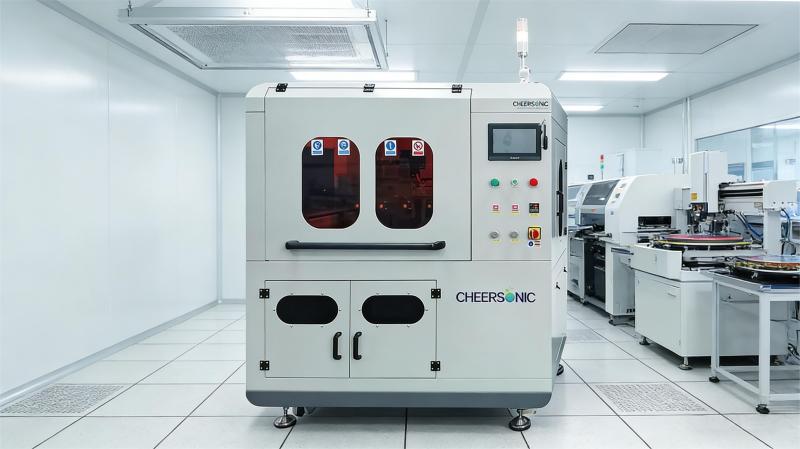
The application of ultrasonic spraying technology in the preparation of anti-fog coatings for medical product mirrors effectively solves the problem of mirror fogging in medical settings, providing technical support for improving the safety and accuracy of diagnosis and treatment. As medical technology advances towards minimally invasive and precise procedures, the performance requirements for anti-fog coatings will continue to increase. In the future, by optimizing ultrasonic parameters, developing multifunctional composite coating materials, and combining intelligent online monitoring systems to achieve closed-loop process control, the coating performance and production stability will be further improved, promoting the application of this technology in more high-end medical product fields.
About Cheersonic
Cheersonic is the leading developer and manufacturer of ultrasonic coating systems for applying precise, thin film coatings to protect, strengthen or smooth surfaces on parts and components for the microelectronics/electronics, alternative energy, medical and industrial markets, including specialized glass applications in construction and automotive.
Our coating solutions are environmentally-friendly, efficient and highly reliable, and enable dramatic reductions in overspray, savings in raw material, water and energy usage and provide improved process repeatability, transfer efficiency, high uniformity and reduced emissions.
Chinese Website: Cheersonic Provides Professional Coating Solutions
