
Ultrasonic Sprayed Ti-Based Ir-Ru Coated Anodes
Cheersonic Ultrasonic Sprayed Ti-Based Ir-Ru Coated Anodes: a precision innovation in the electrochemical industry
In the modern electrochemical industry system, titanium based precious metal oxide anodes are the core key materials, and their performance directly determines the efficiency and cost of processes such as electrolysis, electroplating, and wastewater treatment. In recent years, the application of ultrasonic spraying technology has brought revolutionary breakthroughs to the preparation of titanium coated iridium and ruthenium iridium anodes. With the advantages of high precision, high uniformity, and high material utilization, it has reconstructed the manufacturing paradigm of traditional electrodes and become an important force in promoting the upgrading of the electrochemical industry.
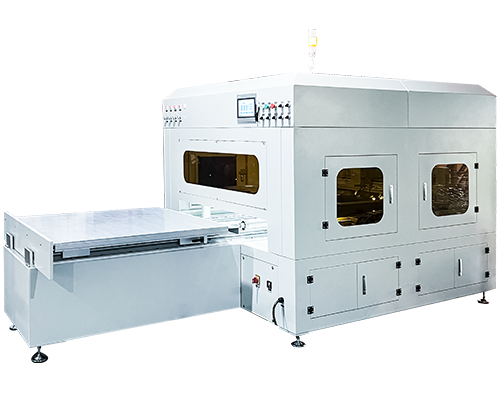
Titanium coated iridium and ruthenium iridium anodes are based on high-purity industrial pure titanium, utilizing the spontaneous formation of a dense oxide film of titanium metal in an oxidizing medium to provide excellent structural strength and basic corrosion resistance. The core functional layer is a surface coated catalytic coating of iridium oxide (IrO ₂) or ruthenium iridium mixed oxide (RuO ₂ – IrO ₂), in which iridium element endows the anode with strong chemical stability and acid resistance, and can operate stably for a long time in strong acid, high salt, and high oxidation environments; Ruthenium significantly enhances the electrocatalytic activity, effectively reduces the overpotential of chlorine and oxygen evolution reactions, and reduces the energy consumption of the electrolysis process. Traditional preparation processes often use thermal decomposition, electroplating, or conventional pneumatic spraying, which can lead to uneven coating thickness, particle agglomeration, and serious waste of precious metals, limiting further improvement of electrode performance.
Ultrasonic spraying technology atomizes precious metal salt slurry containing iridium and ruthenium into fine droplets with uniform particle size (20-50 μ m) through high-frequency ultrasonic vibration (20-120kHz). Unlike traditional high-pressure atomization, this process has a soft droplet movement speed, no splashing rebound, and a material utilization rate of up to 85% -95%, greatly reducing the loss of scarce precious metals such as iridium and ruthenium. More importantly, the droplet distribution formed by ultrasonic atomization is extremely narrow. With the collaborative scanning of the precision motion platform, a uniform coating with a thickness deviation controlled within ± 2% – ± 5% can be formed on the surface of the titanium substrate, completely solving the defects such as edge accumulation, pinholes, and cracks in traditional processes, ensuring that the catalytic layer is continuous and dense, and the active sites are fully exposed. At the same time, this technology can accurately control the coating thickness (2-10 μ m) and precious metal loading (as low as 0.1mg/cm ²), achieving microstructure optimization of the catalytic layer, ensuring electrocatalytic performance while avoiding excessive material use.
The titanium coated iridium/ruthenium iridium anode prepared by ultrasonic spraying has achieved a comprehensive improvement in performance. In terms of corrosion resistance, a uniform and dense oxide coating can effectively block the contact of corrosive media with the titanium substrate. In a wide range of environments with pH 0-14 and high concentration chloride ion solutions, the corrosion rate can be as low as 0.01mm/year or less, and the service life is extended by 3-5 times compared to traditional electrodes. In terms of electrochemical performance, the low overpotential characteristic reduces the voltage of the electrolytic cell by 10% -20%, significantly reducing energy consumption; The high current density tolerance (up to 3000A/㎡) can increase the production capacity per unit area and meet the needs of industrial continuous production. In addition, the coating has strong adhesion with the titanium substrate and can withstand mechanical stresses such as bending and impact, avoiding coating peeling and detachment problems under high current density, ensuring long-term stable operation of the electrode.
With excellent performance, ultrasonic spray titanium coated iridium/ruthenium iridium anodes have been widely used in multiple core industrial fields. In the chlor alkali industry, as a chlorine evolution anode used for electrolyzing saturated saline solution, it can efficiently produce high-purity chlorine gas and caustic soda, improve product purity, and reduce DC power consumption; In the field of water treatment, sodium hypochlorite is used for on-site system and industrial wastewater electrochemical oxidation, safe and efficient preparation of disinfectants, degradation of persistent organic pollutants and toxic substances; In the field of new energy, adapting PEM electrolysis water hydrogen production equipment as an oxygen evolving anode to enhance hydrogen production efficiency and stability; In scenarios such as electroplating, metal deposition, seawater electrolysis, and cathodic protection, traditional graphite and lead based anodes are gradually being replaced due to their long lifespan and high efficiency.
As a product of the cross fusion of advanced manufacturing and electrochemical materials, ultrasonic spray titanium coated iridium/ruthenium iridium anode not only solves the performance bottleneck of traditional electrodes, but also promotes the development of the electrochemical industry towards high efficiency, energy saving, and low cost. With the rapid expansion of industries such as hydrogen energy, environmental protection, and fine chemicals, the demand for high-performance electrodes continues to grow. Ultrasonic spraying technology, with its process flexibility and scalability, can adapt to the coating needs of different shapes (plates, nets, tubes, rods) of titanium substrates, meeting the full process application from laboratory research and development to industrial mass production. In the future, with the continuous upgrading of coating formula optimization, refined process parameters, and intelligent control, this type of anode will further break through performance boundaries, providing more solid material support for the global clean energy transformation and industrial green development.
About Cheersonic
Cheersonic is the leading developer and manufacturer of ultrasonic coating systems for applying precise, thin film coatings to protect, strengthen or smooth surfaces on parts and components for the microelectronics/electronics, alternative energy, medical and industrial markets, including specialized glass applications in construction and automotive.
Our coating solutions are environmentally-friendly, efficient and highly reliable, and enable dramatic reductions in overspray, savings in raw material, water and energy usage and provide improved process repeatability, transfer efficiency, high uniformity and reduced emissions.
