
Ultrasonic Spray Heparin Antithrombotic Coating
Ultrasonic Spray Heparin Antithrombotic Coating : a technological breakthrough in the field of anticoagulation for medical devices
In clinical medicine, direct contact between medical devices and blood often leads to thrombosis, which not only reduces treatment effectiveness but may also endanger the patient’s life. The emergence of ultrasonic spray heparin coating technology provides an effective solution to this problem and has become an important technological breakthrough in the field of medical device anticoagulation.
Heparin, as a widely used antithrombotic drug in clinical practice, has a clear anticoagulant mechanism. It does not directly act on thrombin, but indirectly inhibits the activity of thrombin, blocking the key process of thrombin converting soluble fibrinogen into insoluble fibrin, thereby cutting off the coagulation chain and achieving efficient anticoagulation. This characteristic has laid a solid foundation for its application in the field of medical device coatings.

Ultrasonic spray heparin coating technology is an advanced technology that applies modified heparin onto the surface of medical devices through a specific process. The core of it is to use ultrasonic spraying equipment to atomize the dissolved modified heparin coating liquid into small particles, uniformly adhere to the surface of the instrument, and then firmly graft heparin molecules onto the surface of the instrument through covalent bonding through chemical treatment. This covalent bonding method can be regarded as the “core code” of coating stability, which enables the coating to maintain both structural integrity and anticoagulant function during long-term use of medical devices, without degradation or detachment due to bodily fluid erosion or physical friction, fundamentally solving the problem of traditional coatings being prone to failure.
This coating has multiple core advantages, the first of which is its significant anticoagulant effect. Through stable grafting of heparin molecules, the coating can continuously release anticoagulant activity, effectively inhibit thrombin activity, significantly reduce the adhesion and aggregation of proteins and platelets on the surface of the instrument, and reduce the risk of thrombosis from the source. Secondly, the coating has excellent durability and biocompatibility. The strong bonding force of covalent bonds endows the coating with a long service life, which can match the service life of various medical devices; At the same time, it has good biocompatibility, does not cause immune rejection reactions in the body, has no adverse effects on blood components, and ensures the safety of clinical applications. In addition, the uniformity of the coating is also a major highlight. Ultrasonic spraying technology can achieve micrometer level coating thickness control, ensuring that every part of the instrument surface can be covered with a functionally consistent coating, avoiding local anticoagulant failure caused by uneven coating.
Based on these outstanding advantages, ultrasonic spray heparin coating has a wide range of application scenarios in the field of medical devices. In the field of cardiovascular intervention, coating stent grafts, metal implants and other instruments with this coating can effectively prevent postoperative stent thrombosis and reduce the incidence of vascular restenosis; In vascular access instruments, guide sheaths and vascular grafts can reduce blood adhesion through coatings, ensuring the smoothness of surgical operations; In intensive care and chronic disease treatment, central venous catheter (CVC), peripheral vein inserted central venous catheter (PICC), and hemodialysis catheter can be coated with this coating to extend their service life, reduce complications such as catheter blockage and infection caused by thrombosis, and alleviate patients’ pain and treatment burden.
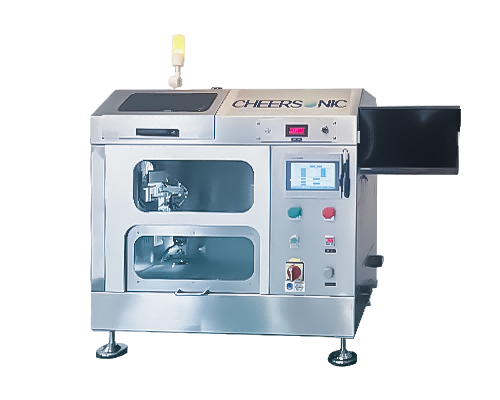
With the continuous advancement of medical technology, there is an increasing demand for anticoagulation in medical devices. The ultrasonic spray heparin coating technology is gradually becoming the “standard configuration” for various invasive medical devices due to its stable coating performance, significant anticoagulant effect, and wide applicability. In the future, with the further integration of materials science and spray coating technology, it is expected to achieve precise regulation and functional upgrading of heparin coatings, providing safer and more efficient anticoagulant solutions for clinical medicine, and promoting the medical device field to move towards a higher quality development stage.
About Cheersonic
Cheersonic is the leading developer and manufacturer of ultrasonic coating systems for applying precise, thin film coatings to protect, strengthen or smooth surfaces on parts and components for the microelectronics/electronics, alternative energy, medical and industrial markets, including specialized glass applications in construction and automotive.
Our coating solutions are environmentally-friendly, efficient and highly reliable, and enable dramatic reductions in overspray, savings in raw material, water and energy usage and provide improved process repeatability, transfer efficiency, high uniformity and reduced emissions.
Chinese Website: Cheersonic Provides Professional Coating Solutions