
Ultrasonic Spray Coating on Bone Screws
Ultrasonic Spray Coating on Bone Screws – Spray PTFE (Teflon) – Cheersonic
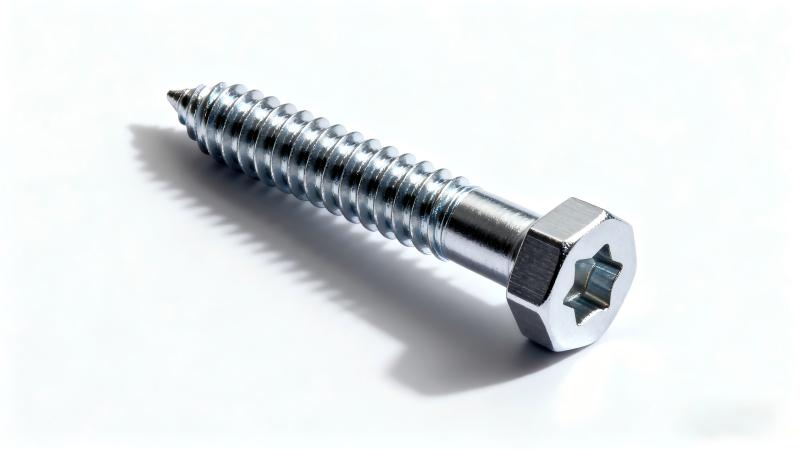
In the field of contemporary orthopedic implants, bone screws serve as key internal fixation devices, and their performance directly affects the success or failure of surgery and the quality of patient rehabilitation. Traditional bone screws mainly rely on their mechanical properties to provide stability. However, with the deepening development of biomaterials science and precision medicine concepts, endowing bone screws with additional biological activity and therapeutic functions has become an important direction to enhance their clinical value. Among them, constructing functional coatings on the surface of bone screws is the core technological path to achieve this goal. Ultrasonic spraying technology, as an emerging precision deposition process, is bringing revolutionary breakthroughs to the preparation of bone screw coatings with its unique advantages.
Technical principle: precise and controllable atomization and deposition mechanism
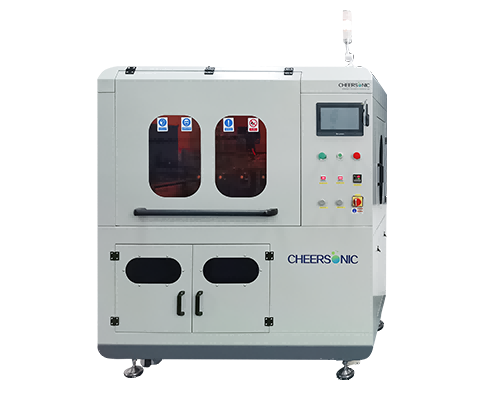
The core of ultrasonic spraying technology is to use high-frequency ultrasonic energy to achieve precise atomization of liquids. Its working principle is to drive the piezoelectric transducer inside the spraying device with electrical energy, generating high-frequency mechanical vibrations with frequencies usually higher than 20kHz. This high-frequency vibration is transmitted to the liquid film at the nozzle tip through the amplitude rod, causing it to form extremely fine and uniform capillary waves on the surface. When the vibration energy exceeds the limit that the surface tension of the liquid can maintain, the liquid film will break into a large number of uniformly sized micro – or even nano sized droplets. These droplets are guided by a carrier gas (usually clean compressed air or inert gas) flowing out through the front end of the nozzle, forming a soft, low kinetic energy “mist like” jet, which eventually deposits smoothly on the surface of the bone screw substrate below.
Compared with traditional spraying techniques that rely on high-pressure fluid shear, the atomization process of ultrasonic spraying is more “gentle” and “precise”. It avoids the structural damage that high pressure may cause to coating materials, especially bioactive macromolecules, nanoparticles, etc., while ensuring a highly concentrated droplet size distribution. This characteristic provides a physical basis for achieving ultra-thin, uniform, and highly consistent coatings.
Process advantage: Excellent characteristics that meet the stringent requirements of bone screw coating
The application of ultrasonic spraying technology in the preparation of bone screw coatings has advantages in multiple aspects, perfectly meeting the strict requirements of medical implants for coatings:
1. Unparalleled uniformity and consistency: As a device with a complex three-dimensional structure (including threads, nuts, etc.), the uniform coverage of its surface coating is a technical difficulty for bone screws. The droplet size generated by ultrasonic spraying is uniform and the flight trajectory is stable, which can effectively wrap around the complex contour of the screw. Even in hard to reach areas such as the root and valley of the thread, a continuous and defect free film can be formed, effectively avoiding the problem of uneven coverage caused by the common “edge effect” or “shadow effect” in traditional spraying.
2. Excellent coating thickness control capability: This technology allows for linear control of coating thickness at the nanometer to micrometer scale by precisely adjusting parameters such as solution delivery rate, nozzle movement speed, ultrasonic power, etc. This is crucial for bone screw coatings, as overly thick coatings may affect the mechanical engagement of threads, while overly thin coatings may not perform the expected biological functions. Accurate thickness control ensures the optimal balance between coating functionality and its impact on the mechanical properties of the screw body.
3. Extremely high material utilization and economy: Due to its high atomization efficiency and precise programming of the spraying path, ultrasonic spraying can directly deliver over 95% of the coating material to the substrate surface, greatly reducing the waste of expensive functional materials such as hydroxyapatite, antibiotics, growth factors, etc. This not only reduces production costs, but also conforms to the concept of green manufacturing.
4. Wide material compatibility and mild processing conditions: Ultrasonic spraying technology has a wide range of adaptability to the viscosity, solid content, etc. of slurry or solution, and can handle various coating precursors from aqueous solutions to organic solvent systems. Its low kinetic energy makes it very suitable for depositing active ingredients that are sensitive to shear forces, such as proteins, peptides, viral carriers, etc., opening up the way for the preparation of intelligent coatings with drug release or gene therapy functions.
Coating function: a leap from biocompatibility to active therapy
With the help of ultrasonic spraying technology, various coatings with different functions can be constructed on the surface of bone screws, greatly expanding their clinical application scenarios:
*Bioactive coating: The most typical is the spraying of bioceramic slurries such as hydroxyapatite or calcium silicate. This type of coating can simulate the inorganic components of natural bone in vivo, promote the adhesion, proliferation, and differentiation of osteoblasts on its surface, accelerate the process of bone integration, and form a strong biological bond between screws and surrounding bone tissue, rather than just mechanical locking, effectively reducing the risk of long-term loosening.
*Antibacterial/anti infective coating: Polymer microspheres or nanofibers loaded with broad-spectrum antibiotics (such as gentamicin and vancomycin) or inorganic antibacterial ions (such as silver and zinc ions) are deposited on the surface of screws by ultrasonic spraying, which can achieve local and controlled release of drugs at the implantation site. This can provide high concentration of antibacterial protection during the operation window period and significantly reduce the incidence of implant related infection, especially for patients with low immunity such as open fractures or diabetes.
*Facilitating bone/drug sustained-release coating: Combining bioactive factors such as bone morphogenetic protein and vascular endothelial growth factor with degradable polymer materials, forming a composite coating through precision spraying. This coating can degrade at a predetermined rate in vivo and continuously release growth factors, actively inducing and stimulating new bone formation, and has important value for fixation in osteoporotic areas or complex bone non union situations.
Application prospects and future prospects
The application of ultrasonic spraying technology in the preparation of bone screw coatings represents a deep cross fusion of precision manufacturing and biomedical engineering. It not only solves the process problem of preparing high-quality coatings on the surface of complex shaped implants, but also promotes the paradigm shift of orthopedic treatment from “passive fixation” to “active repair and regeneration” by empowering implants with multiple biological functions.
Looking ahead to the future, with further understanding of coating materials, interface science, and disease pathological mechanisms, combined with the high controllability and flexibility of ultrasonic spraying technology, we have reason to expect the emergence of more functionally integrated “intelligent” bone screw coatings. For example, coatings that can intelligently release drugs in response to local microenvironment changes such as pH and enzyme concentration, or patterned coatings that can guide specific cell behavior. Ultrasonic spraying technology, as a key enabling tool for realizing these cutting-edge ideas, will undoubtedly demonstrate increasingly broad application potential in improving the performance of orthopedic implants and improving patient prognosis.
About Cheersonic
Cheersonic is the leading developer and manufacturer of ultrasonic coating systems for applying precise, thin film coatings to protect, strengthen or smooth surfaces on parts and components for the microelectronics/electronics, alternative energy, medical and industrial markets, including specialized glass applications in construction and automotive.
Our coating solutions are environmentally-friendly, efficient and highly reliable, and enable dramatic reductions in overspray, savings in raw material, water and energy usage and provide improved process repeatability, transfer efficiency, high uniformity and reduced emissions.
Chinese Website: Cheersonic Provides Professional Coating Solutions