
Ultrasonic Spray Coating for Proton Exchange Membrane Fuel Cell
Ultrasonic Spray Coating for Proton Exchange Membrane Fuel Cell – Cheersonic
Climate change and global warming have become urgent topics for green energy and carbon emission reduction. Proton exchange membrane fuel cells (PEMFC) have become a promising power source in the future due to their high power density, high efficiency, no harmful emissions, high-quality power supply, scalability and fast start-up.
One of the main obstacles to the commercialization of fuel cells is the high cost. For portable equipment and vehicle applications, fuel cells compete with batteries and fuel vehicles respectively. These competitors have used sound infrastructure for nearly a century of commercial operations. Since MEA is the most expensive component in fuel cells, reducing the platinum loading of MEA is an important research area for fuel cell development.
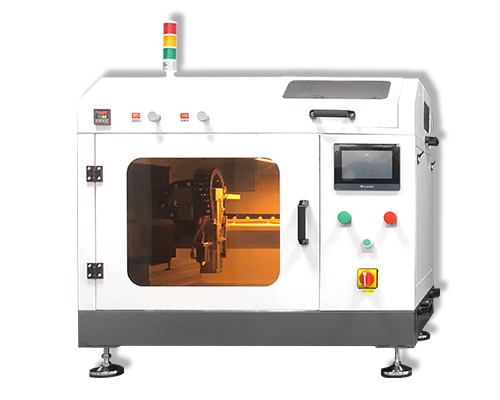
Ultrasonic spraying is now a widely used method for catalyst synthesis, catalyst support treatment, catalyst layer fabrication, membrane electrode assembly (MEA) fabrication, and humidifier etc. for fuel cell applications. Among the abovemen-tioned uses, ultrasonic technology has been utilised mainly for MEA fabrication—especially since it has demonstratedthe capability to produce ultra-low platinum loadings.
Ultrasonic spray coating has emerged as a superior precision manufacturing technology for proton exchange membrane fuel cells (PEMFCs), specifically applied to the fabrication of membrane electrode assemblies (MEA), the core component determining cell power generation performance. Different from traditional air spraying and blade coating, this technology utilizes piezoelectric transducers to convert electrical energy into high-frequency mechanical vibration, which atomizes catalyst ink into uniform micron-scale droplets with narrow particle size distribution. Driven by low-pressure carrier gas, the fine droplets stably deposit on proton exchange membranes and gas diffusion layers without causing membrane deformation or damage.
This technique boasts prominent advantages in catalyst utilization and coating quality. The gentle ultrasonic atomization avoids excessive shear force, effectively preventing the agglomeration of platinum-based catalyst particles and maintaining the integrity of ink components. It forms a uniform, porous and pinhole-free catalyst layer, optimizing the three-phase reaction boundary and significantly improving electrochemical reaction efficiency and cell power density. Meanwhile, it greatly reduces overspray, raising material utilization rate up to 80% and cutting the consumption of expensive noble metal catalysts.
With controllable spray range, stable operation and self-cleaning nozzles, the technology ensures consistent coating thickness and durable adhesion. It adapts to both laboratory research and large-scale automated production, solving the defects of uneven coating and high material waste in conventional processes, and has become a key process to enhance the stability, durability and cost-performance of commercial PEMFCs.
About Cheersonic
Cheersonic is the leading developer and manufacturer of ultrasonic coating systems for applying precise, thin film coatings to protect, strengthen or smooth surfaces on parts and components for the microelectronics/electronics, alternative energy, medical and industrial markets, including specialized glass applications in construction and automotive.
Our coating solutions are environmentally-friendly, efficient and highly reliable, and enable dramatic reductions in overspray, savings in raw material, water and energy usage and provide improved process repeatability, transfer efficiency, high uniformity and reduced emissions.
Chinese Website: Cheersonic Provides Professional Coating Solutions
