
Ultrasonic Spray Coating for Arterial Blood Gas Needles
Ultrasonic Spray Coating for Arterial Blood Gas Needles – CHEERSONIC
Arterial blood gas (ABG) analysis is a core clinical method for assessing respiratory function and acid-base balance. As the critical vehicle for sample collection, the ABG needle’s performance directly impacts the accuracy of test results and the effectiveness of clinical diagnosis and treatment. Leveraging core advantages such as precision atomization and exact control, ultrasonic spray coating technology has achieved breakthroughs in the preparation of functional coatings for ABG needles. It effectively resolves many drawbacks associated with traditional manufacturing processes, driving the evolution of ABG needles toward greater safety, precision, and efficiency.
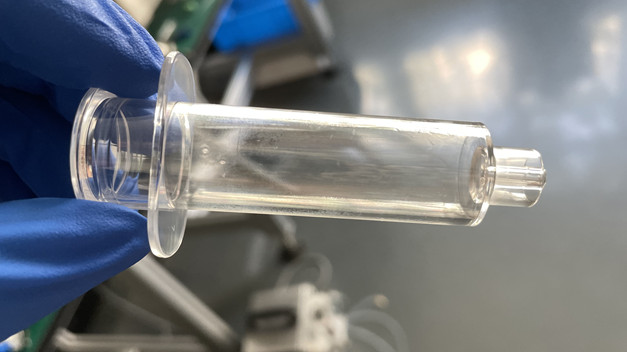
Ultrasonic spray coating technology delivers revolutionary performance improvements for ABG needle coatings, primarily through superior coating uniformity and thickness controllability. The inner walls of ABG needles require an anticoagulant coating (such as lithium heparin) to prevent blood sample coagulation. Traditional methods—like dip coating or brush coating—often result in uneven thickness, localized accumulation, or gaps, leading to inconsistent anticoagulation and compromising the reliability of test results. In contrast, ultrasonic spray coating uses high-frequency vibration to atomize the anticoagulant solution into uniform droplets (13–40 microns). Guided by an airflow, these droplets deposit precisely onto the needle’s inner wall, enabling the creation of ultra-thin coatings ranging from the nanoscale to the microscale. With thickness variations controlled within ±5%, the process ensures uniform anticoagulant concentration throughout, thereby safeguarding the integrity of the blood sample at the source.
A significant increase in material utilization efficiency is another major advantage of ultrasonic spray coating. Medical anticoagulants like lithium heparin are high-value bioactive materials; traditional processes often suffer from material utilization rates below 30%, resulting in substantial waste. Through directional atomization and precision deposition, ultrasonic spray coating applies the anticoagulant solution directly to the target area on the needle’s inner wall, boosting material utilization to over 85%. This not only significantly lowers production costs but also reduces the environmental burden associated with biological material waste, aligning with green manufacturing standards in the medical industry. Furthermore, the technology allows for precise control over the spray area, preventing coating application on non-target zones—such as needle connection points—thereby ensuring the integrity of subsequent connections.
Ultrasonic spray coating technology also demonstrates unique advantages regarding the preservation of bioactivity and coating stability. The anticoagulant activity of lithium heparin relies on the integrity of its molecular structure; however, the high-temperature and high-pressure environments characteristic of traditional spray-coating processes often lead to a degradation of this biological activity. Ultrasonic spraying utilizes a low-temperature atomization mechanism that generates no heat during the process and exerts minimal shear force during droplet formation, thereby maximally preserving the molecular structure of the lithium heparin. Coatings produced via this method demonstrate an antithrombin III binding capacity more than 20% higher than those made using traditional processes, effectively extending the preservation time of blood samples. Furthermore, the high kinetic energy of ultrasonically atomized droplets facilitates strong physical adsorption and chemical bonding upon deposition onto the needle surface; the resulting coating exhibits over 30% greater adhesion than dip-coated alternatives, enabling it to withstand flushing by bodily fluids and minor friction during transport, while preventing biocompatibility risks associated with coating detachment.
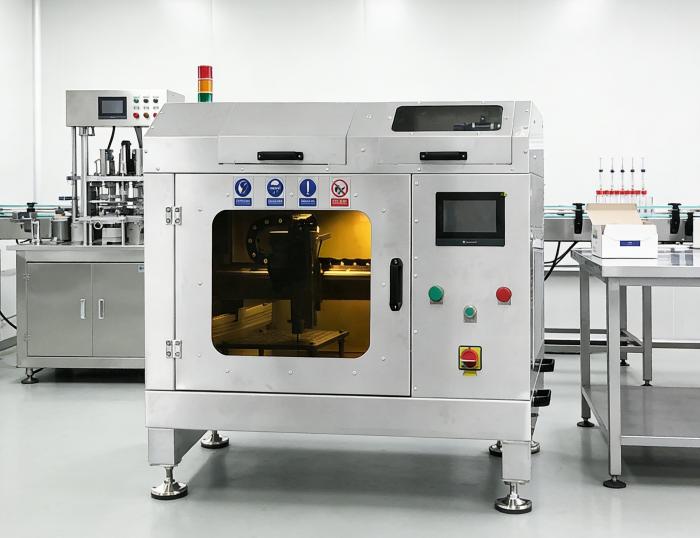
The ultrasonic spraying process adapted for arterial blood gas needles offers a high degree of flexibility and safety. By adjusting parameters such as ultrasonic frequency (30–100 kHz), spray flow rate (0.5–20 mL/min), and nozzle movement paths, uniform coatings can be applied to complex curved surfaces of blood gas needles varying in size and shape. The probe-style spraying method is particularly well-suited for coating confined spaces, such as the inner walls of needles; combined with a self-cleaning nozzle design, this significantly reduces equipment maintenance costs and the risk of clogging. The process requires no organic solvents—using only aqueous anticoagulant solutions—and results in zero VOC emissions and operating noise levels below 60 decibels, fully complying with GMP standards for medical device manufacturing.
Arterial blood gas needles manufactured using ultrasonic spraying technology have already demonstrated significant clinical value. The precise, uniform anticoagulant coating ensures accurate blood gas analysis results, providing a reliable basis for diagnosing and treating conditions such as respiratory failure and acid-base imbalances. Improved material utilization lowers the cost of medical consumables, thereby reducing the financial burden on patients, while stable coating performance enhances safety and minimizes the incidence of adverse events. As medical technology advances, ultrasonic spraying also enables the creation of multifunctional composite coatings—integrating anticoagulant, antimicrobial, and lubricating properties—further expanding the clinical applications of these devices. In summary, ultrasonic spraying technology has revolutionized the traditional manufacturing process for arterial blood gas needles—leveraging key advantages such as coating uniformity, high material efficiency, biocompatibility, and process controllability—thereby driving the advancement of precision manufacturing in medical devices. As the technology continues to be refined, it is poised for broader application across the medical consumables sector, providing a robust technical foundation for enhancing clinical diagnosis and treatment standards.
About Cheersonic
Cheersonic is the leading developer and manufacturer of ultrasonic coating systems for applying precise, thin film coatings to protect, strengthen or smooth surfaces on parts and components for the microelectronics/electronics, alternative energy, medical and industrial markets, including specialized glass applications in construction and automotive.
Our coating solutions are environmentally-friendly, efficient and highly reliable, and enable dramatic reductions in overspray, savings in raw material, water and energy usage and provide improved process repeatability, transfer efficiency, high uniformity and reduced emissions.
Chinese Website: Cheersonic Provides Professional Coating Solutions
