
Ultrasonic Spray-coated Organically Bridged Silica Membranes
Ultrasonic spray-coated ultrathin organically bridged silica membranes for organic solvent nanofiltration
Organic solvent nanofiltration (OSN) is a core membrane separation technology for achieving precise molecular separation and solvent recovery in the chemical and pharmaceutical industries. Unlike traditional thermal separation processes such as distillation, OSN is a pressure-driven, non-thermal process offering advantages such as low-temperature operation, low energy consumption, and environmental and economic benefits, making it a highly promising alternative in industrial purification. Currently, mainstream nanofiltration membranes predominantly feature a polyamide thin-film nanocomposite structure; however, the fabrication of polyamide membranes is prone to side reactions and structural defects, resulting in poor rejection performance for low-molecular-weight solutes (below 300 Da). Meanwhile, novel porous membrane materials—such as graphene oxide and metal-organic frameworks—often suffer from poor resistance to solvent swelling, complex synthesis processes, and difficulties in large-scale production, which hinder the widespread adoption of OSN technology.
Organic-bridged silica is a high-performance membrane separation material; its unique three-dimensional network structure imparts excellent resistance to organic solvent swelling and tunable molecular sieving capabilities. However, traditional fabrication methods are cumbersome, involving multiple steps such as substrate pretreatment, intermediate layer deposition, and high-temperature sintering. Furthermore, conventional coating techniques like dip-coating and spin-coating fail to precisely control membrane thickness, leading to numerous defects and poor reproducibility, making it difficult to produce high-quality, ultra-thin separation membranes.
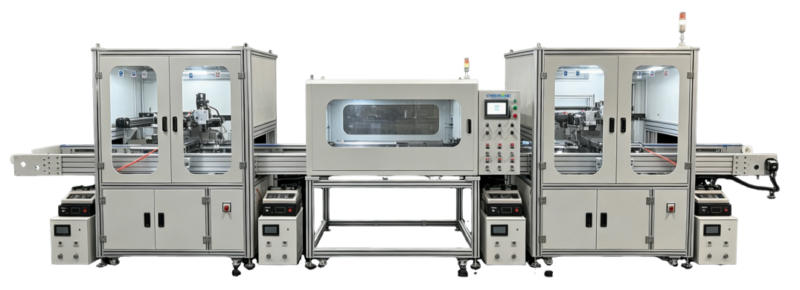
In this study, a simple and efficient ultrasonic spraying technique was employed to fabricate ultra-thin organic-bridged silica nanofiltration membranes, eliminating the need for an intermediate layer and significantly simplifying the fabrication process. Key process parameters—including solvent type, spray step size, and feed flow rate—were systematically optimized. Continuous, uniform separation membranes with a surface roughness of less than 2 nm were successfully constructed on polyamide substrates, with membrane thickness precisely controllable within the 150–400 nm range.
Experimental results demonstrate that the BTESE membranes produced via this process possess a dense, cross-linked network structure. They exhibit a molecular weight cut-off (MWCO) of 270 Da and a rejection rate of 97.4% for the low-molecular-weight organic dye Methyl Red. Additionally, the ethanol permeance reaches 0.22 L·m⁻²·h⁻¹·bar⁻¹, achieving efficient separation of small organic molecules. Compared to techniques such as chemical vapor deposition and conventional spraying, ultrasonic spraying generates ultrafine, uniform droplets; when combined with rapid substrate heating, this effectively inhibits the precursor solution from penetrating substrate pores, thereby fundamentally reducing film defects.
This study demonstrates that ultrasonic spraying overcomes the bottlenecks associated with traditional membrane material preparation. Offering strong process controllability and broad applicability, the technique enables the efficient production of high-performance organic-bridged silica separation membranes, providing a reliable pathway for the large-scale industrial manufacturing of high-precision organic solvent nanofiltration membranes.
About Cheersonic
Cheersonic is the leading developer and manufacturer of ultrasonic coating systems for applying precise, thin film coatings to protect, strengthen or smooth surfaces on parts and components for the microelectronics/electronics, alternative energy, medical and industrial markets, including specialized glass applications in construction and automotive.
Our coating solutions are environmentally-friendly, efficient and highly reliable, and enable dramatic reductions in overspray, savings in raw material, water and energy usage and provide improved process repeatability, transfer efficiency, high uniformity and reduced emissions.
Chinese Website: Cheersonic Provides Professional Coating Solutions