
Ultrasonic Photoresist Coating Process
Ultrasonic Photoresist Coating Process – Cheersonic
In the field of precision photolithography, ensuring uniform photoresist coating on the substrate surface is crucial for achieving process repeatability, reliability, and acceptability. Photoresist, as a special material, is typically dispersed in a solvent or aqueous solution and has high viscosity. Various methods exist to achieve uniform coating, among which spin coating technology has become a commonly used choice in the industry due to its advantages.
Spin coating is considered a “star method” for photoresist coating substrates, standing out for its high throughput and excellent uniformity potential. The core principle of this technology is based on the ingenious use of centrifugal force. In practice, a few milliliters of photoresist are typically placed on a high-speed rotating substrate, with the substrate rotation speed usually reaching thousands of revolutions per minute, commonly 4000 rpm. Depending on the timing of dispensing and rotation, spin coating can be divided into static spin coating and dynamic spin coating. Static spin coating involves dispensing the photoresist onto a stationary substrate first, then accelerating the substrate to a predetermined rotation speed; dynamic spin coating involves dispensing the photoresist while the substrate is already rotating. During rotation, excess photoresist is peeled off from the substrate edges due to centrifugal force, thus removing excess material.
The centrifugal force exerted on the photoresist on the wafer surface causes the initially viscous photoresist to spread, ultimately forming a uniform thin film. Notably, the thickness of this film can be precisely controlled by adjusting the substrate’s rotation speed. Higher rotation speeds result in more complete diffusion of the photoresist under centrifugal force, leading to a thinner film. Operators can flexibly adjust the rotation speed according to specific process requirements to achieve the ideal film thickness. Furthermore, rotation time is also a crucial factor in controlling film thickness. During rotation, the solvent or aqueous liquid used to disperse the photoresist gradually evaporates. This not only further thins the photoresist but also promotes a more stable film structure, reducing the likelihood of collapse or deformation during subsequent substrate processing.
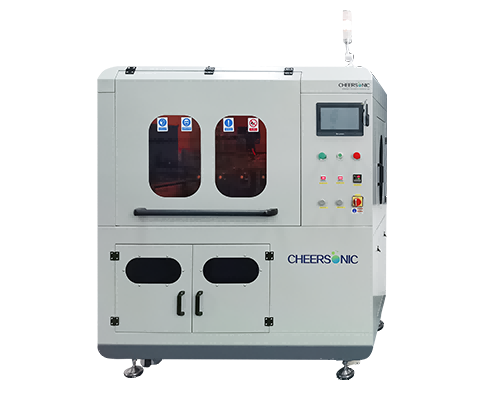
Spin coating technology offers significant advantages. Its biggest highlight is its extremely high coating efficiency. The entire coating process typically takes only 10-20 seconds. Including dispensing and processing time, the overall processing time is often less than one minute, which greatly improves production efficiency for large-scale production. Meanwhile, spin coating produces extremely smooth and flat films with high-precision thickness control. The repeatability of film thickness is excellent even after multiple spin coating operations, meeting the stringent requirements of various precision photolithography processes.
However, spin coating technology is not without its limitations. Problems arise when dealing with non-circular substrates or when coating with high-viscosity, thick photoresist. In these cases, air turbulence easily occurs at substrate edges, especially corners. This turbulence accelerates the drying of the photoresist, and excessive drying hinders its normal dispersion in these areas, causing photoresist to accumulate around the substrate, forming beads. These photoresist deposits on the substrate sidewalls are called edge beads, severely affecting the coating effect and subsequent processes. Furthermore, if the substrate surface has numerous feature structures or complex and varied morphologies, it will also negatively impact the spin coating effect. For example, photoresist accumulation in holes or spaces can cause localized thickening or thinning of the film at feature edges, thus disrupting the uniformity of film thickness. To address these issues, the industry has explored effective solutions, such as employing a two-stage rotation curve to optimize the coating process by adjusting the rotation speed in stages; or selecting alternative coating technologies to complement spin coating, both of which can improve coating results to some extent.
In many fields, including semiconductor manufacturing and microelectromechanical systems , spin coating technology plays an irreplaceable role in photoresist coating due to its unique advantages. Despite its limitations, with continuous technological development and innovation, these problems are gradually being resolved, and spin coating technology will continue to shine in the future of precision manufacturing, providing solid technical support for the realization of more cutting-edge technologies.
About Cheersonic
Cheersonic is the leading developer and manufacturer of ultrasonic coating systems for applying precise, thin film coatings to protect, strengthen or smooth surfaces on parts and components for the microelectronics/electronics, alternative energy, medical and industrial markets, including specialized glass applications in construction and automotive.
Our coating solutions are environmentally-friendly, efficient and highly reliable, and enable dramatic reductions in overspray, savings in raw material, water and energy usage and provide improved process repeatability, transfer efficiency, high uniformity and reduced emissions.
Chinese Website: Cheersonic Provides Professional Coating Solutions