
Ultrasonic Spraying of Catalysts for Photosensors
Ultrasonic Spraying of Catalysts for Photosensors – Cheersonic
As the core device that converts light signals into electrical signals, optical sensors, with their precise capture of changes in light and shadow, have become a crucial bridge connecting the physical world and intelligent systems. From basic photosensitive elements to complex image sensing arrays, their technological evolution has consistently kept pace with the demands of various scenarios, permeating all aspects of life and industry.
The working principle of these sensors is the photoelectric effect, which can be broadly categorized into external and internal photoelectric effects. Under the external photoelectric effect, light irradiating a metal surface excites electrons to escape and form a current, commonly found in high-precision devices such as photomultiplier tubes. The internal photoelectric effect achieves signal conversion through semiconductor materials. The photoconductivity effect causes the material’s resistance to change with light intensity, while the photovoltaic effect directly generates an electromotive force, becoming the core technology of most civilian sensors.
Based on differences in structure and function, optical sensors have formed a rich product matrix. Photoresistors are suitable for basic scenarios such as street light control due to their low cost advantage; photodiodes, with their nanosecond-level response speed, are ideal for optical communication; and phototransistors improve the sensitivity of weak light detection through built-in amplification. More complex image sensors, composed of arrays with tens of millions of pixels, reconstruct two-dimensional light signals using CCD or CMOS technology, becoming the core component for visual acquisition.
In consumer electronics, the application of light sensors is already ubiquitous. Ambient light sensors can simulate the human eye’s perception of light intensity, automatically adjusting screen brightness to balance visual experience and power consumption; color sensors capture color temperature information through RGB channels, providing data support for automatic white balance in cameras; under-display proximity sensors can accurately identify the distance between the device and the human body, enabling automatic screen shutdown during calls. In health monitoring, light sensors detect differences in blood’s absorption of light to achieve real-time monitoring of vital signs such as heart rate and blood oxygenation.
In industrial scenarios, the non-contact detection advantages of light sensors are particularly prominent. Smoke and dust turbidity monitoring relies on their perception of light penetration; robot navigation uses light signals to determine the distance to obstacles; and multispectral sensors can distinguish material composition and smoke type. Plant lighting optimization in agriculture and non-invasive detection in the medical field further highlight their technological extensibility.
Today, miniaturization and integration are the development directions for light sensors. Millimeter-scale packaged devices can be adapted to narrow bezel designs, and smart sensors integrating AI algorithms can achieve environmental adaptation. From automatically waking up a phone screen in the morning to intelligent inspections in factories late at night, light sensors are decoding the language of light and shadow with invisible power, driving the intelligent revolution of the Internet of Things.
Ultrasonic Spraying of Catalysts for Photosensors
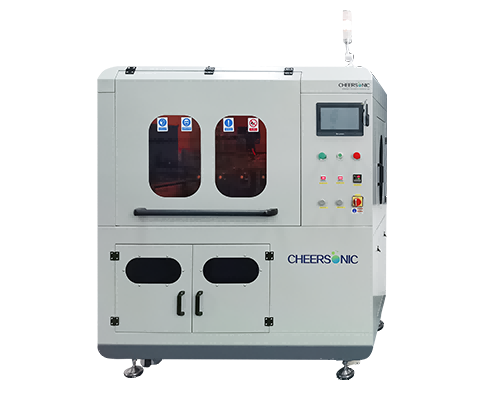
Ultrasonic spraying technology, with its precise and controllable advantages, has become a core process for coating catalysts for photosensors. It effectively solves many pain points of traditional coating methods, significantly improving the catalytic performance and stability of photosensors. This technology utilizes high-frequency ultrasonic vibration to atomize catalyst slurry into micron-sized uniform droplets, which are then guided to the sensor substrate surface by a low-pressure carrier gas. After solvent evaporation, a dense and uniform catalytic coating is formed, meeting the stringent requirements of photosensors for the catalytic layer.
Compared to traditional droplet coating and air spraying, ultrasonic spraying has significant advantages. First, it produces excellent coating uniformity with a narrow droplet size distribution, ensuring uniform distribution of the active catalyst components, avoiding agglomeration, and guaranteeing consistent response rate and stable sensitivity of the photosensor. Second, it offers high material utilization; the atomized droplets have low momentum and strong directionality, significantly reducing overspray losses, making it particularly suitable for precious metal catalysts, saving more than 50% of material costs and reducing production losses.
This process is compatible with various catalysts commonly used in optical sensors. By adjusting parameters such as ultrasonic frequency and slurry delivery rate, precise control of coating thickness from nanometer to micrometer scale can be achieved, balancing the sensitivity and response speed of the optical sensor. Simultaneously, the non-contact spraying process causes no mechanical impact on the porous substrate of the sensor, preserving the original structure of the substrate, facilitating gas diffusion and catalytic reactions, and extending the sensor’s lifespan.
Currently, ultrasonically sprayed optical sensor catalysts are widely used in various precision sensing fields. By optimizing the catalyst layer structure, the conversion efficiency and detection accuracy of optical signals by optical sensors are significantly improved, providing efficient and reliable process support for the large-scale production of high-performance optical sensors and driving the development of optical sensing technology towards miniaturization and high precision.
About Cheersonic
Cheersonic is the leading developer and manufacturer of ultrasonic coating systems for applying precise, thin film coatings to protect, strengthen or smooth surfaces on parts and components for the microelectronics/electronics, alternative energy, medical and industrial markets, including specialized glass applications in construction and automotive.
Our coating solutions are environmentally-friendly, efficient and highly reliable, and enable dramatic reductions in overspray, savings in raw material, water and energy usage and provide improved process repeatability, transfer efficiency, high uniformity and reduced emissions.
Chinese Website: Cheersonic Provides Professional Coating Solutions
