
Ultrasonic Coating Technology in Thin-Film Photovoltaic Chemistry
Wide Application of Ultrasonic Coating Technology in Thin-Film Photovoltaic Chemistry
Against the backdrop of the global energy structure transitioning toward clean and renewable sources, photovoltaic technology, as a core means of utilizing renewable energy, is undergoing rapid technological iteration and industrial upgrading. With distinct advantages such as light weight, flexibility, low cost and scalability for mass production, thin-film photovoltaics have become one of the most promising branches in the photovoltaic sector. As a thin-film preparation method featuring high precision and uniformity, ultrasonic coating technology has been widely adopted in various thin-film photovoltaic chemical systems, providing critical support for improving the performance of photovoltaic devices and promoting their industrialization.
The core advantages of ultrasonic coating technology lie in its unique atomization and deposition mechanism. Coating materials are converted into uniform and fine droplets via high-frequency ultrasonic vibration, which are then precisely deposited onto the substrate surface to form a thin film with uniform thickness, strong adhesion, and low defect rate. This technology effectively overcomes the problems of conventional coating methods (such as knife coating and conventional spraying), including uneven film thickness, edge overflow, and material waste. It is particularly suitable for the fabrication of photovoltaic devices with extremely high film quality requirements, maximizing the photoelectric conversion efficiency of photovoltaic materials.
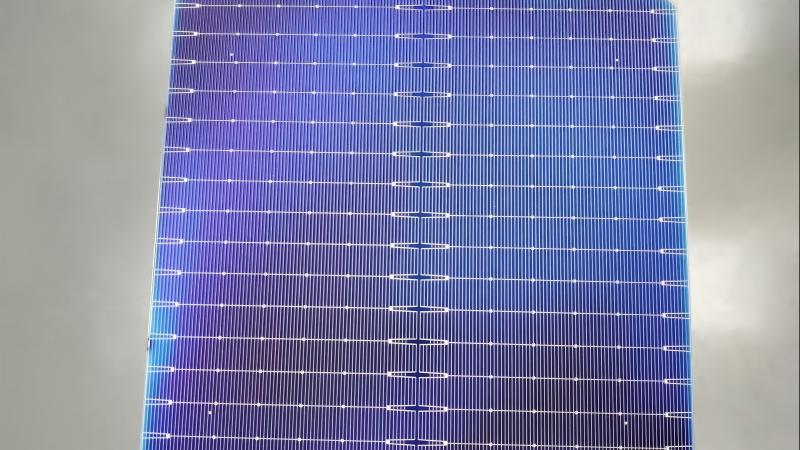
Ultrasonic coating technology demonstrates excellent compatibility and application value across various chemical systems of thin-film photovoltaics, covering most mainstream thin-film photovoltaic types. In addition to common organic photovoltaic systems, the technology is also widely used in the fabrication of perovskite, cadmium telluride (CdTe), and copper indium gallium selenide (CIGS) photovoltaic devices with different chemical compositions, serving as a critical bridge connecting photovoltaic materials and finished devices.
During the fabrication of organic photovoltaic systems, ultrasonic coating technology plays an irreplaceable role. The core of organic photovoltaic devices is the active layer composed of organic semiconductor materials, which imposes extremely high requirements on film uniformity and compactness—properties that directly affect the photoelectric conversion efficiency and stability of the device. Ultrasonic coating technology enables precise control over the active layer thickness, ensuring the uniform distribution of organic semiconductor materials on the substrate and avoiding defects such as pinholes and cracks. Meanwhile, it reduces material waste and lowers production costs. Whether for single organic polymer materials or blended systems of different polymers, ultrasonic coating technology achieves high-efficiency coating and adapts to diverse device design requirements, providing technical support for the flexible and lightweight development of organic photovoltaics.
Beyond organic photovoltaics, the application of ultrasonic coating technology in the perovskite photovoltaic field is becoming increasingly mature. Perovskite materials feature high photoelectric conversion efficiency and simple fabrication processes, but their film preparation imposes strict requirements on environmental humidity and coating uniformity, which are difficult to meet with traditional coating methods. With its low-temperature deposition and precise thickness control, ultrasonic coating technology can produce uniform and compact perovskite films under mild conditions, effectively suppressing defects and improving device stability and service life. Furthermore, this technology can be applied to the coating of functional layers such as electron transport layers and hole transport layers in perovskite photovoltaic devices, realizing full-process high-precision fabrication.
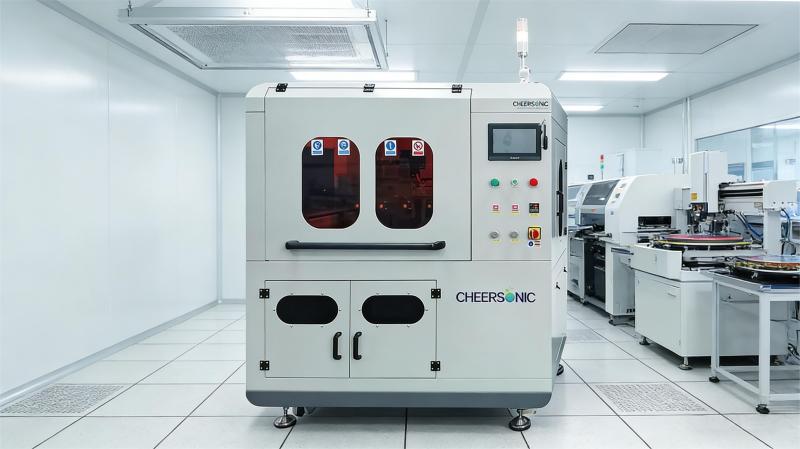
In inorganic thin-film photovoltaic fields such as cadmium telluride and copper indium gallium selenide, ultrasonic coating technology also shows remarkable advantages. Such photovoltaic materials usually require the deposition of multiple functional thin films, whose thickness and uniformity directly determine the device’s photoelectric performance. Ultrasonic coating technology allows precise thickness control for each layer, ensuring tight interfacial bonding, reducing interface defects, and improving carrier transport efficiency. In addition, the technology features high coating speed and scalability, making it suitable for industrial-scale continuous production, helping to reduce costs and increase capacity for inorganic thin-film photovoltaics.
With the continuous development of photovoltaic technologies, the requirements for thin‑film preparation precision, efficiency and cost have been steadily rising, and the application scenarios of ultrasonic coating technology are also continuously expanding. It is not only suitable for laboratory‑scale device research and development, but has also been gradually applied in large‑scale industrial production, becoming an important technical support for promoting the high‑quality development of the thin‑film photovoltaic industry. In the future, with the continuous optimization and innovation of ultrasonic coating technology, it will play a role in more new thin‑film photovoltaic chemical systems, helping photovoltaic technologies achieve higher efficiency, lower costs and wider applications, and injecting new impetus into the global development of renewable energy.
About Cheersonic
Cheersonic is the leading developer and manufacturer of ultrasonic coating systems for applying precise, thin film coatings to protect, strengthen or smooth surfaces on parts and components for the microelectronics/electronics, alternative energy, medical and industrial markets, including specialized glass applications in construction and automotive.
Our coating solutions are environmentally-friendly, efficient and highly reliable, and enable dramatic reductions in overspray, savings in raw material, water and energy usage and provide improved process repeatability, transfer efficiency, high uniformity and reduced emissions.
Chinese Website: Cheersonic Provides Professional Coating Solutions
