
Ultrasonic Coating Machine for Carbon-Coated Aluminum Foil
Ultrasonic Spray Coating Machine for Carbon-Coated Aluminum Foil and Product Characteristics
With the rapid development of the new energy battery industry, optimizing current collector performance has become a key aspect of improving overall battery quality. Carbon-coated aluminum foil, as a high-performance battery current collector, is widely used in the production of various lithium batteries due to its excellent physicochemical properties. Ultrasonic spray coating machines, with their unique high-frequency vibration atomization technology, have become the core equipment for producing high-quality carbon-coated aluminum foil. The carbon-coated aluminum foil produced by this machine exhibits significant advantages in battery performance improvement and cost control, with the following specific characteristics:
Firstly, this carbon-coated aluminum foil can effectively suppress battery polarization, reduce thermal effects, and significantly improve battery rate performance. During battery charging and discharging, polarization leads to voltage deviation, energy loss, and generates a large amount of heat, affecting battery stability and safety. Ultrasonic spray coating machines can atomize carbon slurry into uniform and fine droplets, forming a dense and uniformly thick carbon coating on the aluminum foil surface. This coating optimizes the electron conduction path, accelerates electron migration, and reduces polarization reactions, thereby reducing thermal effects during charging and discharging and preventing battery performance degradation caused by localized overheating. Especially in high-rate charge/discharge scenarios, its advantages are even more pronounced, enabling the battery to maintain stable output performance during rapid charge/discharge, meeting the stringent rate performance requirements of power lithium batteries.
Secondly, this carbon-coated aluminum foil improves battery consistency and effectively extends battery cycle life. Traditional spraying processes are prone to uneven coating and thickness deviations, leading to significant differences in the performance of individual battery cells and affecting the overall stability and lifespan of the battery pack. Ultrasonic spraying machines, through precise control of amplitude, spraying speed, and nozzle distance, achieve precise control of the carbon coating thickness, ensuring highly consistent performance parameters for each piece of carbon-coated aluminum foil, thereby improving the consistency of the battery pack. Simultaneously, the uniform carbon coating reduces uneven current distribution during charge/discharge, lowers internal battery losses, reduces active material shedding and structural damage, significantly extending battery cycle life and meeting the requirements for long-term stable operation of new energy equipment.
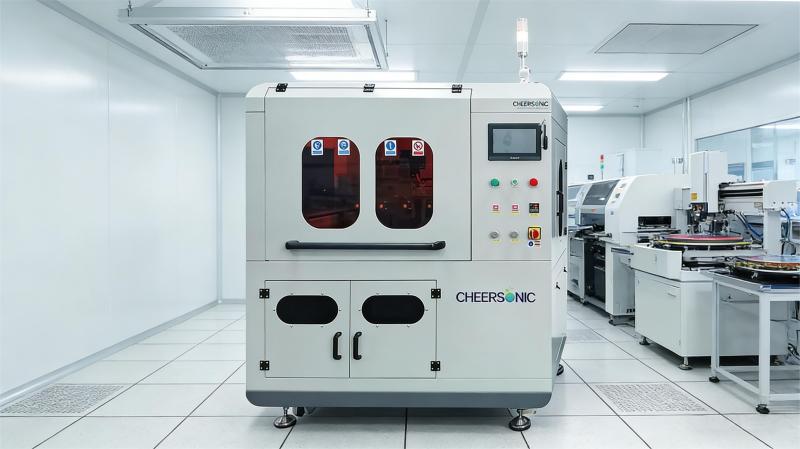
Thirdly, it significantly reduces battery internal resistance, with a sheet resistance lower than that of metallic aluminum foil, while effectively reducing the increase in dynamic internal resistance during cycling. The natural oxide layer on the surface of aluminum foil increases electron conduction resistance. However, the carbon coating prepared by ultrasonic spraying possesses excellent conductivity, effectively covering the oxide layer on the aluminum foil surface, reducing electron conduction resistance, and significantly lowering the battery’s internal resistance. Furthermore, its sheet resistance is significantly lower than that of pure aluminum foil. During long-term battery cycling, this carbon coating maintains structural stability, reducing the increase in dynamic internal resistance and preventing problems such as capacity decay and decreased charge/discharge efficiency caused by increased internal resistance, thus ensuring long-term stable electrochemical performance of the battery.
Fourth, this carbon-coated aluminum foil improves the adhesion between the active material and the current collector, effectively reducing electrode manufacturing costs. Insufficient adhesion between the active material and the current collector easily leads to problems such as powder shedding and delamination during electrode processing and charge/discharge, increasing production costs. The carbon coating prepared by ultrasonic spraying has a suitable surface roughness, which enhances the physical adsorption with the active material, significantly improving adhesion and reducing the amount of binder used. Simultaneously, the improved adhesion increases the electrode processing yield, reduces raw material waste, lowers electrode manufacturing costs, and brings significant economic benefits to battery manufacturers.
Fifth, it effectively protects the current collector from electrolyte corrosion, improving battery safety. Lithium-ion battery electrolytes are corrosive; long-term use can erode the aluminum foil current collector, leading to damage, decreased conductivity, and even short circuits. The dense carbon coating prepared by ultrasonic spraying forms an effective protective barrier, isolating the electrolyte from contact with the aluminum foil surface, preventing corrosion, protecting the structural integrity and conductivity stability of the current collector, and thus improving battery safety and lifespan.
Finally, this carbon-coated aluminum foil improves the processing performance of lithium iron phosphate and lithium iron titanate materials. During processing, lithium iron phosphate and lithium iron titanate cathode materials are prone to uneven dispersion and coating difficulties, affecting electrode quality. The carbon coating on the aluminum foil optimizes material dispersion, improves the compatibility between the active material and the current collector, makes slurry coating smoother and more uniform, reduces electrode processing difficulty, improves processing efficiency and product yield, and provides strong support for the widespread application of these materials.
In summary, carbon-coated aluminum foil prepared by ultrasonic spraying machines, with its many excellent characteristics, can comprehensively improve the electrochemical performance, safety, and stability of batteries, while reducing production costs. It has broad application prospects in the field of new energy batteries and provides important support for the high-quality development of the lithium battery industry.
About Cheersonic
Cheersonic is the leading developer and manufacturer of ultrasonic coating systems for applying precise, thin film coatings to protect, strengthen or smooth surfaces on parts and components for the microelectronics/electronics, alternative energy, medical and industrial markets, including specialized glass applications in construction and automotive.
Our coating solutions are environmentally-friendly, efficient and highly reliable, and enable dramatic reductions in overspray, savings in raw material, water and energy usage and provide improved process repeatability, transfer efficiency, high uniformity and reduced emissions.
