
Ultrasonic Coating Heparin Technology
The technology of using ultrasonic coating equipment to coat heparin on hemodialysis ultrafiltration membranes is a key innovation in improving the anticoagulant performance of dialysis membranes and enhancing clinical treatment outcomes. The following provides a detailed analysis from the aspects of technical principles, advantages, process implementation, and clinical value:
Technical background and anticoagulant mechanism
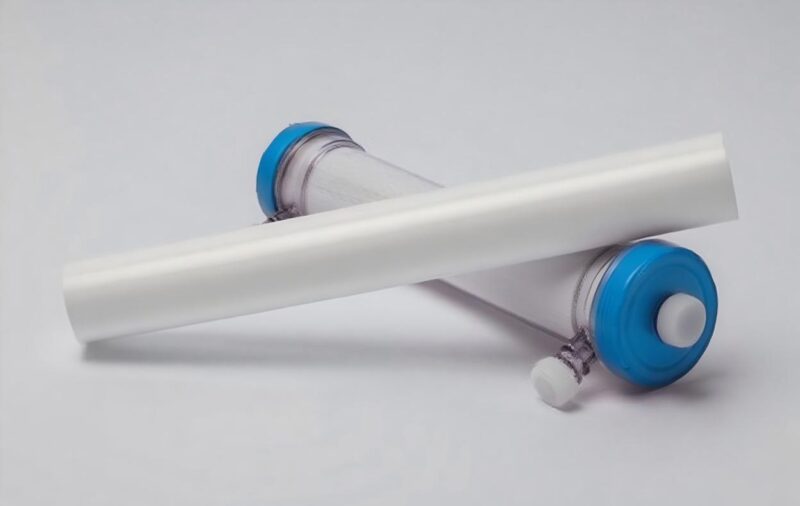
During hemodialysis, direct contact between ultrafiltration membranes and blood can easily cause coagulation reactions, leading to membrane fouling and decreased treatment efficiency. Heparin, as a potent anticoagulant, significantly prolongs clotting time by binding to antithrombin III (ATIII) to inhibit thrombin and factor Xa activity. Traditional coating methods such as dip coating and spray coating have problems such as uneven coating and low utilization of heparin. However, ultrasonic coating technology achieves micrometer level atomization through high-frequency vibration, accurately controlling coating thickness and distribution, and becoming an ideal choice for optimizing heparin coating.
Core Advantages of Ultrasonic Coating Technology
1. Coating Uniformity and Precision
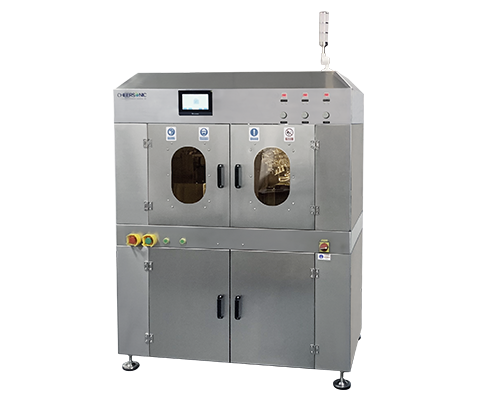
The droplet diameter generated by ultrasonic nozzles can be as small as 1-50 microns, enabling the formation of a heparin coating with uniform thickness (±5% deviation) on the surface of ultrafiltration membranes. For instance, the ultrasonic spraying system developed by Hangzhou Chifei achieves high-density and uniform distribution of heparin molecules on the surface of polysulfone membranes through non-contact atomization, significantly enhancing the anticoagulant effect.
2. Material Utilization and Process Controllability
The material waste rate of traditional spraying processes is as high as over 50%, while the utilization rate of liquid medicine in ultrasonic coating exceeds 95%. The equipment can precisely adjust spraying parameters (such as frequency, power, and flow rate) to achieve accurate control of heparin loading capacity (e.g., 0.1-10 μg/cm²) and support the superposition of multi-layer coatings (e.g., buffer layer + drug layer + wear-resistant layer).
3. Biocompatibility and Long-Term Stability
Ultrasonic coating is performed at low temperatures, which prevents heparin molecules from degrading due to high temperatures and preserves their biological activity. Studies have shown that covalently bonded heparin coatings retain 60%-70% of their activity after simulating 13 months of dialysis, significantly reducing the risk of thrombus formation. Meanwhile, the tight bonding between the coating and the membrane material (e.g., through electrostatic adsorption or covalent bonding) can resist blood scouring and extend the service life.
Process Implementation and Parameter Optimization
1. Membrane Material Pretreatment
Common membrane materials such as polysulfone (PS) and polyethersulfone (PES) require surface modification (e.g., plasma treatment, grafting of hydrophilic groups) to enhance their bonding force with heparin. For example, amination treatment is used to make the membrane surface positively charged, which forms electrostatic adsorption with the negative charge of heparin.
2. Coating Parameter Optimization
– Ultrasonic Frequency: A frequency range of 20-40 kHz is suitable for most heparin solutions; high frequencies (e.g., 80 kHz) can further refine droplets and improve coating uniformity.
– Spraying Distance and Flow Rate: The distance between the nozzle and the membrane surface is 10-30 cm, and the flow rate is 0.1-2 mL/min, ensuring that droplets fully spread without splashing when they hit the membrane surface.
– Drying Conditions: Low-temperature drying (e.g., 37°C) or vacuum drying is adopted to avoid heparin aggregation or membrane pore shrinkage.
3. Coating quality control
The coating morphology was observed by scanning electron microscopy (SEM), surface roughness was detected by atomic force microscopy (AFM), heparin density was evaluated by toluidine blue staining, and anticoagulant performance was verified by dynamic clotting time (such as PTT) testing. For example, covalently bonded heparin coatings can extend PTT to 2-3 times that of the control membrane.
Summary
Ultrasonic coating technology provides an efficient and controllable solution for heparin modification of hemodialysis ultrafiltration membranes, with significantly better coating uniformity, biocompatibility, and long-term stability than traditional methods. With the deepening of process optimization and clinical research, this technology is expected to become the core preparation technology for the next generation of anticoagulant dialysis membranes, bringing a safer and more effective treatment experience to millions of dialysis patients worldwide.
About Cheersonic
Cheersonic is the leading developer and manufacturer of ultrasonic coating systems for applying precise, thin film coatings to protect, strengthen or smooth surfaces on parts and components for the microelectronics/electronics, alternative energy, medical and industrial markets, including specialized glass applications in construction and automotive.
Our coating solutions are environmentally-friendly, efficient and highly reliable, and enable dramatic reductions in overspray, savings in raw material, water and energy usage and provide improved process repeatability, transfer efficiency, high uniformity and reduced emissions.
Chinese Website: Cheersonic Provides Professional Coating Solutions