
Ultrasonic-Assisted Coating of Carbon Nanotubes
Ultrasonic-Assisted Coating of Carbon Nanotubes: Empowering Breakthroughs in Fuel Cell Electrode Performance
As efficient and clean energy conversion devices, the core performance of fuel cells depends on the electrical conductivity and stability of their electrodes. The pursuit of high power density in proton exchange membrane fuel cells (PEMFCs) and the demand for alkali-resistant electrodes in alkaline anion exchange membrane fuel cells (AEMFCs) both point to the technical bottleneck of electrode material modification. Carbon nanotubes (CNTs), with their exceptional electrical conductivity and structural properties, have emerged as ideal fillers, while the application of ultrasonic-assisted coating technology provides critical support for the efficient dispersion and full performance realization of CNTs in electrodes.
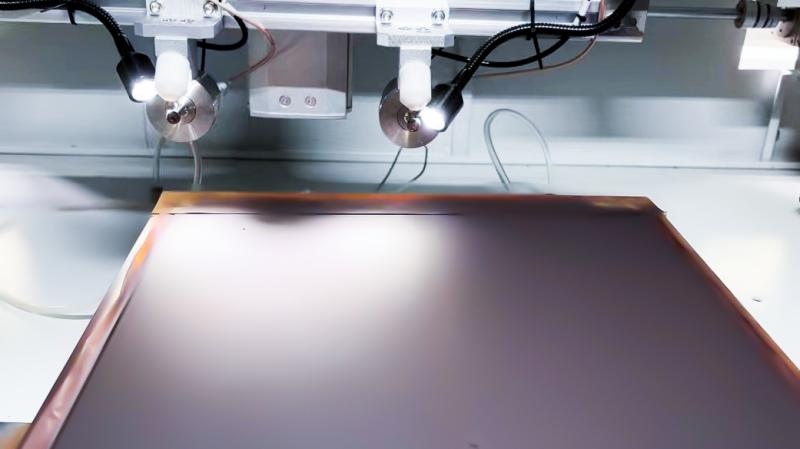
Conventional coating techniques tend to cause CNT agglomeration, creating conductive dead zones that substantially degrade electrode conductivity. Ultrasonic-assisted coating technology fundamentally overcomes this issue through the cavitation effect and mechanical vibration of ultrasound. During the coating process, ultrasound acts on the CNT dispersion, generating countless microscopic bubbles that implode instantaneously, releasing powerful impact forces that effectively break up CNT agglomerates and disperse them uniformly as individual tubes or small bundles. Simultaneously, the vibrational action of ultrasound promotes close bonding between CNTs and the electrode substrate, forming a continuous and stable conductive network that provides unobstructed pathways for charge transport.
For high-power-density PEMFC electrodes, the advantages of ultrasonic-assisted CNT coating are particularly prominent. High-power output requires electrodes with extremely low ohmic resistance, and the uniform conductive network formed by ultrasonic coating can reduce electrode sheet resistance by over 30%. Moreover, this technology enables precise control over CNT coating thickness and distribution, enhancing conductivity without compromising the electrode’s porous structure, thereby ensuring efficient transport of reactant gases and electrolytes. In simulated operating condition tests, PEMFC electrodes employing ultrasonic-assisted CNT coating achieved a peak power density 25% higher than that of conventional electrodes, while exhibiting performance degradation rates of less than 5% after prolonged continuous operation, demonstrating excellent stability.
In the fabrication of alkali-resistant electrodes for AEMFCs, ultrasonic-assisted coating technology also plays a vital role. In alkaline environments, electrode materials are susceptible to corrosion and structural degradation, whereas the alkali resistance and mechanical strength of CNTs can effectively enhance electrode longevity. Ultrasonic-assisted coating ensures uniform CNT dispersion within alkali-resistant binders, forming a dense protective layer that prevents electrolyte erosion of the electrode substrate. Simultaneously, the uniformly distributed CNTs maintain the electrode’s conductive stability under alkaline conditions, avoiding performance decline due to material corrosion. Experimental results indicate that AEMFC electrodes treated with ultrasonic-assisted CNT coating retain 85% of their initial conductivity after 1000 hours of immersion in alkaline electrolyte, far exceeding the 50% retention of conventional electrodes.
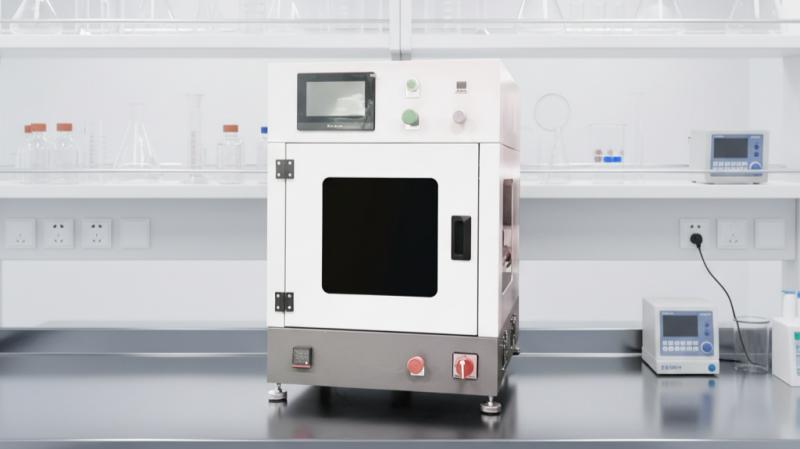
Ultrasonic-assisted CNT coating technology not only enhances the core performance of fuel cell electrodes but also holds potential for industrial-scale application. The technique is operationally straightforward, offers high coating efficiency, and enables continuous batch production. Moreover, the coating process is environmentally friendly, requiring no additional dispersing agents, thereby reducing production costs. With ongoing optimization, the coating precision and stability of this technology are expected to improve further, promising broader adoption in the fabrication of various types of fuel cell electrodes.
Against the backdrop of the global energy transition, breakthroughs in fuel cell technology are of paramount importance. By resolving the CNT dispersion challenge, ultrasonic-assisted coating technology provides an effective solution for enhancing the performance of high-power-density PEMFC electrodes and alkali-resistant AEMFC electrodes. In the future, as this technology becomes deeply integrated with the development of electrode materials, it will undoubtedly drive the widespread application of fuel cells in transportation, distributed power generation, and other fields, laying a solid foundation for the clean and efficient utilization of energy.
About Cheersonic
Cheersonic is the leading developer and manufacturer of ultrasonic coating systems for applying precise, thin film coatings to protect, strengthen or smooth surfaces on parts and components for the microelectronics/electronics, alternative energy, medical and industrial markets, including specialized glass applications in construction and automotive.
Our coating solutions are environmentally-friendly, efficient and highly reliable, and enable dramatic reductions in overspray, savings in raw material, water and energy usage and provide improved process repeatability, transfer efficiency, high uniformity and reduced emissions.
Chinese Website: Cheersonic Provides Professional Coating Solutions
