The Era of Polyimide Separators Has Arrived
Amid the rapid development of new energy technologies, research into high-performance battery materials is central to driving advancements in electric vehicles and energy storage systems. Polyimide (PI), with its exceptional high-temperature resistance, flame retardancy, and insulation properties, holds great potential in the battery separator field. PI films remain stable at temperatures exceeding 500°C and exhibit excellent electrolyte wettability, offering a new solution for improving battery safety and cycle life.
Polyimides are a class of polymers containing a five-membered imide ring in the backbone. Aromatic PIs dominate the industry due to their exceptional performance. Their characteristics include: 1) exceptional high-temperature resistance (above 500°C, with a long-term operating temperature of 200-300°C); 2) excellent chemical resistance and flame retardancy (LOI 35-37%); 3) excellent electrical insulation; and 4) polar groups imparting good electrolyte wettability. Compared to traditional polyolefin separators (such as PE/PP), which suffer from poor thermal stability and insufficient electrolyte wettability, PI film offers significant advantages in high-temperature resistance, flame retardancy, insulation, and electrolyte compatibility, making it an ideal candidate for high-performance battery separators. Research has shown that PI separators only melt above 500°C and shrink to zero at 350°C, significantly exceeding the thermal stability of traditional separators.
As a core energy storage system, lithium-ion batteries require separators to meet several key requirements: excellent thermal stability, optimal thickness and pore size distribution, high melt barrier properties, good electrochemical stability, high porosity, excellent insulation and mechanical properties, and excellent electrolyte wettability.
Currently, the main technologies for preparing PI separators include:
1. Sacrificial Template Method
This method involves mixing a porogen into a solution of PI or its precursor, polyamic acid (PAA), casting the film, and then removing the porogen to create a porous structure.
Inorganic Template Method: Metal oxides and non-metallic oxides are commonly used. For example, a PI membrane with a three-dimensional ordered microporous structure (3DOM) was prepared using a monodisperse SiO₂ opal template, exhibiting high porosity and good wettability. Using water-soluble LiBr as a template, after removal in a water bath, a uniform nanoporous PI membrane was produced, achieving a capacity retention of 91.2% after 200 cycles in assembled batteries.
Polymer template method: Polyethylene glycol (PEG) and polyvinylpyrrolidone (PVP) are commonly used. The PI-PEG/PVP membrane prepared by in situ polymerization has a pore size of approximately 30-35 nm and abundant pores, significantly improving porosity and electrolyte absorption.
Interfacial evaporation-induced self-assembly method: Solvent evaporation is used to induce microspheres (such as SiO₂) to self-assemble at the air-liquid interface to form a template. After filling with the material, the template is removed to obtain an inverse protein structure. For example, 3DOM PI membranes prepared by this method do not require a support layer, effectively improving the current distribution and cycling stability of the battery.
Limitations: Issues include incomplete removal of the porogen, and the removal process may increase costs or affect mechanical properties.
2. Non-Solvent Phase Separation (NIPS)
Porous structures are formed by inducing polymer precipitation through the exchange of solvent and non-solvent, allowing precise control of pore size and porosity.
Research Example: A sponge-like porous PI membrane was prepared using a PI/DMAc solution and an ethanol/DMAc coagulation bath. High ethanol concentration promotes precipitation, and the resulting membrane has excellent ionic conductivity due to its high porosity; a process based on a stainless steel substrate was developed, in which a PAA solution was coated to form a porous PI membrane through phase change and imidization, with uniform pore size (0.02~0.15 μm), good air permeability and thermal stability, but PAA is easily hydrolyzed, affecting strength; the PPI-15 membrane (25-30 μm thick) prepared by optimizing NIPS parameters (such as 15 wt% PI solution, 50:50 ethanol/DMAc coagulation bath) has a porosity of 61%, a pore size of 123 nm, and an ionic conductivity (0.54 mS/cm) that is better than commercial products. However, it is necessary to avoid excessive ethanol content that may lead to unfavorable finger-like pore structure.
3. Electrospinning
Using a high-voltage electric field, polymer solutions or melts are stretched into nanofiber membranes. This method is simple to operate, resulting in membranes with nanostructures, high specific surface area, and uniformity. Typically, PAA nanofibers are electrospun first, followed by thermal imidization to form PI fibers.
Research Example: PI nanofiber separators prepared using PMDA and ODA as precursors exhibit porosity exceeding 90%, excellent wettability, and excellent electrolyte absorption. After 100 cycles at 250°C, the discharge capacity retention reached 90.2%, demonstrating excellent cycling stability and rate capability.
Advantages: Three-dimensional interconnected pore structure, high porosity, and large specific surface area significantly enhance ionic conductivity.
Limitations: Low production yields and high environmental requirements. To address insufficient mechanical strength of the fiber membranes, reinforcement strategies such as hot pressing, chemical crosslinking, or the addition of inorganic fillers can be employed. Future efforts require focus on equipment improvements and process optimization to achieve industrialization.
4. Solution Spraying (SBS)
This new technology combines the advantages of traditional solvent spraying and electrospinning. High-speed airflow is used to ultrafinely stretch a thin stream of extruded solution, forming micro-nanofibers.
Principle and Advantages: The core of this process is a coaxial nozzle, which sprays the solution internally. The high-speed airflow between the inner and outer nozzles generates shear force, stretching the solution into a jet and refining and solidifying it. It does not require high-voltage electrostatic devices or special conductive collectors, has low dielectric constant requirements for the solvent, and does not damage thermo-/piezoelectrically sensitive materials. The spinning rate can reach dozens of times that of electrospinning (e.g., 10 mL·h⁻¹ vs. 0.3 mL·h⁻¹). Compared to meltblowing, it offers a wider range of raw material applicability (processing easily degradable, highly viscous, or non-meltable polymers). The use of room-temperature compressed gas avoids thermal degradation. It offers potential for energy conservation, low cost, and a wide range of product varieties, making it a preferred solution for the large-scale production of PI nanofibers.
Summary and Outlook
Polyimide separator preparation technologies are diverse and constantly evolving, ranging from sacrificial templates, NIPS, to electrospinning, each with its own unique characteristics. The emerging solution jetting method offers significant advantages and is expected to promote industrialization. With continuous process optimization and cost reduction, polyimide separators are expected to become the core components of the next generation of high-performance batteries, injecting strong impetus into the development of the new energy field.
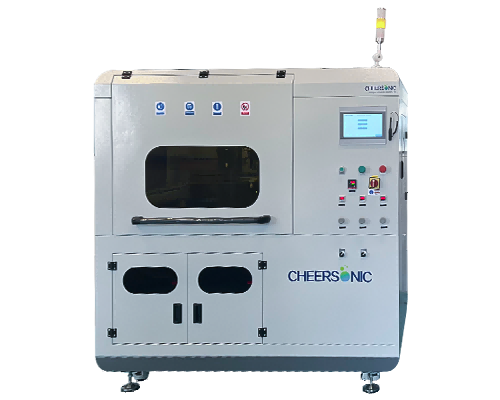
Ultrasonic spray systems are used to apply polyimide coatings, creating insulating layers where chemical inertness is required. This technology can replace traditional insulating tapes and is particularly suitable for complex geometries and small areas (such as grooves and holes), providing material encapsulation and protection to prevent side reactions or leakage of lithium and other active materials. Polyimide offers excellent structural integrity as a flexible encapsulation material for battery systems containing radioactive or highly reactive elements.
The key advantages of ultrasonic spray polyimide encapsulation coatings include:
Durable, mechanically stable coating
No moving parts and wear-free nozzles
Excellent dielectric properties
Extensive expertise in polyimide coatings
Extensive experience in microporous separator coatings
Extremely uniform and reproducible thin films
High-temperature-resistant coatings capable of operating at temperatures up to 400°C
About Cheersonic
Cheersonic is the leading developer and manufacturer of ultrasonic coating systems for applying precise, thin film coatings to protect, strengthen or smooth surfaces on parts and components for the microelectronics/electronics, alternative energy, medical and industrial markets, including specialized glass applications in construction and automotive.
Our coating solutions are environmentally-friendly, efficient and highly reliable, and enable dramatic reductions in overspray, savings in raw material, water and energy usage and provide improved process repeatability, transfer efficiency, high uniformity and reduced emissions.
Chinese Website: Cheersonic Provides Professional Coating Solutions</a