
Precision Technology and Coating Processes of Medical Blades, Surgical Instruments, and Anastomotic Staples
In modern surgical medical systems, medical blades, general surgical instruments, and anastomotic staples serve as essential consumables and tools in clinical procedures, directly influencing surgical precision, wound healing outcomes, and patient safety post-operation. With the continuous advancement of minimally invasive medical technologies, the materials and surface treatment techniques for these medical devices have evolved significantly, progressing toward higher precision, superior lubricity, and enhanced biocompatibility—becoming critical enablers for efficient surgical performance.
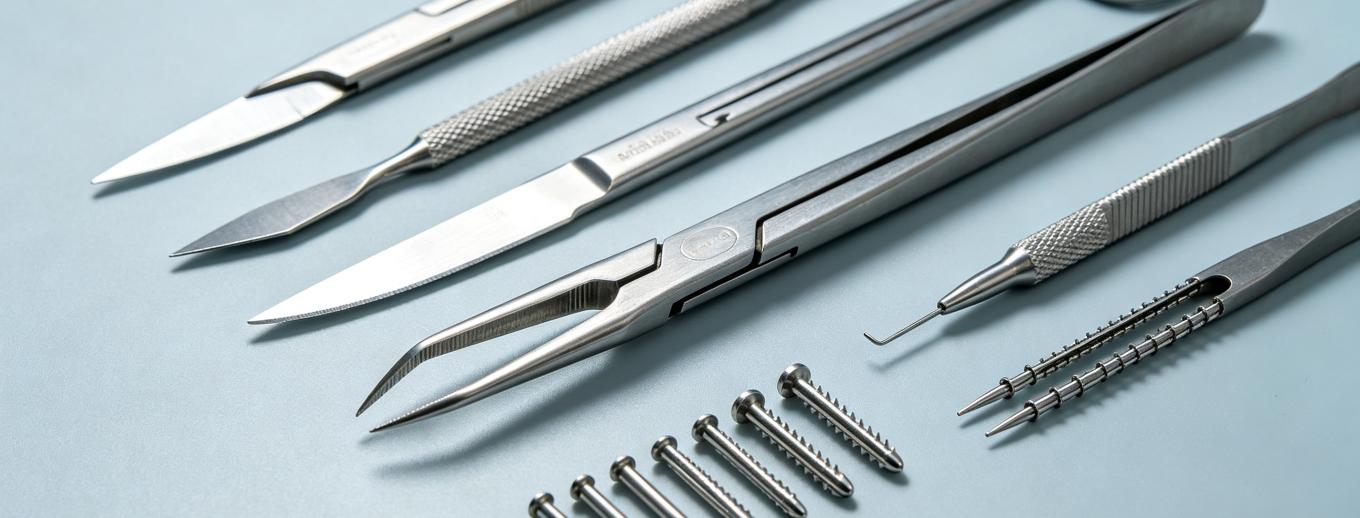
Medical blades, as core cutting instruments, must meet stringent performance criteria including uniformly sharp edges, stable corrosion-resistant materials, and minimal tissue trauma. Typically made from specialized medical-grade stainless steel, they undergo multiple precision processes such as forging, polishing, and passivation to eliminate burrs and chipping at the cutting edge, enabling precise tissue incision and dissection while minimizing mechanical damage to healthy tissues. General surgical instruments, on the other hand, are designed for versatility across various surgical scenarios, balancing toughness, hardness, and resistance to sterilization. They can withstand repeated high-temperature sterilization and disinfection cycles, making them suitable for both conventional and minimally invasive surgeries and meeting the demands of clinical reuse.
Anastomotic staples are crucial consumables used in tissue anastomosis procedures involving the gastrointestinal tract, blood vessels, and skin, replacing traditional manual suturing and significantly improving anastomotic efficiency and uniformity. Their key advantages include even force distribution and tight closure, effectively reducing postoperative bleeding, leakage, and infection risks. Made from highly biocompatible materials, they minimize immune rejection after implantation and adapt well to the body’s natural healing process. Once tissue has healed, they can either remain securely in place or be easily removed, making them widely used across general surgery, thoracic surgery, proctology, and other specialties.
To further enhance the performance, biocompatibility, and durability of medical devices, the industry commonly employs advanced surface modification technologies. Among these, PTFE (Teflon) coating stands out due to its extremely low coefficient of friction, excellent corrosion resistance, and biological inertness, making it a preferred choice for medical device coatings. Ultrasonic spraying is recognized as the optimal method for precisely applying such coatings, enabling the formation of uniform, dense, and strongly adherent ultra-thin films on medical blades, fine surgical instruments, and miniature anastomotic staples.
Compared to conventional spray or dip-coating methods, ultrasonic spraying utilizes high-frequency vibration atomization to generate micron-level droplets, ensuring consistent coating coverage even on micro-scale and irregularly shaped medical devices. This eliminates common issues such as uneven thickness, pinholes, and material buildup. Coated medical blades exhibit significantly reduced cutting resistance, thereby minimizing tissue drag and damage; surgical instruments operate more smoothly, reducing wear during procedures; and anastomotic staples gain improved surface lubricity, facilitating smoother insertion and closure, ultimately enhancing surgical accuracy.
Moreover, all such precision medical devices must strictly comply with medical biosafety standards, undergoing rigorous testing including sterilization, toxicity assessment, and corrosion resistance evaluation to prevent material leaching, bacterial growth, or tissue irritation. In today’s era of widespread minimally invasive surgery, medical blades, surgical instruments, and anastomotic staples developed through advanced substrate processing and state-of-the-art coating technologies continue to drive the evolution of surgery toward greater precision and safety, providing solid support for clinical diagnosis and treatment.
Surgical Tool Technology
Surgical Tool Technology Popularize the aerospace micro-thin coating technology, [...]
To reach our anytime via email please fill out the form below with your request and a company representative will reply to you. To find your local CHEERSONIC representative to connect directly click your region in the contact drop down menu.

Contact CHEERSONIC For immediate assistance please contact us the corporate headquarters during business hours at 6:00 am – 22:00 pm.
Tel: 0571-87910406
- Mobile: +86 15869049660
- Email: Market2@cheersonic.com
Add: 11-13 Chuangye Road, Changkou, Fuyang, Hangzhou, Zhejiang, China