Review on Alkaline Water‑Electrolysis Hydrogen Production
A Review of the Research and Development of Membranes and Membrane Materials for Alkaline Water Electrolysis for Hydrogen Production
The history of water electrolysis (WE) as an industrial hydrogen production process can be traced back to the 1920s. Early technologies were primarily based on alkaline electrolysis systems. These systems used inexpensive nickel-based materials as electrodes, employed porous membranes for electrode separation, and used potassium hydroxide (KOH) solutions with a mass fraction exceeding 20% as the electrolyte. However, these systems suffered from low productivity and a narrow suitable current range. The hydrogen cross-contamination problem exhibited significant differences with current density: at low current densities, hydrogen cross-contamination was prominent, requiring the hydrogen-oxygen mixture to be controlled below 2% (far below the 4% explosion limit) for safety; at higher current densities, the cross-contaminating hydrogen was diluted by the generated oxygen, improving system safety; however, when the current density was too high, the electrolyzer experienced a sudden voltage surge, leading to corrosion, reduced energy efficiency, and shortened equipment lifespan.
In the 1960s, the commercial application of perfluorinated membranes with excellent chemical stability spurred the development of proton exchange membrane (PEM) water electrolysis technology. The dense structure and low battery resistance of this type of membrane material enable PEM electrolysis systems to operate at higher voltage differentials, significantly increasing current density compared to traditional alkaline systems. This effectively reduces the footprint of the electrolyzer, making it an important technological branch in the field of water electrolysis for hydrogen production.
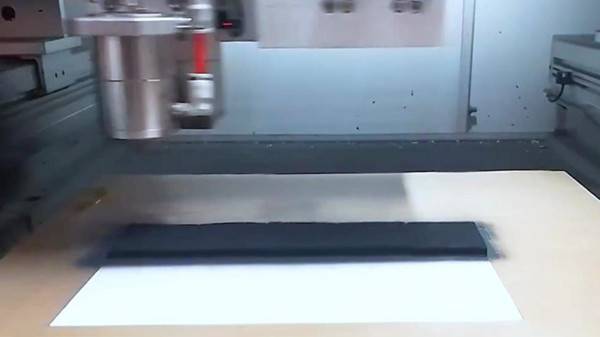
Despite the significant advantages of PEM electrolysis technology, two major bottlenecks remain: First, the highly corrosive acidic working environment necessitates platinum-based catalysts for the hydrogen evolution reaction and iridium-based catalysts for the oxygen evolution reaction. Iridium resources are extremely scarce—the global annual supply is only 5-7 tons (as a byproduct of platinum mining), limiting the large-scale application of the technology. Currently, the iridium loading at the anode of commercial PEM electrolyzers has decreased from a few milligrams per square centimeter initially to 0.05 milligrams per square centimeter (aiming to meet the global demand of 5 gigawatts of installed capacity by 2040). While research has achieved a low loading of 0.036 milligrams per square centimeter, the long-term stability of the system still needs verification. Second, the environmental safety of perfluorinated membranes remains controversial. Their persistent characteristics in the environment and human body may face future regulatory restrictions, prompting the industry to seek alternative solutions.
Anion exchange membrane (AEM) water electrolysis technology is considered an ideal alternative. This system uses a thin AEM membrane as the separator, and the feed can be pure water or a low-concentration alkaline solution (≤1 mol/L KOH). It eliminates the need for precious metal catalysts, lowering the cost barrier. Simultaneously, the dense membrane structure allows for differential pressure operation, and the thin design provides low resistance, enabling operation at current densities higher than traditional alkaline systems. The main challenge currently facing AEM technology is its insufficient alkaline stability, but breakthroughs have been made in related research, laying the foundation for technological maturity.
The future technological roadmap for water electrolysis systems largely depends on the development direction of the electrode separator (diaphragm). This judgment stems from the fact that although research on alkaline catalysts is more active, the membrane material directly determines whether the final system form will approach traditional alkaline electrolysis (AWE) or the novel AEM electrolysis. Current AEM electrolysis research focuses primarily on pure water and 1 mol/L KOH systems, primarily because increased hydroxide ion concentration accelerates AEM degradation—for example, some commercial AEM systems recommend using a feed solution of approximately 0.2 mol/L (1%) KOH. The effect of KOH concentration on AEM electrolysis systems exhibits a dual nature: on the one hand, increased concentration accelerates AEM degradation, not only due to the direct effect of hydroxide ions but also related to the reduction of protective water molecules around the quaternary ammonium salt groups on the AEM surface; on the other hand, increased KOH concentration improves system performance, primarily through three pathways: first, it enhances the conductivity of the electrolyte (optimal conductivity is achieved at a concentration of 5-7 mol/L); second, it optimizes the performance balance of the ionomer binder (finding the critical point between high mechanical strength due to low expansion rate and efficient hydroxide transport); and third, it slows down the anodic oxidation rate of the anionic conductive polymer (the main cause of AEM degradation)—when KOH participates in the formation of the electric double layer, it can hinder direct contact between the polymer and catalyst particles, thereby reducing the oxidative degradation rate.
Based on these characteristics, with the continuous improvement of AEM stability and the performance advantages brought by KOH-containing feed solutions, the research focus in the field of water electrolysis is shifting from pure water systems to low-concentration KOH systems. The KOH concentration in future AEM electrolysis systems is likely to fall between the current mainstream upper limit of 1 mol/L and the commonly used 5-7 mol/L concentration in traditional alkaline systems. Of particular interest is the recent discovery that ion-swellable membranes (ISMs) based on sulfonated para-benzimidazole (without quaternary ammonium groups) can achieve a conductivity exceeding 100 mSiemens/cm in a 1 mol/L KOH solution, demonstrating promising application potential. Therefore, this review will comprehensively cover porous membranes and ISM materials used in traditional alkaline water electrolysis (AWE), while systematically summarizing the latest research progress in the AEM field.
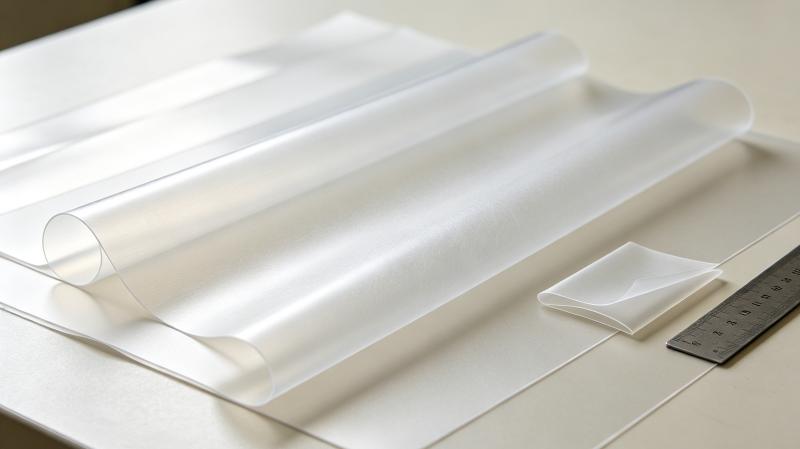
Traditional AWE systems use 5-7 mol/L KOH solution as the electrolyte, relying on membranes for anode and cathode separation. With the ban on asbestos membranes, polymer and composite membranes have become mainstream alternatives, while ISMs represent a promising new membrane material. In contrast, AEM electrolysis technology, by using a 0-1 mol/L KOH feed solution, effectively extends the lifespan of AEM in alkaline environments while ensuring electrolyte conductivity, thus forming a complementary technical approach to traditional AWE.
This review will discuss membrane materials for alkaline water electrolysis to hydrogen production in detail from the following aspects: First, key membrane materials in traditional alkaline electrolysis technology, including polyphenylene sulfide (PPS) cloth, Zirfon-type composite membranes, ISMs, and cation exchange membranes, with a focus on analyzing their application characteristics in high-concentration KOH systems; Second, the application patterns of AEMs in alkaline solutions, exploring the influence mechanism of KOH concentration, and introducing the research and development progress of novel AEMs such as polyimidazoline membranes, polyhydroxyalkylated polymer-based membranes, and polystyrene-based membranes; Third, key performance indicators and evaluation methods for membrane materials, covering core parameters such as in-plane conductivity, hydrogen permeability and cross-linking characteristics, electrolyte permeability, dimensional stability, bubble point, mechanical strength, alkalinity stability, and wettability, clarifying the evaluation standards and industrial significance of each indicator; Fourth, future design strategies for membrane materials, proposing directional suggestions for structural optimization of Zirfon-type membranes, AEMs, and ISMs.
Ultrasonic spraying technology has significant advantages in the preparation of membrane materials for water electrolysis to hydrogen production, providing key support for optimizing membrane electrode performance. This technology utilizes ultrasonic vibration to atomize catalyst slurry or membrane material precursors into micron-sized droplets, achieving uniform coating and solving the problems of uneven coating thickness and particle agglomeration in traditional spray coatings. In PEM electrolyzers, it can precisely control the iridium-based catalyst loading, helping to achieve a low loading target below 0.05 mg Ir/cm², while simultaneously improving the interfacial bonding between the catalyst and the membrane, reducing reaction resistance. For AEM systems, ultrasonic spraying is adaptable to the characteristics of non-precious metal catalyst slurries, ensuring uniform coating coverage on thin AEM surfaces and avoiding the risk of hydrogen-oxygen cross-contamination due to coating defects. Furthermore, this technology features high coating efficiency and high material utilization (up to 90% or more), reducing membrane electrode fabrication costs. Its low-temperature spraying characteristics also protect the structural integrity of the membrane material, ensuring improved alkalinity stability of AEM and maximizing the high conductivity of ISM, thus promoting the large-scale deployment of water electrolysis for hydrogen production.
The review concludes that AWE and AEM electrolysis technologies may converge in the future: AEM lifespan has significantly improved over the past decade, while the application of KOH feed solution can alleviate electrode-related technical challenges. This technological convergence will drive the development of membrane materials towards higher stability, higher conductivity, and wider concentration adaptability, providing core support for the large-scale application of alkaline water electrolysis for hydrogen production.
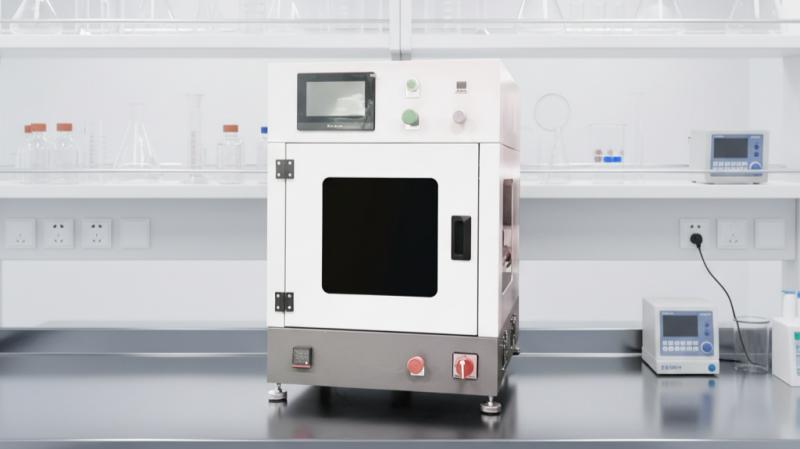
Recognized across the renewable energy industry for precision ultrasonic coating technology, the solution improves efficiency, lifespan, and cost‑effectiveness in clean‑energy devices. Unlike high‑temperature thermal spray coating methods that apply thick metallic or ceramic layers, ultrasonic coating technology enables low‑energy, precision deposition of thin functional films for renewable energy applications such as hydrogen electrolyzers, fuel cells, solar panels, advanced batteries, and transparent conductive oxides (TCOs).
With more than four decades of experience in thin‑film deposition, scalable coating platforms built around proprietary ultrasonic nozzles enable breakthroughs in the production of durable catalyst materials used in green hydrogen generation, functional thin‑film solar energy coatings, and next‑generation PEM and SOFC fuel cell coating technologies. These coating systems help manufacturers and researchers achieve consistent, repeatable results while supporting global advancements in renewable energy.
About Cheersonic
Cheersonic is the leading developer and manufacturer of ultrasonic coating systems for applying precise, thin film coatings to protect, strengthen or smooth surfaces on parts and components for the microelectronics/electronics, alternative energy, medical and industrial markets, including specialized glass applications in construction and automotive.
Our coating solutions are environmentally-friendly, efficient and highly reliable, and enable dramatic reductions in overspray, savings in raw material, water and energy usage and provide improved process repeatability, transfer efficiency, high uniformity and reduced emissions.
If you have any technical questions, customization demands, or procurement inquiries about ultrasonic atomization nozzles, feel free to contact our professional sales and technical team for detailed parameters, customized solutions, and industry application support.
Email: market2@cheersonic.com