
Preparation of TCO Thin Films by Spray Pyrolysis
Application of Spray Pyrolysis and Ultrasonic Spray Pyrolysis in the Fabrication of Transparent Conductive Oxide Thin Films
Transparent conductive oxide (TCO) thin films are one of the key functional layers in the stacked structure of thin-film solar cells. Whether in copper indium gallium selenide (CIGS), cadmium telluride (CdTe), or perovskite solar cells, the TCO layer undertakes the vital tasks of collecting photogenerated carriers while maintaining high light transmittance. To achieve efficient photoelectric conversion, TCO thin films require both excellent electrical conductivity and high transparency over a broad spectral range, which imposes stringent requirements on the material composition, crystal structure, and fabrication process.
Among the various methods for preparing TCO thin films, spray pyrolysis has been widely used in research and development and small-scale production due to its advantages of simple equipment, controllable cost, and easy doping regulation. The basic principle of spray pyrolysis is as follows: a solution containing metal precursors (e.g., chlorides or organic salts of tin, indium, zinc, etc.) is atomized into micro-droplets, which are transported by carrier gas to the surface of a substrate heated to a certain temperature (typically 350–550 °C). On the substrate, the droplets undergo solvent evaporation, solute thermal decomposition, and oxidation reactions, ultimately forming dense or porous oxide thin films. Since the substrate itself provides heat, the process does not require complex vacuum systems, has a moderate deposition rate, and can be performed in an atmospheric environment, resulting in relatively low equipment investment and maintenance costs.
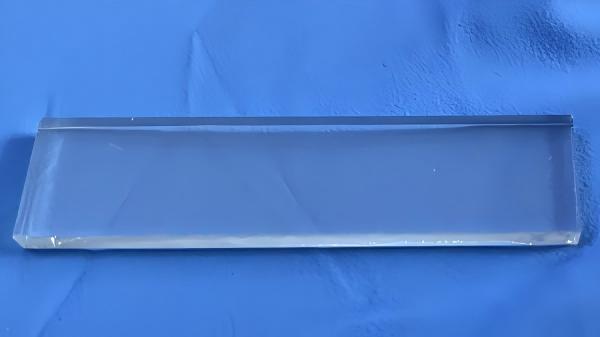
However, conventional pneumatic spray pyrolysis also has several inherent limitations. Problems such as a wide droplet size distribution, unstable atomization flux affected by gas source pressure fluctuations, and possible splashing or uneven spreading of droplets upon impact on the hot substrate can all affect the uniformity and surface morphology of the thin films. Especially in large-area coating, ensuring high consistency of film thickness, resistivity, and transmittance across the entire substrate poses challenges to nozzle design and scanning path control.
To overcome these shortcomings, ultrasonic spray pyrolysis has emerged. This method uses an ultrasonic transducer to generate high-frequency mechanical vibrations (usually in the range of 20 kHz – 2 MHz), breaking the precursor solution into droplets with more uniform size, controllable at several microns or even submicron levels. Compared with traditional pneumatic atomization, droplets formed by ultrasonic atomization exhibit a narrower size distribution, lower momentum, and more controllable transport behavior. These characteristics allow droplets to spread smoothly and pyrolyze uniformly when reaching the hot substrate, thereby significantly improving the compactness, surface flatness, and thickness uniformity of the thin films. In addition, ultrasonic spray systems have higher tolerance for physical parameters such as viscosity and surface tension of the precursor solution, and the atomization rate can be precisely adjusted via transducer power and liquid supply rate, facilitating automated closed-loop control.
At present, both conventional spray pyrolysis and ultrasonic spray pyrolysis are mainly applied in R&D and pilot/lab-scale production lines. In these settings, researchers can rapidly iterate formulations—for example, adjusting the ratio of doping elements (e.g., aluminum-doped zinc oxide AZO, fluorine-doped tin oxide FTO, indium tin oxide ITO, etc.), changing deposition temperature, and optimizing atomization parameters—to customize the carrier concentration, mobility, and work function of the TCO layer for different device structures. Meanwhile, spray pyrolysis can also be used to prepare hole transport layers or electron transport layers, providing a full solution-processing route for perovskite or organic solar cells.
As thin-film solar cells move from the laboratory to industrialization, the demand for large-area, low-cost, high-uniformity TCO deposition technologies is increasingly urgent. The inherent advantages of spray pyrolysis—vacuum-free operation, high material utilization (up to 80%–95% or more, much higher than sputtering), and easy integration into continuous production—endow it with the potential to be upgraded to in-line coating production lines. For instance, in roll-to-roll or flat-panel continuous production lines, multiple ultrasonic atomizing nozzles can be arranged in a linear array; as the substrate passes through the heating zone, the nozzles scan or spray fixedly to achieve dynamic deposition. Combined with real-time thickness monitoring and feedback control, uniformity comparable to vacuum coating is expected to be obtained. Furthermore, the spray pyrolysis process can be carried out in an ambient air environment, eliminating the trouble of vacuum locks and frequent vacuum breaking and significantly improving productivity.
Nevertheless, several challenges still need to be overcome to successfully apply spray pyrolysis to large-scale production. First is the balance between film-forming temperature and substrate thermal budget: glass substrates can withstand high temperatures, while flexible polymer substrates (e.g., PET, PEN) require the development of low-temperature spray pyrolysis processes (<200 °C). Second is the further improvement of thin-film electrical properties: compared with high-performance TCO prepared by magnetron sputtering or metal-organic chemical vapor deposition, spray-pyrolyzed thin films often have higher resistivity, which needs optimization through precursor chemical design, oxidation atmosphere control, or post-deposition annealing. Third is the treatment of waste liquid and by-products; in particular, the use of chloride precursors generates hydrochloric acid gas, requiring tail gas absorption devices.
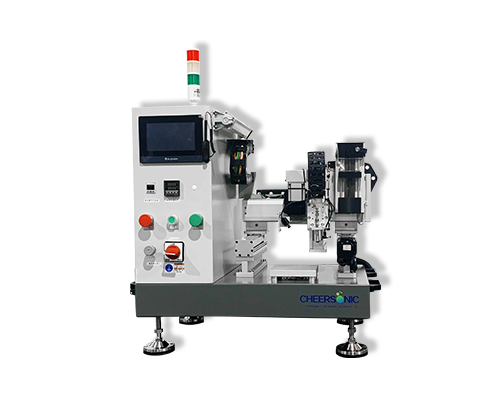
Looking forward, with the continuous maturity of atomization technology, thermal field control, and online monitoring technology, spray pyrolysis, especially ultrasonic spray pyrolysis, is expected to evolve from an R&D tool into a reliable large-area TCO deposition method. In emerging fields such as perovskite/silicon tandems, all-inorganic perovskites, and flexible thin-film batteries, this low-cost, high-material-utilization process route will demonstrate unique competitiveness. It can be predicted that in the near future, spray pyrolysis will not only continue to act as a flexible and efficient exploration tool in laboratories but also occupy a place in the coating section of photovoltaic production lines, becoming one of the important technical pathways to reduce costs and improve efficiency for thin-film solar cells.
About Cheersonic
Cheersonic is the leading developer and manufacturer of ultrasonic coating systems for applying precise, thin film coatings to protect, strengthen or smooth surfaces on parts and components for the microelectronics/electronics, alternative energy, medical and industrial markets, including specialized glass applications in construction and automotive.
Our coating solutions are environmentally-friendly, efficient and highly reliable, and enable dramatic reductions in overspray, savings in raw material, water and energy usage and provide improved process repeatability, transfer efficiency, high uniformity and reduced emissions.
Chinese Website: Cheersonic Provides Professional Coating Solutions