
Porous Metal Carbon-Coated Dry-Current Collector Technology
Discussion on Dry-Current Collector Technology Based on Porous Metal Carbon-Coated Composite Coatings
With the rapid development of new energy battery technologies, the current collector, as a critical carrier for electrode materials, directly determines the energy density, power performance, and safety of batteries. In recent years, a functional coating based on porous metals (e.g., foam metals) with surface composite conductive carbon materials has gradually attracted industrial attention. Such materials serve as ideal dry-process current collectors, and their unique structural design and multifunctional integration capability provide a new approach for the fabrication of next-generation high-performance battery electrodes.
Structure and Preparation Principle
The composite coating is built on a porous metal framework with a 3D interconnected network, typically nickel foam, copper foam, aluminum foam, etc. These porous metals not only retain the excellent electrical conductivity and mechanical strength of metals but also offer sufficient space for active material loading due to their high porosity and large specific surface area.
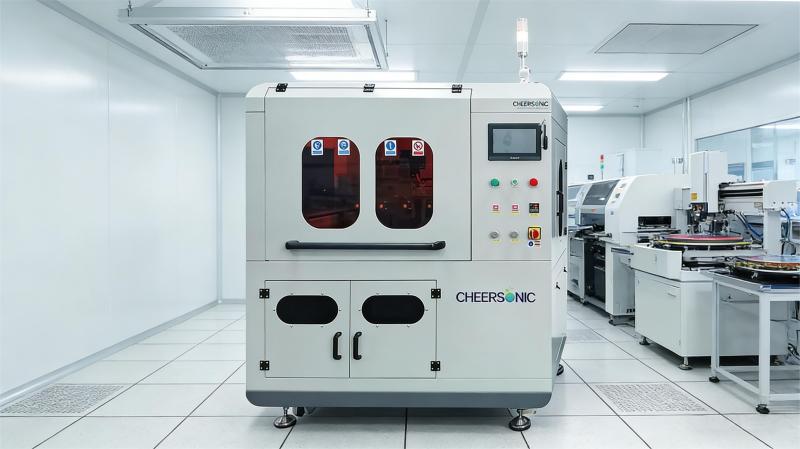
Based on this framework, advanced coating processes such as ultrasonic coating are adopted to uniformly attach carbon-based conductive reinforcing materials—including conductive carbon black, carbon nanotubes, vapor-grown carbon fibers, and porous carbon—onto the metal surface, forming a carbon-coated composite layer. Ultrasonic coating uses high-frequency vibration to achieve more uniform particle dispersion in the slurry and promote infiltration into the deep network of the porous metal, yielding a homogeneous, agglomerate-free composite coating. Combined with the dry-process route, this technology eliminates solvent recovery and environmental control issues in conventional wet coating, delivering higher production efficiency and environmental friendliness.
Multifunctional Integration Methods
The core advantage of this technology lies in integrating multiple functional layers into one current collector structure through coatable, stackable, and hidden design. Specifically:
- Conductivity Enhancement Layer
On the basic carbon coating, one-dimensional/two-dimensional conductive materials (e.g., carbon nanotubes or vapor-grown carbon fibers) can be further stacked. These materials form a cross-scale conductive network within the 3D framework, significantly reducing electrode internal resistance and improving high-rate charge–discharge capability. The introduction of porous carbon also provides additional ion-transport pathways and optimizes electrolyte wetting. - Safety Protection Layer
By stacking positive temperature coefficient (PTC) materials, flame-retardant components, heat-dissipating media, or phase-change insulating materials, active or passive safety response mechanisms can be constructed. For instance, when local overheating occurs inside the battery, PTC materials sharply increase resistance to cut off short-circuit current; phase-change materials absorb heat and delay thermal runaway propagation. These protective layers are “hidden” inside the composite structure without occupying extra volume, yet provide critical protection when needed. - Performance Compensation Layer
To address irreversible active lithium/sodium loss during cycling in lithium-ion or sodium-ion batteries, lithium-supplementing or sodium-supplementing materials can be pre-deposited on the current collector surface. These compensation layers are precisely dosed via stacking processes and release extra active ions during the first charge, effectively improving initial Coulombic efficiency and long-term cycling stability. - Interface Optimization Layer
On the outermost layer or specific interfaces, metal coatings (e.g., tin, silver) are introduced via electroless plating or electrodeposition. With high conductivity and strong affinity to active materials, these coatings reduce contact resistance, suppress interfacial side reactions, and relieve stress concentration caused by electrode volume changes, thereby enhancing structural integrity.
Process Realization and Hidden Characteristics
“Coatable, stackable, and hidden” is not only a design concept but also an implementable manufacturing solution. On a dry production line, functional layers are sequentially applied to the porous metal substrate in powder or slurry form. Ultrasonic coating is particularly suitable for the first conductive layer: high-frequency vibration drives nanocarbon materials into the micropores of the porous metal, forming robust “anchor points” that strengthen interlayer adhesion. Subsequent calendaring or thermal compounding ensures tight interlayer bonding.
Owing to the inherent roughness of the porous structure, thin functional layers can be fully embedded in pores or coated on the framework surface, becoming nearly invisible externally and achieving the “hidden” effect. This design avoids thickness redundancy from multi-layer structures and maintains a high volumetric energy density for the electrode.
Application Prospects
This technology is applicable to various battery systems, including high-energy-density lithium-ion batteries, sodium-ion batteries, and solid-state batteries. In power batteries, it balances high-power output and thermal safety; in energy-storage batteries, it helps extend cycle life and reduce costs. Furthermore, the combination of dry processing and ultrasonic coating improves coating uniformity and material utilization, aligning with the trend of green manufacturing.
Conclusion
In summary, as a dry-process current collector, the porous-metal-based carbon-coated composite coating integrates conductivity enhancement, safety protection, performance compensation, and interface optimization via advanced techniques (e.g., ultrasonic coating) and flexible stacking and function-hiding strategies. It provides a promising solution to overcome current bottlenecks in battery technology. With continuous improvement in related processing equipment and material systems, this technology is expected to achieve large-scale application in the near future.
About Cheersonic
Cheersonic is the leading developer and manufacturer of ultrasonic coating systems for applying precise, thin film coatings to protect, strengthen or smooth surfaces on parts and components for the microelectronics/electronics, alternative energy, medical and industrial markets, including specialized glass applications in construction and automotive.
Our coating solutions are environmentally-friendly, efficient and highly reliable, and enable dramatic reductions in overspray, savings in raw material, water and energy usage and provide improved process repeatability, transfer efficiency, high uniformity and reduced emissions.
Chinese Website: Cheersonic Provides Professional Coating Solutions