
Perovskite Solar Cells
Perovskite solar cells generally consist of a transparent conductive substrate, a carrier transport layer, a perovskite layer, and metal electrodes. The perovskite layer absorbs photons and generates electron-hole pairs. Since the exciton binding energy of the perovskite material is very small, such as the exciton binding energy of MAPbI3 is only 19±3 meV, it can be separated into free charge at room temperature. Carriers, and then the free carriers generated are transported out by the transport layer material, collected by the electrodes, form a current and then go to the external circuit to do work, completing the entire process of photoelectric conversion.
The working process can be roughly divided into
1) Exciton generation and separation;
2) Transport of free carriers;
3) Collection of carriers and generation of current;
4) It is also accompanied by the carrier recombination process.
In perovskite solar cells, we use transparent electrodes and metal electrodes to collect charges respectively. Generally, we use electrodes with high work function to collect holes and electrodes with low work function to collect electrons to improve the charge collection efficiency of the device. The most commonly used transparent electrodes are ITO (In-doped SnO2) and FTO (F-doped SnO2). For ITO, its work function is about 4.5-4.9 eV. The bandgap width of 3.7 eV can reach more than 80% in the light range, but the large-scale application is limited due to the scarcity of In element. Compared with ITO, FTO has a slightly lower work function of ~4.4 eV, its light transmission performance is basically the same, and it has excellent high temperature resistance. It is currently widely used in perovskite solar cells. At present, common metal electrodes include Al, Ag, Au, etc., and there are also some such as Ag nanowire electrodes, carbon electrodes, carbon nanotubes, Ag/Al alloy electrodes, etc. The use of these new electrodes effectively improves the collection of charges. Efficiency, fill factor and stability of battery devices have been greatly improved.
About Cheersonic
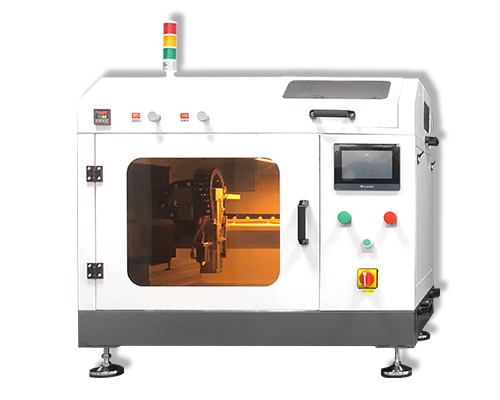
Cheersonic is the leading developer and manufacturer of ultrasonic coating systems for applying precise, thin film coatings to protect, strengthen or smooth surfaces on parts and components for the microelectronics/electronics, alternative energy, medical and industrial markets, including specialized glass applications in construction and automotive.
Our coating solutions are environmentally-friendly, efficient and highly reliable, and enable dramatic reductions in overspray, savings in raw material, water and energy usage and provide improved process repeatability, transfer efficiency, high uniformity and reduced emissions.
Chinese Website: Cheersonic Provides Professional Coating Solutions