
Overview of Medical Hydrophilic Coatings
Hydrophilic coating is a coating material with special functions and wide application fields. Its excellent hydrophilicity, high lubricity, and biocompatibility make it of significant application value in medical devices, anti fog applications, and other fields. The following is a detailed overview of it:
Definition and Principle
Hydrophilic coating is a type of coating that can form hydrogen bonds with water molecules, thereby exhibiting high hydrophilicity. This type of coating is usually formed by modifying polymer materials that meet biological evaluations and organically bonding them to the surface of the substrate. In the wetting state, the coating is activated by water to form a colorless and transparent hydrogel. The hydrogel coating is highly lubricated and can withstand repeated friction.
Features and Functions
Good hydrophilicity: The coating can form hydrogen bonds with water molecules, exhibiting strong hydrophilicity, making the coating surface easily wetted by water.
High lubricity: in the wetting state, the hydrogel layer formed by the coating has an extremely low friction coefficient, making the coating surface highly lubricated and easy to slide.
Biocompatibility: Hydrophilic coatings are usually made of polymer materials that meet biological evaluations, therefore they have good biocompatibility and will not cause irritation or rejection reactions to human tissues.
Wear resistance: The coating can withstand certain friction and wear, maintaining its lubricity and hydrophilicity.
Application Fields
Medical devices: Hydrophilic coatings have a wide range of applications in the field of medical devices, such as catheters, guide wires, and other interventional products. These products require contact with human tissue during use, and hydrophilic coatings can reduce friction with the tissue, lower the risk of injury, and prevent thrombosis.
Anti fog applications: Hydrophilic coatings can also be used for anti fog applications, such as glasses, camera lenses, car windshields, etc. The coating can absorb moisture and form a uniform water film on the surface, preventing water droplets from condensing into mist and maintaining clear visibility.
Other fields: In addition, hydrophilic coatings can also be used in filtration systems, heat pipes, biomedical and other fields to improve efficiency and performance.
Precautions
Storage conditions: The storage temperature, UV irradiation, and humidity conditions of hydrophilic coated medical devices have a significant impact on their performance. Higher temperatures, UV irradiation, and high humidity can accelerate the degradation of coatings.
Disinfection method: Disinfection methods may also cause damage to hydrophilic coatings. Therefore, when choosing a disinfection method, it is necessary to consider its compatibility with the coating.
Ultrasonic coating medical hydrophilic coating
Ultrasonic coating technology, as one of the core processes for preparing high-performance coatings in the medical field, has demonstrated unique advantages in hydrophilic coating preparation due to its precise controllability and low damage characteristics. This technology utilizes the atomization effect of tiny droplets generated by ultrasonic vibration to uniformly deposit hydrophilic coating materials on the surface of medical devices, forming a thin film structure that combines biocompatibility and functionality, providing key support for the performance upgrade of medical devices.
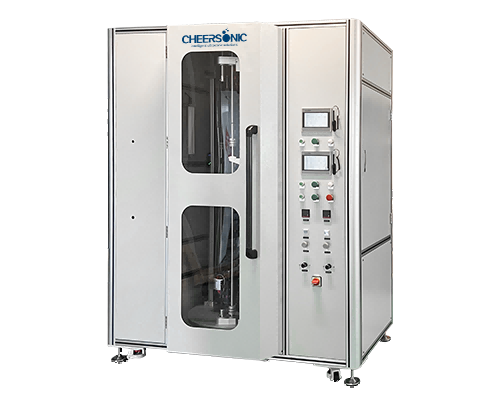
From a technical perspective, ultrasonic coating utilizes high-frequency ultrasound to act on the coating precursor liquid, causing the liquid to split into uniform droplets ranging from nanometers to micrometers under vibration energy. These droplets are directed and deposited on the surface of the instrument under airflow guidance, and after solidification, form a hydrophilic coating. Compared with traditional spraying and immersion coating processes, ultrasonic coating does not require high-pressure airflow assistance, and the droplet size distribution is more concentrated (usually between 1-50 μ m), which can achieve precise control of coating thickness (error ± 1 μ m), while avoiding coating splashing and uneven thickness caused by high-pressure spraying. It is particularly suitable for surface treatment of complex structured medical devices.
The core function of medical hydrophilic coatings is to reduce the frictional resistance between instruments and human tissues and body fluids through surface modification, minimize the damage caused by invasive operations to the human body, and inhibit bacterial adhesion, thereby reducing the risk of infection. Ultrasonic coating technology can adapt to a variety of hydrophilic coating materials, including polyethylene glycol (PEG) derivatives, hydrogels, chitosan composites and other biocompatible materials. By adjusting ultrasonic power, liquid supply speed, deposition distance and other parameters, customized regulation of coating hydrophilicity, adhesion, degradation rate and other properties can be achieved. For example, the ultrasonic coated hydrophilic coating prepared on the surface of interventional instruments (such as catheters and guide wires) can have a contact angle as low as 10 ° or less, significantly reducing the resistance of the instrument in the blood vessel and improving operational flexibility.
In terms of application scenarios, ultrasound coated hydrophilic coatings have been widely used in the manufacturing of various medical devices. In interventional therapy instruments, the hydrophilic coating prepared by this technology can reduce damage to the inner wall of blood vessels and lower the risk of thrombosis in cardiac stents and vascular catheters; The hydrophilic coating on the surface of endoscopic instruments (such as gastroscopes and colonoscopes) can reduce mucosal friction, improve examination comfort, and facilitate postoperative cleaning and disinfection; Ultrasound coated hydrophilic coatings on implantable devices such as artificial joints and orthopedic screws can improve biocompatibility, promote tissue integration, and shorten postoperative recovery cycles. In addition, hydrophilic coatings on the surface of diagnostic instruments such as ultrasound probes and blood glucose detection electrodes can improve detection accuracy and reduce interference from residual body fluids on the test results.
The core advantages of ultrasonic coating technology in the preparation of medical hydrophilic coatings are reflected in three aspects: first, high biological safety. The low-temperature atomization process avoids the thermal decomposition of the coating material, ensuring that the original biocompatibility of the material is not damaged; Secondly, it has strong process adaptability and can handle various substrates such as metals, polymers, ceramics, etc. It is compatible with complex structural instruments such as straight pipes, bends, and micropores, and the coating coverage rate can reach 100%; Thirdly, it has excellent stability, strong adhesion of the prepared hydrophilic coating, good sterilization resistance, and can withstand conventional sterilization methods such as high temperature steam and ethylene oxide. Its service life is consistent with that of the instrument body.
With the development of medical technology towards minimally invasive and precise directions, the performance requirements for hydrophilic coatings are constantly increasing. Ultrasonic coating technology is upgrading towards intelligence and efficiency, achieving closed-loop control of coating preparation through integrated online thickness monitoring and automatic parameter adjustment systems; At the same time, by combining nanomaterial modification, composite coating design and other technologies, the development of composite coatings with multiple functions such as hydrophilicity, antibacterial, and anti-inflammatory will further expand their application space in the field of high-end medical devices. In the future, ultrasound coated medical hydrophilic coatings will play a more important role in improving medical quality, reducing diagnostic and treatment risks, and become one of the core technologies for surface modification of medical devices.
About Cheersonic
Cheersonic is the leading developer and manufacturer of ultrasonic coating systems for applying precise, thin film coatings to protect, strengthen or smooth surfaces on parts and components for the microelectronics/electronics, alternative energy, medical and industrial markets, including specialized glass applications in construction and automotive.
Our coating solutions are environmentally-friendly, efficient and highly reliable, and enable dramatic reductions in overspray, savings in raw material, water and energy usage and provide improved process repeatability, transfer efficiency, high uniformity and reduced emissions.
Chinese Website: Cheersonic Provides Professional Coating Solutions