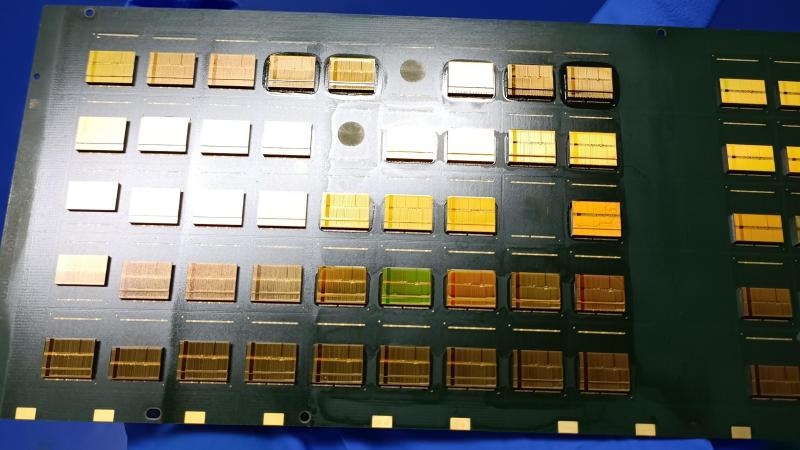
Ordered Membrane Electrode
Ordered Membrane Electrode – Ultrasonic Spraying Membrane Electrode – Cheersonic
The catalytic layer of GDE type MEA and CCM type MEA is mixed with a catalyst and an electrolyte solution to form a catalyst slurry and then coated. The material transmission channels of the prepared MEA such as protons, electrons, gas and water are in a disordered state, resulting in material transmission The efficiency is very low, and there is a large polarization phenomenon, which is not conducive to the high current discharge of the MEA. In addition, the platinum loading in MEA is relatively high. The development of high-performance, long-life, and low-cost MEA has become the focus of attention. Ordered MEA has a very high Pt utilization rate, which effectively reduces the cost of MEA, and at the same time realizes the efficient transport of protons, electrons, gas, water and other substances, thereby improving the comprehensive performance of PEMFC.
Ordered membrane electrodes include ordered membrane electrodes based on carbon nanotubes, ordered membrane electrodes based on catalyst films, and ordered membrane electrodes based on proton conductors.

Ordered film electrode based on carbon nanotubes
The graphite lattice properties of carbon nanotubes are durable to high potentials. The interaction with Pt particles and their elasticity improve the catalytic activity of Pt particles. In the past ten years, people have developed films based on vertically aligned carbon nanotubes (VACNTs). electrode. The vertical arrangement mechanism enhances the gas diffusion layer, drainage capacity and Pt utilization.
VACNTs can be divided into two types: one is VACNTs composed of curved, sparse carbon nanotubes; the other is VACNTs composed of straight, dense carbon nanotubes.
Classical preparation process of membrane electrode based on vertical carbon nanotubes
Zhang et al. developed VACNTs/Nafion/VACNTs ordered membrane electrodes. The performance is twice higher than the traditional Pt/C membrane electrode.
SEM morphology of VACNTs on Nafion membrane
Murata et al. catalyzed the growth of curved and sparse VACNTs on a stainless steel substrate. While maintaining performance, its platinum content is close to the 2020 goal of DOE in the United States.
Ordered membrane electrode based on catalyst film
The ordering of the catalyst film mainly refers to the ordering structure of Pt nanotubes and Pt nanowires. Among them, the representative of the catalyst ordered membrane electrode is 3M’s commercial product NSTF. Compared with traditional Pt/C catalysts, NSTF has four main characteristics: the catalyst carrier is an ordered organic whisker; the catalyst forms a Pt-based alloy film on the whisker-like organism; there is no carbon support in the catalytic layer; NSTF catalyst The thickness of the layer is below 1um.
The performance parameters of the NSTF electrode prepared by 3M are shown in the figure below. It can be seen from the figure that, except that the durability of the NSTF electrode is lower than the DOE technical index, the other performance indicators are relatively close to the DOE target value.
Ordered membrane electrode based on proton conductor
Proton conductor ordered membrane electrode, the main function is to introduce nanowire-like polymer materials to promote the efficient transmission of protons in the catalytic layer. Yu et al. prepared the TiO2/Ti structure of TiO2 nanotube arrays (TNTs) on a titanium wafer, and then annealed them in a hydrogen atmosphere to prepare H-TNTs, and prepared Pt-Pd particles on the surface of H-TNTs by SnCl2 sensitization and replacement method. High power density fuel cell.
Based on the fast proton conduction function of Nafion nanowires, Tsinghua University Nuclear Research Institute and the Department of Automobiles synthesized a new ordered catalyst layer for the first time. It has the following characteristics: Nafion nanorods are grown in situ on a proton exchange membrane, and the interface contact resistance is reduced to zero; a catalytic layer of Pt particles is deposited on the Nafion nanorods, which also has the functions of catalyst and electronic conduction phase; in the catalytic layer Nafion nanorods have fast proton conduction function.
Ordered membrane electrode is undoubtedly the main direction of the next generation of membrane electrode preparation technology. While reducing the platinum group element loading, it is necessary to further consider five issues: Ordered membrane electrode is very sensitive to impurities; through material optimization, Characterization and modeling to broaden the operating range of membrane electrodes; the introduction of fast proton conductor nanostructures in the catalytic layer; low-cost mass production process development; in-depth study of the interaction between the membrane electrode proton exchange membrane, electrocatalyst and gas diffusion layer And synergy.
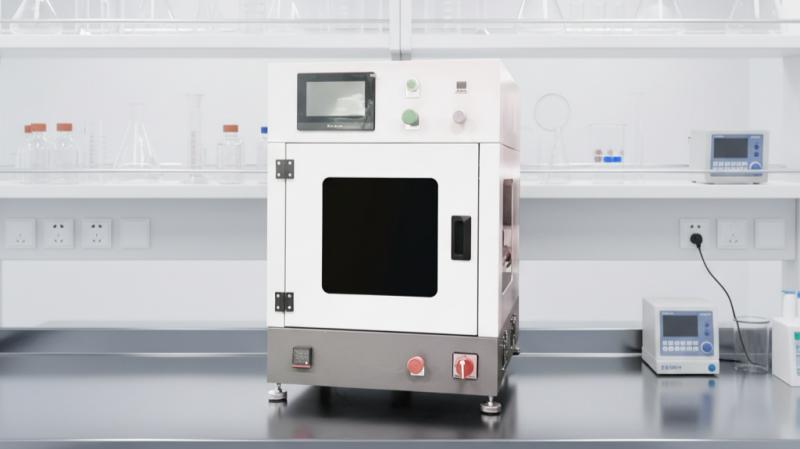
Ultrasonic Spray Machine for Ordered Membrane Electrode Catalyst Coating
Cheersonic stands as a leading professional provider of high-precision catalyst coating equipment, specially developed for accurate catalyst deposition on fuel cell and electrolyzer ordered membrane electrodes. Adopting advanced ultrasonic spraying technology, the equipment effectively solves the pain points of uneven coating, serious material waste and unstable performance in traditional catalyst coating processes, delivering reliable and efficient coating solutions for electrochemical device manufacturing.
The ultrasonic spraying system features ultra-high coating accuracy and repeatability, enabling stable and consistent catalyst layer deposition on diverse electrode and membrane substrates. It greatly improves the transfer efficiency of catalyst ink, drastically cutting the waste of expensive precious metal materials such as platinum. Meanwhile, the equipment supports flexible parameter adjustment for coating output and molding, which can customize the catalyst layer structure to optimize membrane electrode morphology and enhance overall service durability.
Different from conventional spraying methods, the ultrasonic vibration principle can maintain long-term uniform dispersion of nano-catalyst particles and effectively avoid particle re-agglomeration during coating. This enables manufacturers to achieve full and uniform catalyst activation under low loading conditions, significantly reducing the consumption of high-cost platinum materials per product. Without compromising the excellent electrochemical response and operational stability of membrane electrodes, the technology realizes dual optimization of product performance and production costs.
Video of Ultrasonic Fuel Cell Coating
About Cheersonic
Cheersonic is the leading developer and manufacturer of ultrasonic coating systems for applying precise, thin film coatings to protect, strengthen or smooth surfaces on parts and components for the microelectronics/electronics, alternative energy, medical and industrial markets, including specialized glass applications in construction and automotive.
Our coating solutions are environmentally-friendly, efficient and highly reliable, and enable dramatic reductions in overspray, savings in raw material, water and energy usage and provide improved process repeatability, transfer efficiency, high uniformity and reduced emissions.
Chinese Website: Cheersonic Provides Professional Coating Solutions