Email: market2@cheersonic.com
1 11, 2026

Cardiac Pacemakers and Implantable Cardiac Devices — The Technical Value of Polyimide-Insulated Platinum-Iridium Wires

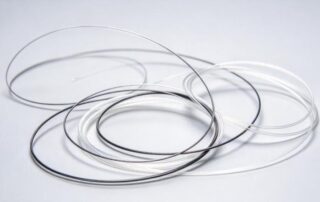
Implantable Cardiac Device Wire PI Coating Cardiac Pacemakers and Implantable Cardiac Devices — The Technical Value of Polyimide-Insulated Platinum-Iridium Wires 1. Why Do Implantable Cardiac Devices Require Reliable Electrical Connections? Cardiac implantable electronic devices (CIEDs) include pacemakers, implantable cardioverter-defibrillators, and other cardiac monitoring or therapeutic systems. These devices use electrodes, conductive leads, and electronic control systems to detect cardiac electrical activity or deliver electrical stimulation. Because some devices [...]

1 11, 2026

Six Technical Challenges in Coating 2D Material Aqueous Dispersions on Copper Foil

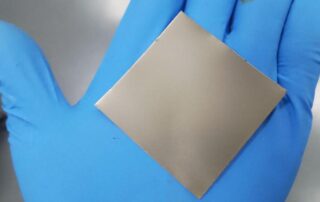
6 Challenges Coating 2D Material Dispersions on Copper Foil Six Technical Challenges in Coating 2D Material Aqueous Dispersions on Copper Foil: Wetting, Aggregation, Drying, Oxidation, and Film Uniformity 1. Why Is Coating 2D Material Aqueous Dispersions Challenging? Two-dimensional materials have attracted considerable interest in lithium battery research. However, depositing them consistently onto copper foil surfaces is not straightforward. Many 2D material aqueous dispersions contain suspended nanosheets rather than [...]

1 11, 2026

From Manual Spraying to Automated Processing: How Can Catalyst Layer Consistency Be Improved in PEM/AEM Membrane Electrodes?

Improving Catalyst Layer Consistency in PEM/AEM Electrodes From Manual Spraying to Automated Processing: How Can Catalyst Layer Consistency Be Improved in PEM/AEM Membrane Electrodes? In fuel cell and water electrolysis research, catalyst layer fabrication requires more than achieving the target catalyst loading. Coating coverage, thickness distribution, interfacial condition, and sample-to-sample reproducibility also matter. Manual spraying or semi-automated equipment is often used during early laboratory development. However, when experiments [...]

31 10, 2026

Catalyst Deposition for Carbon Nanotube Growth: The Role of Ultrasonic Spray Coating Systems

Catalyst Deposition for Carbon Nanotube Growth Catalyst Deposition for Carbon Nanotube Growth: The Role of Ultrasonic Spray Coating Systems Where Ultrasonic Spraying Fits in Carbon Nanotube Manufacturing Carbon nanotubes (CNTs) are studied for electrical, thermal, mechanical, and interfacial applications. Many synthesis routes grow nanotubes from nanoscale catalytic sites under a controlled thermal and reactive atmosphere. Catalyst deposition is therefore an important upstream step: the location, amount, and distribution [...]

31 10, 2026

Brain-Computer Interfaces and Microelectrode Arrays — Opportunities for Polyimide Coating on Ultra-Fine Platinum-Iridium Wires

Microelectrode Array Polyimide Coating for BCI Brain-Computer Interfaces and Microelectrode Arrays — Opportunities for Polyimide Coating on Ultra-Fine Platinum-Iridium Wires 1. Why Do Brain-Computer Interfaces Require Miniature Electrodes? Brain-computer interface (BCI) technology explores methods of communication between the nervous system and external electronic devices. Some BCI systems record neural activity through electrodes and use signal processing algorithms to extract relevant information. Depending on the application, electrodes may be [...]

31 10, 2026

Comparison of 2D Material Coating Methods on Copper Foil: Doctor Blade, Slot-Die, Spin Coating, and Ultrasonic Spray Coating

Comparison of 2D Material Coating Methods on Copper Foil: Doctor Blade, Slot-Die, Spin Coating, and Ultrasonic Spray Coating 1. How Is 2D Material Coating on Copper Foil Different from Conventional Anode Coating? In conventional lithium-ion battery manufacturing, anode slurries typically contain active materials, conductive additives, binders, and solvents. The slurry is deposited onto copper foil using an appropriate coating process, followed by drying, calendering, and other manufacturing steps. [...]

31 10, 2026

Triclosan Antibacterial Coating Technology for Absorbable Surgical Sutures: Ultrasonic Spray Coating Equipment and Continuous Thread Processing

Triclosan Antibacterial Coating Technology for Absorbable Surgical Sutures: Ultrasonic Spray Coating Equipment and Continuous Thread Processing 1. Project Background: Applying Triclosan Coatings to Absorbable Sutures Absorbable surgical sutures are widely used in medical applications requiring temporary tissue support. To introduce specific antibacterial functionality, manufacturers may consider incorporating antibacterial active ingredients such as triclosan into coatings applied to the suture surface. Manufacturing triclosan antibacterial coatings involves formulation development, coating [...]

31 10, 2026

Why Do PEM and AEM Membranes Wrinkle and Warp During Spray Coating?

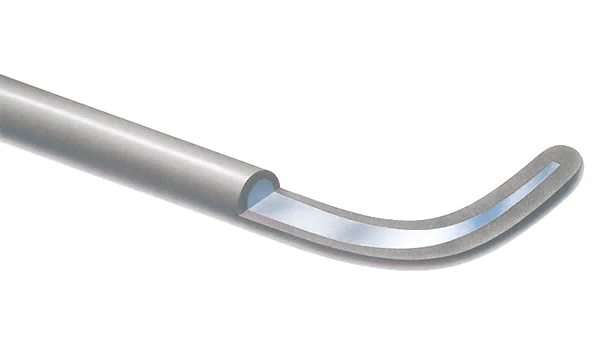
Why Do PEM Membranes Wrinkle and Warp During Spray Coating? Why Do PEM and AEM Membranes Wrinkle and Warp During Spray Coating? From Solvent-Induced Deformation to Nonuniform Catalyst Layers In research on fuel cells and hydrogen production by water electrolysis, proton exchange membranes (PEMs) and anion exchange membranes (AEMs) serve as both ion-conducting media and essential components of membrane electrode assemblies. When catalyst inks are deposited directly onto [...]

30 10, 2026

What Are Absorbable Surgical Sutures? Materials, Degradation Mechanisms, Surface Coatings, and Ultrasonic Spray Coating Applications

Absorbable Surgical Sutures: Materials and Coatings What Are Absorbable Surgical Sutures? Materials, Degradation Mechanisms, Surface Coatings, and Ultrasonic Spray Coating Applications 1. What Are Absorbable Surgical Sutures? Absorbable surgical sutures are medical suturing materials designed to gradually degrade and be absorbed or metabolized within the human body. Unlike certain nonabsorbable sutures that require removal at an appropriate time, absorbable sutures are generally used in tissue closure applications where [...]

30 10, 2026

Why Apply 2D Material Coatings to Copper Foil in Lithium Batteries? Applications of Graphene, Graphene Oxide, and MXene

2D Material Coatings on Copper Foil for Lithium Batteries Why Apply 2D Material Coatings to Copper Foil in Lithium Batteries? Applications of Graphene, Graphene Oxide, and MXene 1. What Is the Role of Copper Foil in Lithium Batteries? Copper foil is commonly used as the negative electrode current collector in lithium-ion batteries. In a typical lithium-ion battery structure, the anode active material is coated onto the copper foil. [...]

Go to Top