Email: market2@cheersonic.com
17 10, 2026

PTFE Medical Coatings: Evaluating Dispersion, Film Formation, and Thermal Limits

PTFE Medical Coatings: Evaluating Dispersion, Film Formation, and Thermal Limits A coating system for medical instrument manufacturing must match the formulation's film-forming route. PTFE-containing coatings are not equivalent to ordinary dissolved-polymer coatings. Some are particle dispersions; others use binders or composite architectures. The selected formulation determines handling, deposition, and thermal requirements. Ultrasonic spraying may be evaluated as a deposition step, but it does not remove the need for [...]
17 10, 2026

Ceramic Separator Coatings: Balancing Coverage, Wetting and Open Pore Structure

Ceramic Separator Coatings: Balancing Coverage, Wetting and Open Pore Structure Ceramic separator coatings sit at the intersection of surface engineering and transport control. In Advanced Battery Research and Emerging Production, their value cannot be judged by coverage alone. A deposited ceramic-polymer layer must be evaluated alongside separator permeability, electrolyte wetting, mechanical handling and cell behavior. Ultrasonic spray coating offers a route worth investigating for selected thin surface layers, [...]

16 10, 2026

Antimicrobial Medical Device Coatings: Evaluating Coverage, Durability, and Function

Antimicrobial Medical Device Coatings: Evaluating Coverage, Durability, and Function A coating system for medical instrument manufacturing can apply a formulation, but it cannot establish an antimicrobial claim by itself. A medical polymer coating may contain an active constituent or present a surface designed for a specific interaction. Development must connect deposition quality with relevant functional testing and device requirements. Uniform appearance, retained active loading, and durable performance are [...]

16 10, 2026

Polyimide Dielectric Barrier Coatings for Advanced Battery Components

Polyimide Dielectric Barrier Coatings for Advanced Battery Components Polyimide dielectric barrier coatings are one development direction within Advanced Battery Research and Emerging Production. The objective is often electrical isolation on selected components, rather than the porous transport function expected of a separator. This distinction matters when defining thickness, continuity and curing requirements. A coating process that produces an attractive film must still demonstrate appropriate adhesion, electrical behavior and [...]

16 10, 2026

Advanced Battery Research and Emerging Production: Building a Functional Coating Process Window

Advanced Battery Research and Emerging Production: Building a Functional Coating Process Window Advanced Battery Research and Emerging Production requires more than a promising formulation. A functional layer must reach the intended location, maintain its structure during drying, and survive subsequent assembly. Lithium-ion, solid-state and sodium-ion programs may investigate similar deposition equipment, but their chemical compatibility and acceptance criteria differ. Ultrasonic coating should therefore be evaluated as a process-development [...]

16 10, 2026

What Is a Gas Diffusion Electrode?

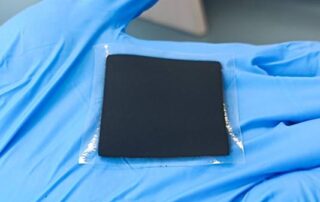
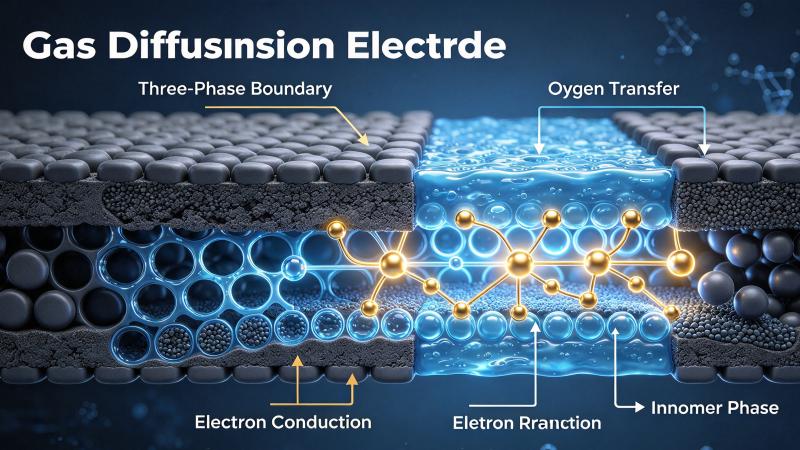
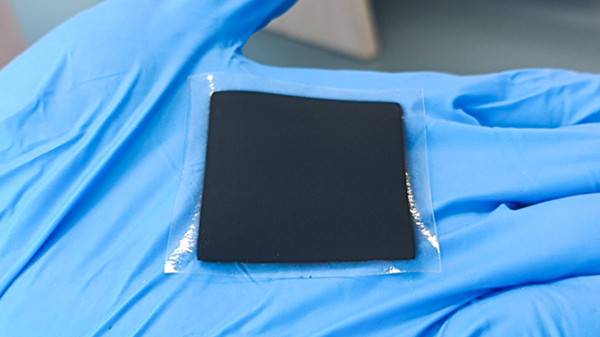
A gas diffusion electrode (GDE) is a porous electrode designed to deliver gaseous reactants to electrochemically active sites while conducting electrons and supporting ionic contact. GDEs are used in fuel cells, CO₂ electrolysis, and other gas-fed electrochemical systems where conventional liquid-phase transport may limit reactant delivery.

15 10, 2026

Bioactive Thin Film Coatings: Linking Ultrasonic Deposition with Functional Testing

Bioactive Thin Film Coatings: Linking Ultrasonic Deposition with Functional Testing A coating system for medical instrument development must preserve the intended function of a bioactive layer. The term bioactive describes a purpose, not a single formulation. A film may contain a polymer carrier, active molecule, enzyme, or other functional constituent. Stable spraying and a continuous appearance are useful observations, but neither establishes retained activity or suitability for the [...]

15 10, 2026

What Is a Membrane Electrode Assembly?

A membrane electrode assembly (MEA) is a layered electrochemical component built around an ion-conducting membrane and functional electrode layers. In proton-exchange-membrane fuel cells and electrolyzers, the MEA brings together the membrane, anode catalyst layer, and cathode catalyst layer; gas-diffusion or porous transport layers are often adjacent components in the assembled cell.

14 10, 2026

Implantable Membrane Coating: Balancing Coverage, Porosity, and Substrate Stability

Implantable Membrane Coating: Balancing Coverage, Porosity, and Substrate Stability A coating system for medical instrument development must preserve the properties that make a membrane useful. Adding a functional polymer layer can change wetting, permeability, flexibility, or handling. A coating that is uniform on the surface may partially block pores or alter transport through the structure. Implantable membrane coating therefore requires evaluation of both the deposited film and the [...]

14 10, 2026

What Is a Catalyst Coated Membrane?

A catalyst-coated membrane (CCM) is an ion-conducting membrane with catalyst layers deposited directly onto one or both sides. It is widely studied in proton-exchange-membrane fuel cells and water electrolyzers because the direct membrane–catalyst interface can support short ionic pathways and compact assembly. Its performance depends on membrane integrity, catalyst-layer structure, and the quality of each interface.

Go to Top