
Microneedle Patches: A New Type of Drug Delivery Technology That Penetrates the Skin Barrier
The skin is the largest organ of the human body and also serves as a robust physiological barrier. Most traditional topical applied medications can only remain on the epidermis layer and have difficulty reaching the dermis to exert their effects; while injection administration causes pain and poses a risk of cross-infection. The emergence of microneedle patches has opened up a new path for transdermal drug delivery and is regarded as a highly promising innovative technology in the field of drug delivery.
Microneedle patches, as the name suggests, are patches composed of a large number of micrometer-sized needles. The needle length is generally between several tens and several thousand micrometers, much smaller than conventional injection needles. When used, they are applied to the skin surface, and the needles will pierce the stratum corneum, forming tiny channels on the epidermis, but will not reach the nerve endings of the dermis layer, so they are basically painless. Drugs can be directly delivered to the target skin layer through the microneedle channels, breaking through the obstruction of the stratum corneum and significantly improving the absorption efficiency of the drugs.
Microneedles can be classified into various types based on their materials and preparation methods. Solid microneedles are mainly used for skin pre-treatment, opening the skin channel first and then applying the medication; hollow microneedles are similar to miniature catheters, which can directly deliver the drug liquid into the skin; soluble microneedles use biodegradable polymer materials as carriers, with the drug encapsulated inside the needle body, which dissolves after penetrating the skin, and the drug is slowly released. After use, only the base of the patch remains, without sharp medical waste, and the safety is higher.
The preparation process of microneedle patches is diverse. Some processes use ultrasonic spraying to complete the uniform deposition of drugs or functional coatings, ensuring the uniform thickness of the drug loading layer on the needle surface and improving batch stability. This spraying technology can precisely control the thickness of the film layer, reduce drug waste, and be adapted to the processing requirements of such fine and tiny structures as microneedles.
In terms of application scenarios, the development of microneedle patches has long gone beyond the medical field. In the field of biomedicine, they can be used for vaccine delivery, continuous drug administration for chronic diseases, and local treatment of skin diseases; in the medical aesthetics field, they are used for the transdermal introduction of active ingredients to improve skin problems such as pigmentation and fine lines; in the field of rapid detection, microneedles can collect tissue fluid to achieve non-invasive biochemical indicator screening. Compared with traditional methods, it has a lower usage threshold, and ordinary people can operate it themselves with simple guidance, and it is also convenient for storage and transportation, which is of great value for medical care in remote areas.
Of course, this technology still has many challenges to be overcome. The mechanical strength of microneedles needs to be balanced; they should be hard enough to pierce the stratum corneum but not too hard to cause skin damage; the drug loading capacity is limited, restricting the application of large molecule drugs; the skin irritation after long-term use, and the cost of large-scale production, all still need to be continuously optimized.
Overall, microneedle patches integrate knowledge from materials science, bioengineering, and pharmaceutics, breaking the limitations of traditional drug delivery methods. With the continuous iteration of materials and manufacturing processes, in the future, more practical products are expected to be implemented in scenarios such as vaccines, chronic disease management, and skin health monitoring, promoting the popularization of non-invasive drug delivery technology to the general public.
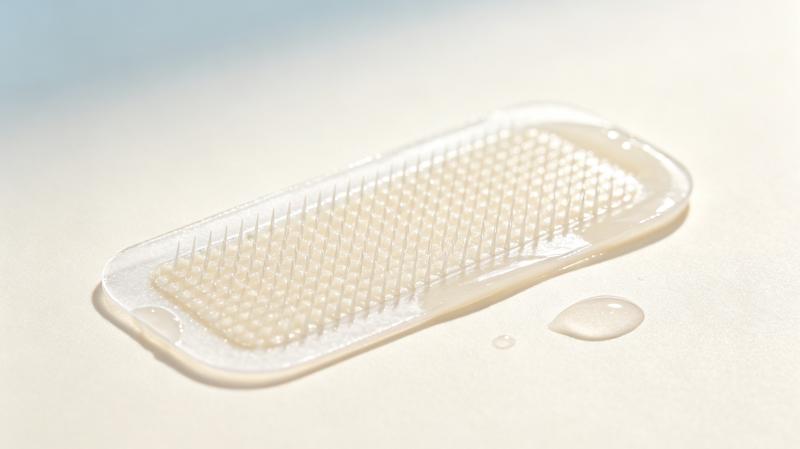
Microneedle Patches Technology
Microneedle Patches Technology Microneedle Patches are a cutting-edge non-invasive [...]
To reach our anytime via email please fill out the form below with your request and a company representative will reply to you. To find your local CHEERSONIC representative to connect directly click your region in the contact drop down menu.

Contact CHEERSONIC For immediate assistance please contact us the corporate headquarters during business hours at 6:00 am – 22:00 pm.
Tel: 0571-87910406
- Mobile: +86 15869049660
- Email: Market2@cheersonic.com
Add: 11-13 Chuangye Road, Changkou, Fuyang, Hangzhou, Zhejiang, China