
A Comprehensive Analysis of Lens Optical Technology
Lens, also known as an optical lens, is the core fundamental component of the modern optical system. It utilizes the law of refraction to achieve light beam focusing, divergence, and image regulation, running through the entire course of human optical development. It is also the core hardware support for photography imaging, intelligent sensing, and precise detection, etc. From everyday shooting equipment, vehicle perception systems, to high-end medical instruments, aerospace detection equipment, the imaging quality and perception accuracy of various optical scenarios all depend on the iterative upgrade of Lens technology.
From the core principle perspective, Lens relies on the difference in light speed in different media to achieve light regulation. When light passes through transparent curved media such as glass and optical plastics, the propagation speed changes, thereby causing refraction deviation. By precisely designing the curvature of the lens surface, the refractive index of the medium, and the thickness of the lens, the direction of the light can be controlled, allowing scattered light to converge into a clear focus or allowing parallel light beams to uniformly diverge, ultimately achieving clear imaging, beam calibration, and other functions. According to the differences in optical characteristics, Lens is mainly divided into convergent and divergent types, respectively adapting to different usage requirements for focusing imaging and light beam diffusion. The basic structure can be single-piece simple lenses or multi-piece combined composite lenses. The composite structure can effectively counteract the optical defects of a single lens.
Traditional optical lenses often have problems such as dispersion, aberration, and glare, which can cause color distortion and edge blurring in the picture. The core breakthrough of modern Lens technology is to overcome these problems through material innovation and structure optimization. The industry adopts low-dispersion optical materials and combines multiple lens groups for collaborative design to precisely correct the focal deviation of different colors, significantly improving the imaging purity. At the same time, the popularization of aspheric lens technology breaks the limitations of traditional spherical lenses, reducing the number of lenses and the volume of the module while effectively correcting image distortion, making the imaging field more flat and the picture quality clearer, perfectly adapting to the design requirements of lightweight intelligent devices.
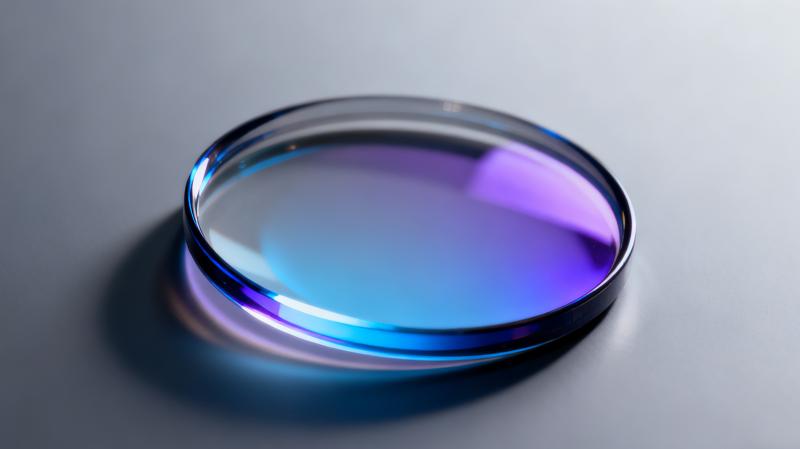
Lens Optical Technology
Lens Optical Technology In-depth explanation of the core technology [...]
To reach our anytime via email please fill out the form below with your request and a company representative will reply to you. To find your local CHEERSONIC representative to connect directly click your region in the contact drop down menu.
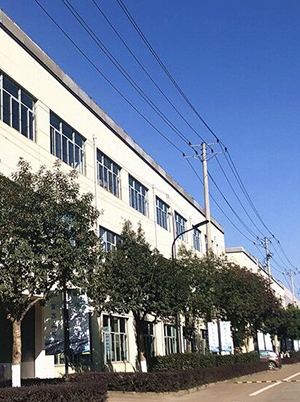
Contact CHEERSONIC For immediate assistance please contact us the corporate headquarters during business hours at 6:00 am – 22:00 pm.
Tel: 0571-87910406
- Mobile: +86 15869049660
- Email: Market2@cheersonic.com
Add: 11-13 Chuangye Road, Changkou, Fuyang, Hangzhou, Zhejiang, China
